



| HEADLINE |

|

Energy sector never under national control: Prof Anu Muhammad
It heavily depends on multinational and domestic corporate interests
Published : Sunday, 6 September, 2026 at 12:00 AM


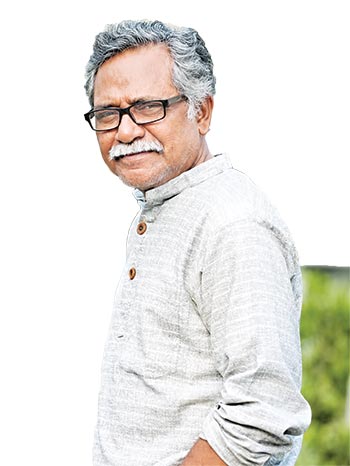
Economist Professor Anu Muhammad has strongly criticised the structure of the power and energy sector, arguing that it has long failed to remain firmly under national control and has instead been heavily influenced by multinational companies.
Bangladesh’s deepening gas and electricity crisis is not merely the result of declining domestic gas production or rising LNG prices. At its heart lies a long-standing policy of dependence on foreign companies, imported fuels and foreign financing, while national capacity for energy exploration, production and renewable energy remains inadequate.
The United States and India, the World Bank and Asian Development Bank, multinational companies, company lobbyists and sections of political, bureaucratic, business and media circles were among the major players identified by critics of that kind of policy.
Domestic and foreign corporate interests have helped create a form of “national inferiority”�"the belief that Bangladeshis are incapable of managing their own strategic resources
The mass movement ultimately succeeded in stopping gas exports.
Had that resistance failed, Bangladesh’s already limited domestic gas supply could have been placed under even greater pressure, potentially forcing the country to import substantially more oil and LNG to meet domestic requirements.
“This situation is nothing new in Bangladesh. The Awami League-led government took this system to an even higher level. To protect those involved in plundering public resources, it also enacted a Special Act that provided them with immunity from existing laws. We had expected the new government to take measures to break this anti-people and anti-state system. Unfortunately, it appears to be continuing the old approach. They have not learned the lessons of the past, which is deeply disappointing for us and extremely dangerous for the country,” Professor Anu Muhammad remarked.
Successive governments, however, have largely moved in the opposite direction.
Foreign companies, foreign loans and imported energy have become increasingly important, while critics say environmentally damaging projects and costly energy policies have expanded.
During the Hasina government, this trend intensified. The 2010 Indemnity Act, critics argue, further strengthened the position of private power producers.
Meanwhile, a long-term power-sector master plan extending to 2041 was developed with assistance from Japan’s JICA consultants.
Critics say the basic direction of this planning has remained largely unchanged despite changes of government and repeated revisions.
“The fundamental question is not how much LNG Bangladesh can import, but whether the country can build the capacity to manage its own energy future,” he asked.
He has also questioned the process through which major energy agreements are negotiated, arguing that corporate interests can effectively influence both sides of the negotiating table.
The result, he says, has been one costly commitment after another, leaving Bangladesh increasingly trapped in dependency.
Yet enormous amounts of money spent on LNG imports and capacity payments could, critics argue, have been partly invested in building national institutions, research facilities, exploration capabilities and technical expertise.
He said Bangladesh can continue along the existing path�"greater LNG imports, foreign corporate dependence, expensive infrastructure, rising energy costs and increasing exposure to international markets.
Or it can pursue a new roadmap based on public ownership, national capacity, domestic resource development and renewable energy.
According to Professor Anu Muhammad, the campaign involved a combination of international financial institutions, foreign governments, multinational companies, company lobbyists and sections of the domestic political, bureaucratic, business and media establishment.
Since its establishment in 1998, the National Committee has consistently highlighted three fundamental principles.
First, Bangladesh’s mineral and natural resources should remain under 100 per cent ownership of its people.
Second, because these resources are finite, their export should be prohibited so that they can be preserved and used primarily for the long-term benefit of the people of Bangladesh.
Third, Bangladesh must develop its own national capacity for oil and gas exploration and extraction while simultaneously expanding renewable energy.
However, successive governments have largely failed to follow this approach. Instead, the country has moved in the opposite direction, with increasing dependence on foreign companies, foreign financing and imported energy.
Instead, domestic and foreign corporate interests have helped create what Professor Anu Muhammad describes as a form of “national inferiority”�"the belief that Bangladeshis are incapable of managing their own strategic resources.
Breaking this psychological and institutional barrier should therefore be one of the central responsibilities of any government claiming to represent the people’s interests.
He said the present gas and electricity crisis is serious, but it is not necessarily irreversible.
In the short term, immediate changes are required in the government’s approach to the power and energy sector. Emergency measures are necessary to address supply shortages and ensure uninterrupted energy supplies.
In the medium and long term, Bangladesh needs a completely new roadmap based on two fundamental principles:
100 per cent ownership of national resources by the people, and the development of strong national capacity.
Bangladesh now stands at a critical crossroads.
One path is familiar: continue importing LNG, relying on foreign companies, borrowing heavily for large infrastructure projects, increasing capacity payments, raising gas and electricity prices and remaining vulnerable to international energy markets.
The real question is whether the country will continue along a model of dependency and import-driven development, or whether it will finally invest in its own people, institutions, technology and natural resources.
If the government remains tied to the old model, critics warn, the pockets of a handful of domestic and foreign groups may become increasingly prosperous while the country’s energy crisis continues to deepen.
Loading...
Loading...
Also read



Editor : Iqbal Sobhan Chowdhury
Published by the Editor on behalf of the Observer Ltd. from Globe Printers, 24/A, New Eskaton Road, Ramna, Dhaka.
Editorial, News and Commercial Offices : Aziz Bhaban (2nd floor), 93, Motijheel C/A, Dhaka-1000.
Phone: PABX- 41053001-06; Advertisement: 41053012; 01793317829, 01550707291, E-mail: [email protected], [email protected] Online: email: [email protected] 41053014; 01550707297 Advertisement: 01550707296
Published by the Editor on behalf of the Observer Ltd. from Globe Printers, 24/A, New Eskaton Road, Ramna, Dhaka.
Editorial, News and Commercial Offices : Aziz Bhaban (2nd floor), 93, Motijheel C/A, Dhaka-1000.
Phone: PABX- 41053001-06; Advertisement: 41053012; 01793317829, 01550707291, E-mail: [email protected], [email protected] Online: email: [email protected] 41053014; 01550707297 Advertisement: 01550707296


