



| HEADLINE |

|
Ragnar to Ivar: Fact or fiction?
Published : Wednesday, 9 September, 2026 at 8:07 PM
Hasibul Islam


Collected Photo
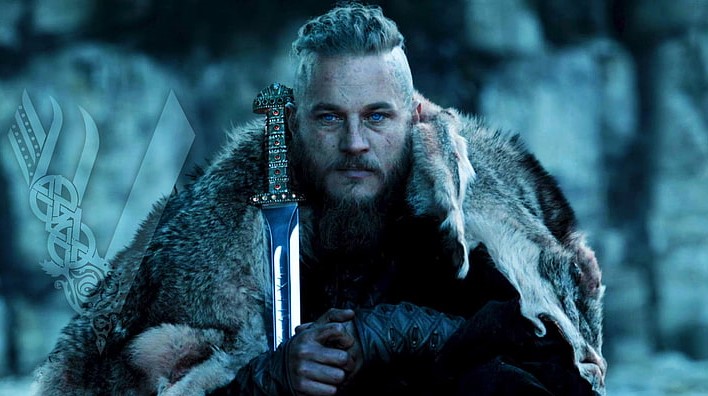
Long hair, a sword in hand and an unrelenting desire for conquest made Ragnar Lothbrok one of television’s most iconic Viking characters. But did Ragnar really exist? What about Lagertha, Bjorn Ironside and Ivar the Boneless? The hit series Vikings draws heavily from the real Viking Age, but it also blends historical figures, Norse sagas and legend with considerable creative freedom. As a result, some of its most famous characters are rooted in history, while others remain somewhere between fact and folklore.
Ragnar Lothbrok: Historical figure or legendary hero?
Ragnar Lothbrok is the central figure of 'Vikings'. The series portrays him as a farmer who rises to become a powerful Viking leader, leading raids on England and attacking Paris while challenging kings and rulers.
History, however, is far less certain. There is no definitive contemporary evidence of a Viking leader named Ragnar Lothbrok whose life matches the character portrayed in the series. His story is mainly found in later Norse sagas. Historians have suggested that the Ragnar legend may have been formed from the stories of several real Viking leaders.
One possible historical inspiration is Reginherus, a Viking leader associated with the siege of Paris in 845.
So, rather than calling Ragnar a confirmed historical figure, it is more accurate to describe him as a character standing between history and legend.
Lagertha: Was she really a shield-maiden?
Lagertha is one of the most popular characters in Vikings. She is portrayed as Ragnar’s wife, a skilled warrior and eventually a powerful ruler in her own right.
Her name, however, was not invented entirely for television. Danish historian Saxo Grammaticus wrote about Lagertha in Gesta Danorum, describing her as a warrior woman associated with Ragnar.
However, there is no contemporary evidence confirming the details of her life. It is therefore impossible to establish that the historical Lagertha was exactly the woman portrayed in the series.
Her relationship with Bjorn is also uncertain. The series presents Bjorn Ironside as Lagertha’s son, while different Norse saga traditions provide different accounts of Bjorn’s family relationships.
Bjorn Ironside: A Viking rooted in legend
Bjorn Ironside is another character with roots in Norse tradition. He is portrayed in Vikings as Ragnar’s son and a powerful warrior and explorer.
His name appears in Norse legendary accounts, and stories associate him with Viking expeditions across Western Europe and into the Mediterranean.
However, much of the detailed story of Bjorn comes from sagas written centuries after the Viking Age. As a result, it is difficult to establish a direct match between the historical record and the character’s life as shown on television.
Ivar the Boneless: One of the strongest historical figures
Among Ragnar’s sons, Ivar the Boneless has one of the strongest historical foundations.
Around 865, the Viking force known as the Great Heathen Army launched a major campaign in England. Ivar was one of its leading figures, and his name appears in historical accounts of Viking warfare against the Anglo-Saxon kingdoms.
Yet even in Ivar’s case, the series takes considerable liberties. The exact meaning of his nickname “Boneless” remains disputed, and the explanations surrounding his physical condition are not firmly established by historical evidence.
While Ivar’s existence as a Viking leader is much better supported than Ragnar’s, many details of his personal life and his relationship with Ragnar remain tied to saga traditions.
The biggest problem: The timeline
One of the most noticeable historical liberties in Vikings is its timeline.
The series makes Ragnar, his sons, Rollo and several English kings appear to belong to essentially the same period and storyline. Historically, however, many of these events were separated by decades.
The famous Viking raid on Lindisfarne took place in 793, while the Great Heathen Army arrived in England in 865, more than 70 years later. The series compresses events from different periods to create a more continuous and dramatic narrative.
Rollo is another example. In the series, he is portrayed as Ragnar’s brother. Historically, the Rollo associated with the foundation of Normandy belonged to a later period, and there is no solid evidence that he was Ragnar’s brother.
What about Kattegat?
Kattegat appears in Vikings as a major Viking settlement and the centre of much of the series’ political and military drama.
But the Kattegat shown in the series was not a real Viking city.
Kattegat is actually the name of a sea area between Denmark and Sweden. There is no historical evidence for a major Viking city in that location resembling the settlement depicted in the series.
So, is 'Vikings' historically inaccurate?
Not entirely.
The series is best understood as historical fiction rather than a history textbook. Its depiction of the Viking Age, Norse seafaring, Viking raids in Europe, conflicts in England and the religious tension between Christianity and Norse beliefs is rooted in real history.
At the same time, character relationships, timelines, battles and personal stories were frequently altered or combined for dramatic effect.
Ragnar may not be a fully documented historical king, Lagertha’s story is deeply connected to legend, and Bjorn’s life is heavily influenced by saga tradition. Ivar, meanwhile, has a much stronger historical basis, while Viking campaigns in England and across Europe are firmly rooted in historical records.
The irony is that some of the most extraordinary events in Vikings have a basis in history, while the existence and identities of some of its most famous characters remain uncertain.
Ultimately, Ragnar Lothbrok is best viewed not simply as a Viking king, but as a character created at the intersection of history, Norse sagas and legend.
-HIS
Loading...
Loading...
Also read









Editor : Iqbal Sobhan Chowdhury
Published by the Editor on behalf of the Observer Ltd. from Globe Printers, 24/A, New Eskaton Road, Ramna, Dhaka.
Editorial, News and Commercial Offices : Aziz Bhaban (2nd floor), 93, Motijheel C/A, Dhaka-1000.
Phone: PABX- 41053001-06; Advertisement: 41053012; 01793317829, 01550707291, E-mail: [email protected], [email protected] Online: email: [email protected] 41053014; 01550707297 Advertisement: 01550707296
Published by the Editor on behalf of the Observer Ltd. from Globe Printers, 24/A, New Eskaton Road, Ramna, Dhaka.
Editorial, News and Commercial Offices : Aziz Bhaban (2nd floor), 93, Motijheel C/A, Dhaka-1000.
Phone: PABX- 41053001-06; Advertisement: 41053012; 01793317829, 01550707291, E-mail: [email protected], [email protected] Online: email: [email protected] 41053014; 01550707297 Advertisement: 01550707296


