



| HEADLINE |

|

You Can Tear Down a Photo, But Never the Photo’s Reality


 These days, we appear to be becoming dangerously comfortable with destroying history.
Over the past two years, the entire nation witnessed an unsettling practice to distort, remove and physically destroy historical evidences - often without a second thought and driven by fiercely unforgiving political impulses.
Whether it is bulldozing a historic residence associated with a political leader, demolishing statues, removing photographs documenting significant political events, or replacing historical images with controversial political characters depicting shoes being thrown at one of them.
A recent incident at Dhaka University has made this concern particularly disturbing. A student named Muhammad Abu Tayab (Habilder), a fourth-year student of the Department of Urdu from the 2001-02 session and reportedly the oldest candidate in the last DUCSU election, entered the archives section of Dhaka University's museum and smashed a framed photograph where Muhammad Ali Jinnah was seen delivering a speech. He subsequently removed the photograph and tore it apart. Later, Students' Federation leaders and activists handed Tayab a Dawn newspaper clipping featuring Mr Jinnah, which he also tore up. The stated justification was an objection to Jinnah-related displays at the DUCSU Museum.
We do not display historical artefacts in a museum because we love everyone who appears in it. We put them in display because history contains people, events and ideas that we may admire, condemn, question or even profoundly despise. If we start tearing photographs because we dislike the people appearing in them, where exactly do we stop? Should we tear down all photos where Ayyub, Yahyia Khan and Bhutto have been depicted from now on?
There is another question that deserves a reply: Why now? Why would a former student of the Urdu Department, after spending years within the university's academic sphere, suddenly decide that a historical photograph had to be torn down and make it go viral? Was this simply an impulsive act by an individual, or was there a broader political motivation?
We should never make allegations without evidence, but neither should we dismiss questions about whether such incidents are being encouraged, politically exploited or deliberately orchestrated with a ' sponsorship' tag.
The museum itself baffles this writer with another perplexing contradiction.
There was reportedly no photograph of Sheikh Mujibur Rahman among the key exhibits, despite the presence of a photograph of the weddings of his sons in 1974 and three newspaper clippings featuring him.
This omission is more than enough to make any conscious citizen uncomfortable.
Sheikh Mujibur Rahman was unquestionably an integral figure in the political history of Bangladesh and the Liberation War. We may debate, question on his subsequent political decisions, his government, legacy and the controversies surrounding his rule. But we cannot seriously discuss the history of Bangladesh while selectively removing one of its most iconic characters from the Liberation War's historical record.
This writer fails to understand, how could there be no portrait of Mujib among the exhibits or a photograph of his historic 7 March speech?
And this leads me to even a bigger question: Who decides what should and should not be displayed in a museum? It is certainly not student activists, and certainly not political mobs. And certainly not whichever student group happens to possess the loudest voice or the strongest muscle inside the university campus right now.
It is equally troubling that a photograph showing convicted 1971 war criminal and former Jamaat-e-Islami ameer Golam Azam being thrown with shoes by local people outside Baitul Mukarram in Dhaka on January 1, 1981, was compellingly hung and displayed as an exhibit.
I simply fail to understand the reason for replacing the Jinnah photo, it is important to identify the photos subject and examine its historical significance. It should neither be celebrated nor erased according to contemporary political convenience. And this is precisely where we are making a dangerous distinction. A museum, whether our national or DUCSU Museum is not a courtroom. A museum does not exist to tell us whom to love. It exists to tell us what actually happened.
If we want to condemn Jinnah, let us place beside his photograph the history of partition, the Two-Nation Theory, discrimination against East Pakistan and the political consequences of his decisions. If we want to explain Mujib, let us display the Six Points, the 7 March speech, the Liberation War and, subsequently, all the failures and controversies surrounding his government. If we want to understand Golam Azam, let us document his role in 1971 and the judicial history surrounding his conviction. And it is right here, where the actual context is the answer to uncomfortable history�"not radical destruction or vandalism documented and photographed history.
We can disagree with Jinnah without destroying his photograph. We can fiercely criticise Mujib without erasing his legacy. We can condemn Golam Azam without pretending he never existed. We can challenge every political narrative, but not through physically mutilating the evidence from which future generations must learn.
A reactionary force appears increasingly committed to transform political anger into cultural and historical vandalism, sending an alarming message to the world: We are not merely damaging, destroying or rejecting aspects of our history; rather we are becoming dangerously tempted to rewrite history according to extremist and politically motivated preferences of the moment.
What truly horrifies this writer is how easily such sentiments can be fuelled during these volatile times. Once a crowd, (in this case an individual) is emotionally heated up, the distinction between political protest and historical vandalism can simply just disappear into thin air.
However, I feel like reflecting back to a particular memorable incident. Less than a year ago, I spent a memorable winter day inside Lahore's iconic museum fondly remembering Rudyard Kipling and his father's association with this museum. My late father had spent uncounted hours while he was a CSP Probationer in 1971.
Among the museum’s historical objects and artworks, one particular portrait struck me deeply symbolic - a portrait of Sheikh Mujibur Rahman. I found it something profoundly curious about encountering Mujib's portrait inside a major museum in Pakistan.
It was in Lahore that Sheikh Mujib announced his historic Six-Point Programme in February of 1966. At that time, he was the key political leader of erstwhile East Pakistan demanding substantial autonomy within Pakistan.
Fast-forward 5 years, that political struggle would culminate in the birth of Bangladesh. And yet, decades later, his portrait had found a place inside one of Pakistan's major museums. The portrait's display didn't mean that every Pakistani visitor endorsed his politics. Rather, the portrait acknowledged that he was part of Pakistan's history�"even though that history ultimately triggered Pakistan’s most historic breakup. I believe that is what historical maturity looks like. History does not become less true because we dislike it.
Now imagine that a violent reactionary mob enters Lahore Museum tomorrow smashes the Mujib portrait how would we react? Should we applaud because we disagree with Mujib? Would we remain silent because the mob claimed that his image offended its historical sensibilities? Or should we describe the demolishing act as an act of 'patriotic purification' on behalf of the mob?
At least, I would condemn it. I would call it historical vandalism and insist that Pakistan must preserve and display its complex past, including the role of the man who eventually became the founding leader of Bangladesh. Similarly, it is time to acknowledge our shared 24 years or so complicated shared history with Pakistan, and definitely by not removing Mr Jinnah from the scene. This is not political neutrality; rather it is a call to remain honest to history.
We can disagree with Jinnah without destroying his photograph. We can fiercely criticise Mujib without erasing his legacy. We can condemn Golam Azam without pretending he never existed. We can challenge every political narrative, but not through physically mutilating the evidence from which future generations must learn.
Lest we forget, when we destroy a photograph, we do not destroy the person inside it. When we demolish a statue, we do not demolish the history it represents. When we tear a newspaper clipping, we do not tear the event out of history. We ultimately destroy our own ability to remember it honestly. And today, perhaps, that is the greatest danger stands before us.
One day, our children may walk through our museums and ask a simple question: Where is the history that once stood here?
If we have destroyed everything we disliked, they may never know.
The bottom-line: If we rewrite everything we hate and fear, they may never know us either.
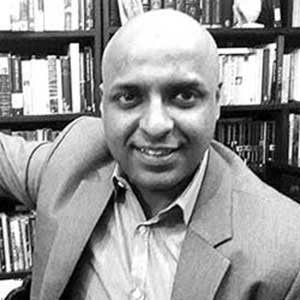
The Writer is Senior Assistant Editor for The Daily Observer

Loading...
Loading...
Also read


Editor : Iqbal Sobhan Chowdhury
Published by the Editor on behalf of the Observer Ltd. from Globe Printers, 24/A, New Eskaton Road, Ramna, Dhaka.
Editorial, News and Commercial Offices : Aziz Bhaban (2nd floor), 93, Motijheel C/A, Dhaka-1000.
Phone: PABX- 41053001-06; Advertisement: 41053012; 01793317829, 01550707291, E-mail: [email protected], [email protected] Online: email: [email protected] 41053014; 01550707297 Advertisement: 01550707296
Published by the Editor on behalf of the Observer Ltd. from Globe Printers, 24/A, New Eskaton Road, Ramna, Dhaka.
Editorial, News and Commercial Offices : Aziz Bhaban (2nd floor), 93, Motijheel C/A, Dhaka-1000.
Phone: PABX- 41053001-06; Advertisement: 41053012; 01793317829, 01550707291, E-mail: [email protected], [email protected] Online: email: [email protected] 41053014; 01550707297 Advertisement: 01550707296


