



| HEADLINE |

|

El Niño may cut Philippine rice output
Published : Saturday, 3 October, 2026 at 9:35 PM
Observer Online Report


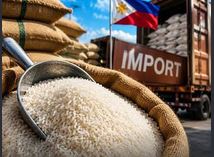
Collected Photo
Rice production in the Philippines may decline in the 2026-27 marketing year as El Niño conditions and high fertilizer prices put pressure on farmers and crop yields, potentially increasing the country's demand for imported rice and adding pressure to Asian rice trade.
The US Department of Agriculture’s Foreign Agricultural Service (USDA-FAS) has forecast Philippine milled rice production at 12.25 million tonnes, down from 12.36 million tonnes in the previous year. Higher fertilizer costs are weakening farmers’ planting incentives, while moderate-to-strong El Niño conditions could reduce water availability and affect crop yields.
The Philippines is expected to consume about 17.65 million tonnes of rice in 2026-27. To cover the gap between domestic production and consumption, USDA-FAS has forecast imports of 5.2 million tonnes. Other USDA projections have put Philippine rice imports at as much as 5.7 million tonnes in 2027 as the country builds stocks against weather-related supply risks.
The Philippines is the world’s largest rice importer, making its buying decisions important for the international market. Higher Philippine import demand could increase competition among buyers and redirect more rice from major Asian exporters, particularly Vietnam, Thailand, India and Pakistan, potentially tightening exportable supplies in the region.
The effect is likely to extend beyond the Philippines because several major rice-producing countries are also facing El Niño-related production risks. S&P Global projects global rice production could fall by about 9 million tonnes to 536.4 million tonnes in 2026-27, while global rice import demand could rise by nearly 4 million tonnes as countries seek to secure supplies against possible weather disruptions.
However, the production decline does not necessarily mean an immediate global rice shortage. Strong carry-in stocks are expected to provide some buffer, although a combination of lower output, increased import demand and further weather disruptions could make international rice prices and trade flows more sensitive to supply shocks.
The US Department of Agriculture’s Foreign Agricultural Service (USDA-FAS) has forecast Philippine milled rice production at 12.25 million tonnes, down from 12.36 million tonnes in the previous year. Higher fertilizer costs are weakening farmers’ planting incentives, while moderate-to-strong El Niño conditions could reduce water availability and affect crop yields.
The Philippines is expected to consume about 17.65 million tonnes of rice in 2026-27. To cover the gap between domestic production and consumption, USDA-FAS has forecast imports of 5.2 million tonnes. Other USDA projections have put Philippine rice imports at as much as 5.7 million tonnes in 2027 as the country builds stocks against weather-related supply risks.
The Philippines is the world’s largest rice importer, making its buying decisions important for the international market. Higher Philippine import demand could increase competition among buyers and redirect more rice from major Asian exporters, particularly Vietnam, Thailand, India and Pakistan, potentially tightening exportable supplies in the region.
The effect is likely to extend beyond the Philippines because several major rice-producing countries are also facing El Niño-related production risks. S&P Global projects global rice production could fall by about 9 million tonnes to 536.4 million tonnes in 2026-27, while global rice import demand could rise by nearly 4 million tonnes as countries seek to secure supplies against possible weather disruptions.
However, the production decline does not necessarily mean an immediate global rice shortage. Strong carry-in stocks are expected to provide some buffer, although a combination of lower output, increased import demand and further weather disruptions could make international rice prices and trade flows more sensitive to supply shocks.
The Philippine Department of Agriculture has decided to keep rice imports open as it prepares for a potentially strong El Niño, with officials estimating that the weather phenomenon could reduce palay production by up to 750,000 tonnes.
-AH

Loading...
Loading...
Also read








Editor : Iqbal Sobhan Chowdhury
Published by the Editor on behalf of the Observer Ltd. from Globe Printers, 24/A, New Eskaton Road, Ramna, Dhaka.
Editorial, News and Commercial Offices : Aziz Bhaban (2nd floor), 93, Motijheel C/A, Dhaka-1000.
Phone: PABX- 41053001-06; Advertisement: 41053012; 01793317829, 01550707291, E-mail: [email protected], [email protected] Online: email: [email protected] 41053014; 01550707297 Advertisement: 01550707296
Published by the Editor on behalf of the Observer Ltd. from Globe Printers, 24/A, New Eskaton Road, Ramna, Dhaka.
Editorial, News and Commercial Offices : Aziz Bhaban (2nd floor), 93, Motijheel C/A, Dhaka-1000.
Phone: PABX- 41053001-06; Advertisement: 41053012; 01793317829, 01550707291, E-mail: [email protected], [email protected] Online: email: [email protected] 41053014; 01550707297 Advertisement: 01550707296


