



| HEADLINE |

|

Trump’s midterm test: What the US elections mean
Published : Tuesday, 6 October, 2026 at 5:28 PM
Observer Online Report


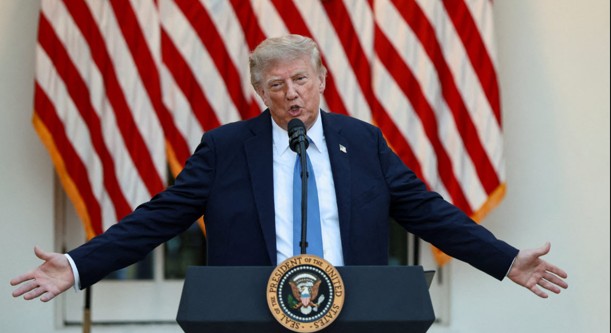
Collected Photo
The 2026 US midterm elections will be held on November 3, halfway through President Donald Trump’s four-year term, with voters set to elect members of Congress and determine control of the House and Senate.
What is a midterm election?
The US Congress consists of two chambers: the House of Representatives and the Senate. Congressional elections are held every two years. Every House seat is contested every two years, while Senate elections are staggered, with roughly one-third of the seats contested each time.
What will be decided in 2026?
In this year's election:
435 House seats will be contested.
35 Senate seats will be on the ballot.
36 governorships are also scheduled for election.
Thousands of state and local offices will be contested.
The winners will form the 120th Congress, which will begin in January 2027.
Why is it important for Trump?
Trump's name will not be on the ballot, but the election is closely linked to his presidency because the results will determine which party controls Congress during the final two years of his current term.
Congress has the power to pass federal laws and approve government spending. The Senate also plays a major role in confirming presidential nominees, including federal judges and senior officials. Therefore, a change in control of either chamber could affect how easily Trump's administration can advance its legislative agenda.
Who currently controls Congress?
Republicans currently hold majorities in both chambers. The House currently has 220 Republicans and 215 Democrats, according to the House's official historical record.
The Senate has 53 Republicans, while Democrats and allied independents hold the remaining seats. Democrats would need to gain four Republican-held seats, without losing seats of their own, to reach a Senate majority under the current balance.
Why is the election called a “test” for Trump?
Midterms often become a referendum of sorts on the political environment under the sitting president, although they do not determine the presidency. Trump has made the 2026 campaign a priority and announced a 32-day campaign tour ahead of Election Day to support Republican candidates.
The major issues in the 2026 campaign include the economy and cost of living, energy prices, immigration, foreign policy and the war involving Iran, with voters' views of Trump's administration also influencing competitive races.
What happens after the election?
The newly elected members will take office in January 2027. The party that controls each chamber will have significant influence over its legislative agenda and committee leadership. If different parties control the House and Senate, or if Congress is controlled by a party different from the president's, the administration could face a more divided political environment.
In short: The 2026 midterms are not about choosing America's president. They are about deciding who controls Congress—and, consequently, how much political room Donald Trump will have during the final two years of his presidency.
-AH

Loading...
Loading...
Also read








Editor : Iqbal Sobhan Chowdhury
Published by the Editor on behalf of the Observer Ltd. from Globe Printers, 24/A, New Eskaton Road, Ramna, Dhaka.
Editorial, News and Commercial Offices : Aziz Bhaban (2nd floor), 93, Motijheel C/A, Dhaka-1000.
Phone: PABX- 41053001-06; Advertisement: 41053012; 01793317829, 01550707291, E-mail: [email protected], [email protected] Online: email: [email protected] 41053014; 01550707297 Advertisement: 01550707296
Published by the Editor on behalf of the Observer Ltd. from Globe Printers, 24/A, New Eskaton Road, Ramna, Dhaka.
Editorial, News and Commercial Offices : Aziz Bhaban (2nd floor), 93, Motijheel C/A, Dhaka-1000.
Phone: PABX- 41053001-06; Advertisement: 41053012; 01793317829, 01550707291, E-mail: [email protected], [email protected] Online: email: [email protected] 41053014; 01550707297 Advertisement: 01550707296


