



| HEADLINE |

|

Lightning kills 250-300 people in Bangladesh every year: Minister
Published : Wednesday, 28 October, 2026 at 4:49 PM
Staff Correspondent


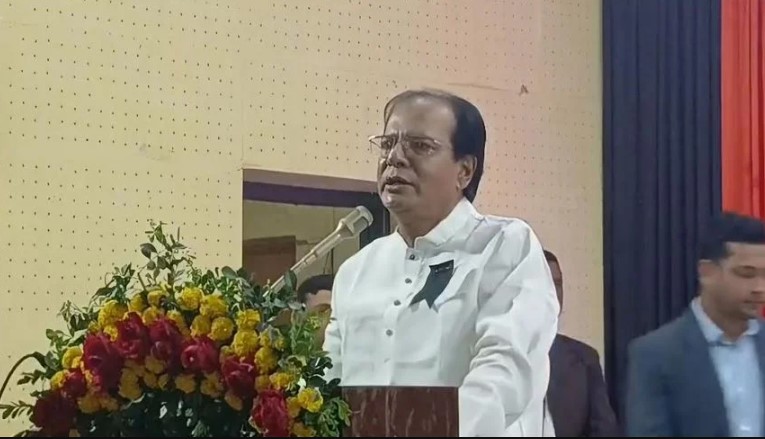
The government plans to build specialised shelters in lightning-prone areas and train 100,000 volunteers to respond to major earthquakes as Bangladesh faces growing disaster risks, Disaster Management and Relief Minister Asadul Habib Dulu said on Wednesday.
He said lightning strikes kill around 250 to 300 people in Bangladesh every year, making them a major cause of disaster-related deaths in the country.
Speaking at a roundtable discussion in Dhaka, the minister said the government was working to strengthen early warning systems, improve rescue capacity and prepare communities for natural disasters.
The planned shelters will be built in vulnerable areas, particularly the haor wetlands and northern parts of the country. They will have sirens and sensors to warn people when lightning is expected.
The proposed three-storey shelters will provide refuge for farmers, fishermen and their livestock. Solar power systems will also be installed to keep the warning systems operational during power outages.
Dulu said a project proposal had been prepared with input from experts. He urged non-governmental organisations and private organisations working in disaster management to give greater attention to reducing lightning-related deaths.
On earthquake preparedness, the minister said Prime Minister Tareque Rahman had given special importance to the issue. The government has started compiling a database of volunteers as part of an initiative to train 100,000 people, and training has already begun.
The government has also designated 445 locations in Dhaka North and South for people to gather during emergencies. The sites include playgrounds and the grounds of schools and colleges, which have been officially gazetted.
Dulu said the government had collected information on heavy machinery owned by private contractors, helicopters available in the private sector and the number of beds in private hospitals to support rescue and emergency response operations after a major earthquake.
He stressed the need for government agencies, private organisations and non-governmental organisations to work together under a coordinated system during disasters.
The minister was speaking at a national roundtable titled “Institutionalizing Inclusive, Community-Led Disaster Risk Reduction and Climate Change Adaptation”, held at the Bangla Vision office in Dhaka on Wednesday.
Muslim Aid-UK Bangladesh Field Office, the Eco-Social Development Organization (ESDO) and Bangla Vision jointly organised the event to discuss community-led disaster preparedness, climate change adaptation, sustainable livelihoods and access to safe water and sanitation.
The discussion reviewed the achievements and challenges of the three phases of the Inclusive Community Resilience to Disaster and Climate Vulnerabilities (ICRDCV) project, implemented by ESDO with support from Muslim Aid.
The project covers 68 communities across 27 disaster-prone wards in Ashashuni Sadar, Sreeula and Pratapnagar unions of Ashashuni upazila in Satkhira district.
Its main objective is to strengthen local communities' ability to prepare for disasters and cope with the effects of climate change.
A 2024 baseline survey conducted for the project found that 98 per cent of 453 surveyed households had experienced at least one disaster in the previous three years.
The survey also found that 51 per cent of respondents lacked adequate knowledge of disaster risk reduction, while 59 per cent of households had no alternative source of income. Another 22 per cent of households purchased drinking water to meet their needs.
The findings highlight the challenges faced by coastal communities, where repeated disasters, limited livelihood options and shortages of safe drinking water increase people's vulnerability.
According to the project progress report presented at the event, capacity-building activities had been conducted for 31 disaster management committees. Risk assessments and risk reduction plans had also been prepared for 68 villages.
In addition, 728 disaster-vulnerable households had received training in climate-resilient agriculture, fisheries and livestock-based livelihoods.
The project has also supported the reconstruction of 25 road-cum-embankments and raised the grounds of a school-cum-cyclone shelter.
Other initiatives include rainwater harvesting systems, the rehabilitation of water treatment facilities and improvements to water, sanitation and hygiene facilities in schools and communities.
Participants stressed the need to strengthen local disaster management committees, maintain embankments, improve access to safe drinking water and promote livelihoods that can withstand climate-related shocks.
They also discussed financing disaster-related losses and damage, improving cyclone shelter management and ensuring that women, children, persons with disabilities and other vulnerable groups are included in disaster planning.
The discussion highlighted the importance of incorporating community-level disaster risk reduction plans into union and upazila development plans and budgets.
Participants also called for stronger local institutions, regular maintenance of water and sanitation facilities and long-term funding to sustain successful initiatives.
The organisers said cooperation among local communities, government agencies and development partners was essential to making disaster risk reduction and climate change adaptation programmes sustainable.
They said the roundtable aimed to identify effective measures from the project that could be expanded to other disaster-prone areas and to develop practical recommendations for future programmes.
- MaT

Loading...
Loading...
Also read





Editor : Iqbal Sobhan Chowdhury
Published by the Editor on behalf of the Observer Ltd. from Globe Printers, 24/A, New Eskaton Road, Ramna, Dhaka.
Editorial, News and Commercial Offices : Aziz Bhaban (2nd floor), 93, Motijheel C/A, Dhaka-1000.
Phone: PABX- 41053001-06; Advertisement: 41053012; 01793317829, 01550707291, 01550707296
E-mail: [email protected], [email protected]. [email protected], [email protected], [email protected], [email protected], Online-email: [email protected]


