



| HEADLINE |

|

Erosion ravages Chunarughat hills, tea gardens
Published : Sunday, 1 November, 2026 at 12:00 AM
MS Jilani Akhanjee


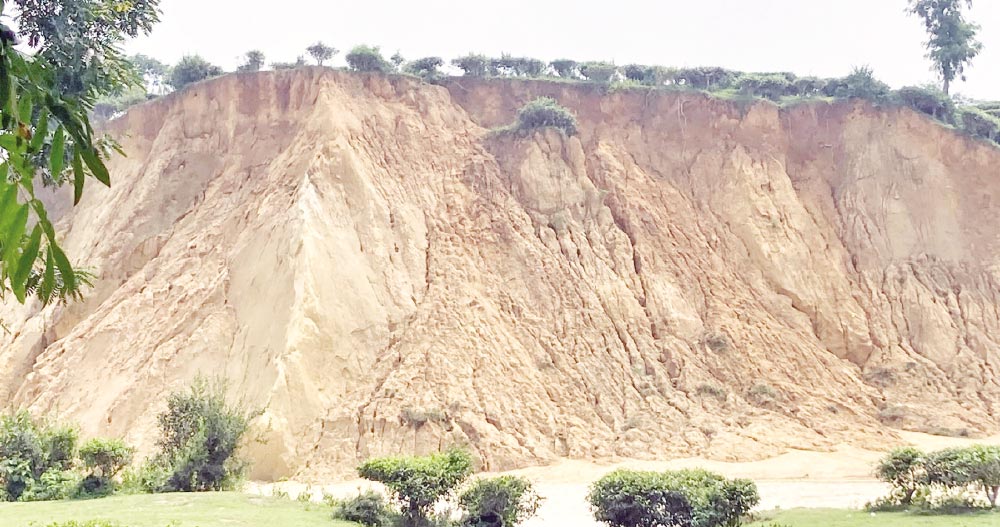 CHUNARUGHAT, HABIGANJ, Oct 31: Hills and elevated mounds inside tea gardens in Chunarughat Upazila of Habiganj are gradually collapsing into rivers and streams due to flash floods and strong water currents, damaging tea plantations and putting roads, bridges and settlements at risk.
Locals allege that despite the recurring damage, neither government agencies nor private authorities have taken effective, long-term measures to prevent the erosion.
They said many streams flowing through hills and tea gardens had become clogged with sand and silt over the years. During the monsoon and flash floods, water cannot flow through them normally, creating strong currents that erode hill slopes and tea garden mounds. Roads, bridges and houses have also been damaged.
The erosion has already affected the Tipra Indigenous settlement in Satchhari, bridges including Ramganga Bridge, several bridges inside tea gardens and sections of the old Dhaka-Sylhet highway. In some places, large hillocks have collapsed into streams.
Tinku Santal of Surma Tea Garden said flash floods this year washed away soil from the approach road to an under-construction bridge numbered 20, creating a huge hole. Large hillocks in the Kibriaabad section have also collapsed into streams.
“Neither the government nor the garden authorities have come forward to prevent the erosion. Excavating the streams and planting trees could help reduce soil erosion,” he said.
Chitranjan Debbarma, headman of the Tipra Indigenous settlement in Satchhari, said five houses had been washed away because the streams had not been excavated. A small footbridge had also been completely destroyed.
He said sand deposits had reduced the streams' water-holding capacity, accelerating erosion along hillsides and streambanks and causing environmental damage. Without planned measures, the annual erosion would cause further serious losses, he warned.
Amar Bhumij of Chaklapunji Tea Garden said the erosion at Chaklapunji and Ramganga was alarming, with large mounds inside tea gardens collapsing every year.
“This year's erosion has also damaged the old Ramganga highway. Some sections have been paved, but many areas remain damaged,” he said.
Selimur Rahman, Manager of Chandi Chhara Tea Garden, said large areas of the garden were losing hillocks to erosion, damaging tea plants, bridges, roads and the surrounding environment.
He said excavating streams and controlling water currents could help prevent erosion in the hills and tea gardens, adding that the erosion had become increasingly severe.
Omaiya Ferdous, a network member of the Bangladesh Environmental Lawyers Association (BELA), said the destruction of hills and tea garden mounds was causing extensive environmental damage. She called on the government to take sustainable measures to stop the erosion, warning that the hills and tea garden landscapes could gradually be destroyed without intervention.
Deputy Commissioner Dr GM Sarfaraz said the authorities witnessed hill and river erosion every year. Many hillocks, tea gardens and bridges had also been damaged this year, while some locations had undergone repairs.
He said technical aspects were being examined to determine how erosion could be prevented permanently.

Loading...
Loading...
Also read



Editor : Iqbal Sobhan Chowdhury
Published by the Editor on behalf of the Observer Ltd. from Globe Printers, 24/A, New Eskaton Road, Ramna, Dhaka.
Editorial, News and Commercial Offices : Aziz Bhaban (2nd floor), 93, Motijheel C/A, Dhaka-1000.
Phone: PABX- 41053001-06; Advertisement: 41053012; 01793317829, 01550707291, 01550707296
E-mail: [email protected], [email protected]. [email protected], [email protected], [email protected], [email protected], Online-email: [email protected]


