



| HEADLINE |

|
Coastal people losing taste of Hilsa as prices soar
Published : Sunday, 25 January, 2026 at 12:00 AM
Our Correspondent


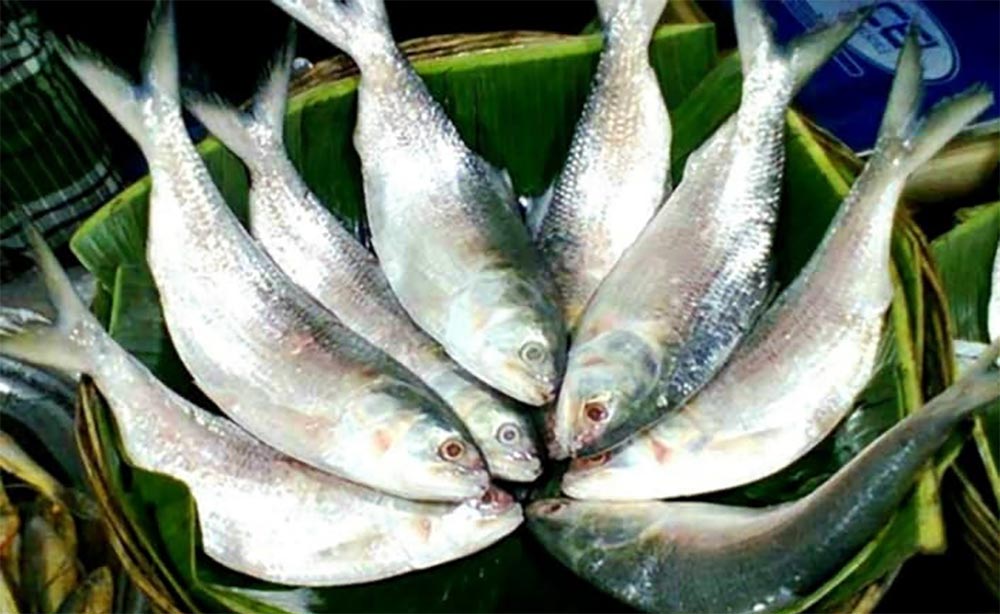 AMTALI, BARGUNA, Jan 24: For generations, Hilsa fish has been a staple food for people in Amtali and other coastal areas of Barguna. Today, however, it has become largely out of reach for ordinary residents.
 While Hilsa can still be seen along the Bay of Bengal coast, most people cannot afford to buy it. Soaring prices, the dominance of middlemen, and rising production costs have turned the prized fish into a luxury item for the affluent.
A survey of local markets in Amtali and Taltali shows that a medium-sized Hilsa now sells for Tk 2,000-2,500 per kilogram, while larger fish fetch even higher prices. For day-labourers, farmers, fishermen, and lower-middle-class families, buying Hilsa has become nearly impossible. Many customers quietly leave the market after asking prices.
Ironically, those who catch Hilsa are also losing out. Fishermen in villages along Amtali, Taltali, and other coastal areas say they cannot sustain their households without selling the fish. Rising costs of fuel, ice, nets, and boat repairs have reduced profits from Hilsa fishing. Meanwhile, middlemen push prices up at every stage-from fisher to wholesaler to retailer-ultimately passing the burden to consumers.
Climate change is another challenge. Frequent cyclones, rough weather, and sea risks often prevent fishermen from going out. Although government restrictions on Hilsa fishing exist to conserve stocks, the lack of alternative income during these periods puts fishermen under financial stress.
As a result, many families in coastal Barguna have not cooked Hilsa for years. Even during Eid, Durga Puja, or other special occasions, cheaper alternatives such as eggs, vegetables, or other fish replace Hilsa. Sathi, a housewife from Purbochila Village in Amtali, said her children have never tasted real Hilsa this year.
Experts say the situation will not improve without ensuring fair prices at the local level, controlling middlemen, and monitoring market practices. Effective support and alternative income for fishermen during restricted periods are also essential.
For the people of coastal Barguna, not being able to eat the fish from their own rivers and sea has become the new normal. If Hilsa disappears from ordinary plates, it will not only worsen food insecurity but also erode a vital part of local culture.
Loading...
Loading...
Also read



Editor : Iqbal Sobhan Chowdhury
Published by the Editor on behalf of the Observer Ltd. from Globe Printers, 24/A, New Eskaton Road, Ramna, Dhaka.
Editorial, News and Commercial Offices : Aziz Bhaban (2nd floor), 93, Motijheel C/A, Dhaka-1000.
Phone: PABX- 41053001-06; Advertisement: 41053012; 01793317829, 01550707291, E-mail: [email protected], [email protected] Online: email: [email protected] 41053014; 01550707297 Advertisement: 01550707296
Published by the Editor on behalf of the Observer Ltd. from Globe Printers, 24/A, New Eskaton Road, Ramna, Dhaka.
Editorial, News and Commercial Offices : Aziz Bhaban (2nd floor), 93, Motijheel C/A, Dhaka-1000.
Phone: PABX- 41053001-06; Advertisement: 41053012; 01793317829, 01550707291, E-mail: [email protected], [email protected] Online: email: [email protected] 41053014; 01550707297 Advertisement: 01550707296


