



| HEADLINE |

|

Gen-Z rejects 1972 constitution says youngest MP
Published : Sunday, 29 March, 2026 at 11:01 PM
Observer Online Report


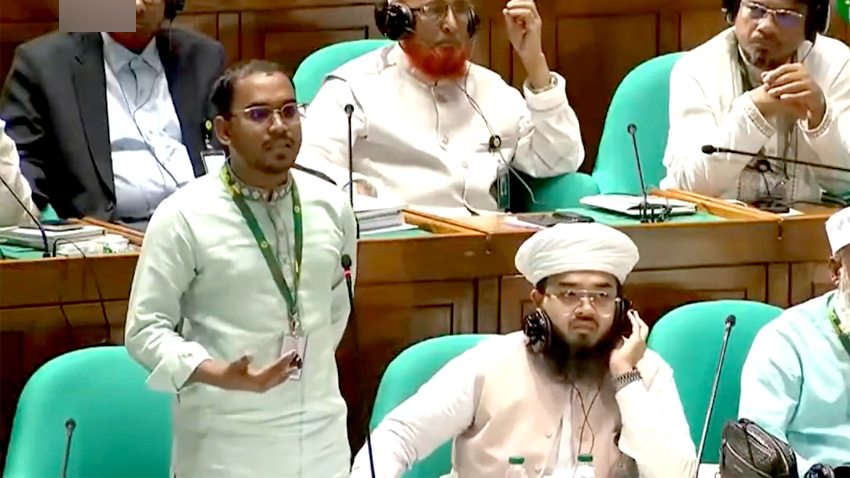
The youngest member of the 13th Parliament delivered an impassioned address on Sunday demanding constitutional reform and accountability for political violence, declaring that his generation rejects the 1972 Constitution.
Jatiya Nagorik Party (NCP) leader and lawmaker Abdul Hannan Masud made the remarks during the parliamentary session on March 29, challenging both the Home Minister's priorities and broader governance failures while invoking generational aspirations for a transformed Bangladesh.
"I am the youngest member of this parliament. We are called Gen-Z. So I want to say clearly that Gen-Z does not want the 1972 Constitution," Masud declared from the floor of the House.
The lawmaker redirected criticism toward Home Minister Salahuddin Ahmed, arguing that legal interpretation falls under the Law Minister's purview while the Home Minister should focus on identifying and prosecuting criminals across the country.
"The Home Minister should concentrate on listing terrorists nationwide and bringing them to justice. He should ensure that families of murder victims receive justice," Masud stated.
He raised a disturbing case from his constituency where a woman was allegedly raped for voting for the Shapla Koli symbol. Despite the severity of the allegation, Masud said the Circle SP denied the incident within one hour. Forty-two days later, DNA results remain outstanding while filing the case took three days, the parliamentarian told the House.
"The civil service office submitted an investigation report, yet the victim herself was not informed. Who created this horrifying environment?" he questioned.
Masud revealed he survived three separate attacks in his constituency, including assailants armed with locally made weapons attempting to assault him physically. He accused unnamed parties of rehabilitating individuals responsible for violence against BNP leaders and workers.
"Those whose hands are stained with the blood of BNP leaders and workers, those who murdered your brothers, are being rehabilitated and unleashed to kill us," the lawmaker charged.
Drawing upon generational identity, Masud questioned why citizens like himself were denied voting rights in previous elections despite being born in independent Bangladesh.
"Our ancestors shed blood in 1971 to build a safe Bangladesh. But have we received that safe Bangladesh? Three million people were martyred wanting their future generations to have voting rights, freedom from paramilitary forces, and protection from famine. But what did we witness? Famine struck Bangladesh, votes were stolen in 1973," he said.
The parliamentarian praised former President Ziaur Rahman's contributions to national recovery, noting his multiple visits to Hatiya and infrastructure development including embankments and canal excavation projects in the region.
However, Masud lamented that despite subsequent visits by leaders including Khaleda Zia, riverbank erosion continues devastating his constituency, leaving hundreds of thousands homeless.
Addressing government leaders directly, the young lawmaker asserted that their current positions were made possible by sacrifices of people like himself. "I shed blood for this election. Today I say before the Prime Minister and Home Minister present here, you became Prime Minister and Home Minister because we shed our blood," Masud stated.
His speech encapsulated growing frustrations among younger parliamentarians who emerged from the July uprising demanding fundamental constitutional changes rather than incremental reforms within existing frameworks.
The address coincides with ongoing parliamentary tensions over implementing the July Charter and convening the Constitution Reform Council, issues that continue dividing government and opposition benches as Bangladesh navigates its post-uprising political landscape.
Jatiya Nagorik Party (NCP) leader and lawmaker Abdul Hannan Masud made the remarks during the parliamentary session on March 29, challenging both the Home Minister's priorities and broader governance failures while invoking generational aspirations for a transformed Bangladesh.
"I am the youngest member of this parliament. We are called Gen-Z. So I want to say clearly that Gen-Z does not want the 1972 Constitution," Masud declared from the floor of the House.
The lawmaker redirected criticism toward Home Minister Salahuddin Ahmed, arguing that legal interpretation falls under the Law Minister's purview while the Home Minister should focus on identifying and prosecuting criminals across the country.
"The Home Minister should concentrate on listing terrorists nationwide and bringing them to justice. He should ensure that families of murder victims receive justice," Masud stated.
He raised a disturbing case from his constituency where a woman was allegedly raped for voting for the Shapla Koli symbol. Despite the severity of the allegation, Masud said the Circle SP denied the incident within one hour. Forty-two days later, DNA results remain outstanding while filing the case took three days, the parliamentarian told the House.
"The civil service office submitted an investigation report, yet the victim herself was not informed. Who created this horrifying environment?" he questioned.
Masud revealed he survived three separate attacks in his constituency, including assailants armed with locally made weapons attempting to assault him physically. He accused unnamed parties of rehabilitating individuals responsible for violence against BNP leaders and workers.
"Those whose hands are stained with the blood of BNP leaders and workers, those who murdered your brothers, are being rehabilitated and unleashed to kill us," the lawmaker charged.
Drawing upon generational identity, Masud questioned why citizens like himself were denied voting rights in previous elections despite being born in independent Bangladesh.
"Our ancestors shed blood in 1971 to build a safe Bangladesh. But have we received that safe Bangladesh? Three million people were martyred wanting their future generations to have voting rights, freedom from paramilitary forces, and protection from famine. But what did we witness? Famine struck Bangladesh, votes were stolen in 1973," he said.
The parliamentarian praised former President Ziaur Rahman's contributions to national recovery, noting his multiple visits to Hatiya and infrastructure development including embankments and canal excavation projects in the region.
However, Masud lamented that despite subsequent visits by leaders including Khaleda Zia, riverbank erosion continues devastating his constituency, leaving hundreds of thousands homeless.
Addressing government leaders directly, the young lawmaker asserted that their current positions were made possible by sacrifices of people like himself. "I shed blood for this election. Today I say before the Prime Minister and Home Minister present here, you became Prime Minister and Home Minister because we shed our blood," Masud stated.
His speech encapsulated growing frustrations among younger parliamentarians who emerged from the July uprising demanding fundamental constitutional changes rather than incremental reforms within existing frameworks.
The address coincides with ongoing parliamentary tensions over implementing the July Charter and convening the Constitution Reform Council, issues that continue dividing government and opposition benches as Bangladesh navigates its post-uprising political landscape.
Loading...
Loading...
Also read



Editor : Iqbal Sobhan Chowdhury
Published by the Editor on behalf of the Observer Ltd. from Globe Printers, 24/A, New Eskaton Road, Ramna, Dhaka.
Editorial, News and Commercial Offices : Aziz Bhaban (2nd floor), 93, Motijheel C/A, Dhaka-1000.
Phone: PABX- 41053001-06; Advertisement: 41053012; 01793317829, 01550707291, E-mail: [email protected], [email protected] Online: email: [email protected] 41053014; 01550707297 Advertisement: 01550707296
Published by the Editor on behalf of the Observer Ltd. from Globe Printers, 24/A, New Eskaton Road, Ramna, Dhaka.
Editorial, News and Commercial Offices : Aziz Bhaban (2nd floor), 93, Motijheel C/A, Dhaka-1000.
Phone: PABX- 41053001-06; Advertisement: 41053012; 01793317829, 01550707291, E-mail: [email protected], [email protected] Online: email: [email protected] 41053014; 01550707297 Advertisement: 01550707296


