



| HEADLINE |

|

Hilsa prices soar in Khulna ahead of Pahela Baishakh
Published : Monday, 13 April, 2026 at 7:10 PM
Observer Correspondent


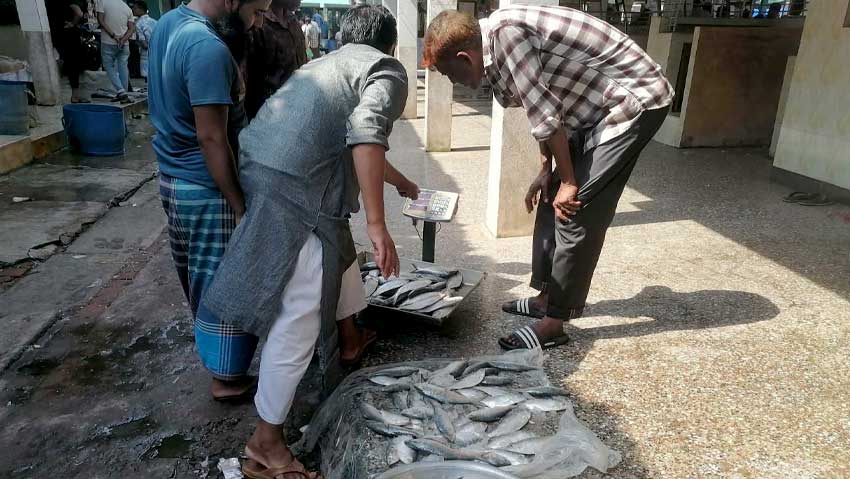
Hilsa fish prices have surged sharply in Khulna ahead of Pahela Baishakh, making the traditional festive dish increasingly unaffordable for many consumers.
At the wholesale market in Khulna's Rupsha, large-sized hilsa weighing around one kilogram is being sold at Tk 4,000 per kg.
In retail markets, the same fish is priced even higher, ranging between Tk 4,200 and Tk 4,400 per kg.
Traders say the price hike is driven by a significant drop in supply. As a result, many buyers are struggling to afford medium to large-sized hilsa, a staple of the Bengali New Year tradition.
Some consumers noted that while the cultural importance of hilsa remains strong, rising prices are putting it out of reach for many.
Sellers at Rupsha wholesale market said demand for hilsa typically rises during this season. However, limited supply this year has pushed up prices. Medium-sized hilsa is being sold at Tk 2,500 to Tk 2,700 per kg, while smaller fish weighing around 500 grams are priced at about Tk 1,900 per kg. Retail prices are even higher.
Moinuddin, manager of Madina Fish at the wholesale market, said supply remains very low. He sold only 30 kg of fish on Monday, with one-kilogram hilsa priced at Tk 4,000 and 700-gram fish selling between Tk 3,000 and Tk 3,200.
He explained that ongoing fishing restrictions in regions such as Bhola and Chandpur have reduced supply. Additionally, hilsa from areas like Barishal, Char Dohani and Patharghata usually enter this market, but a two-month ban on catching juvenile hilsa (jatka) has further limited availability.
Another trader, Raj from A Bengal Fish, said imports are lower than last year, contributing to higher prices.
He also pointed to fuel shortages, which have prevented many fishing boats from going to sea.
He added that prices would decrease if supply improved.
Retailer Md. Hafizul from Lobonchora market said he had to buy fish at higher prices due to low supply and sell at a markup. Despite returning later in the day to restock, he found no fish available.
Traders also noted that fewer large hilsa are being caught in rivers, forcing markets to rely on previously stored fish, which further drives up prices.
Some buyers alleged that the hilsa currently available has a reddish appearance, indicating stored stock from previous seasons being released ahead of the festival.
At Rupsha wholesale market, buyer Abu Naser claimed that some dishonest traders create artificial shortages during the New Year period to increase prices, depriving many of enjoying the festival fully.
Another consumer, Abu Sayeed from Sonadanga New Market, said Pahela Baishakh is a symbol of Bengali identity and pride, but rising costs may eventually discourage people from maintaining such traditions.
SMS/SH
At the wholesale market in Khulna's Rupsha, large-sized hilsa weighing around one kilogram is being sold at Tk 4,000 per kg.
In retail markets, the same fish is priced even higher, ranging between Tk 4,200 and Tk 4,400 per kg.
Traders say the price hike is driven by a significant drop in supply. As a result, many buyers are struggling to afford medium to large-sized hilsa, a staple of the Bengali New Year tradition.
Some consumers noted that while the cultural importance of hilsa remains strong, rising prices are putting it out of reach for many.
Sellers at Rupsha wholesale market said demand for hilsa typically rises during this season. However, limited supply this year has pushed up prices. Medium-sized hilsa is being sold at Tk 2,500 to Tk 2,700 per kg, while smaller fish weighing around 500 grams are priced at about Tk 1,900 per kg. Retail prices are even higher.
Moinuddin, manager of Madina Fish at the wholesale market, said supply remains very low. He sold only 30 kg of fish on Monday, with one-kilogram hilsa priced at Tk 4,000 and 700-gram fish selling between Tk 3,000 and Tk 3,200.
He explained that ongoing fishing restrictions in regions such as Bhola and Chandpur have reduced supply. Additionally, hilsa from areas like Barishal, Char Dohani and Patharghata usually enter this market, but a two-month ban on catching juvenile hilsa (jatka) has further limited availability.
Another trader, Raj from A Bengal Fish, said imports are lower than last year, contributing to higher prices.
He also pointed to fuel shortages, which have prevented many fishing boats from going to sea.
He added that prices would decrease if supply improved.
Retailer Md. Hafizul from Lobonchora market said he had to buy fish at higher prices due to low supply and sell at a markup. Despite returning later in the day to restock, he found no fish available.
Traders also noted that fewer large hilsa are being caught in rivers, forcing markets to rely on previously stored fish, which further drives up prices.
Some buyers alleged that the hilsa currently available has a reddish appearance, indicating stored stock from previous seasons being released ahead of the festival.
At Rupsha wholesale market, buyer Abu Naser claimed that some dishonest traders create artificial shortages during the New Year period to increase prices, depriving many of enjoying the festival fully.
Another consumer, Abu Sayeed from Sonadanga New Market, said Pahela Baishakh is a symbol of Bengali identity and pride, but rising costs may eventually discourage people from maintaining such traditions.
SMS/SH

Loading...
Loading...
Also read






Editor : Iqbal Sobhan Chowdhury
Published by the Editor on behalf of the Observer Ltd. from Globe Printers, 24/A, New Eskaton Road, Ramna, Dhaka.
Editorial, News and Commercial Offices : Aziz Bhaban (2nd floor), 93, Motijheel C/A, Dhaka-1000.
Phone: PABX- 41053001-06; Advertisement: 41053012; 01793317829, 01550707291, E-mail: [email protected], [email protected] Online: email: [email protected] 41053014; 01550707297 Advertisement: 01550707296
Published by the Editor on behalf of the Observer Ltd. from Globe Printers, 24/A, New Eskaton Road, Ramna, Dhaka.
Editorial, News and Commercial Offices : Aziz Bhaban (2nd floor), 93, Motijheel C/A, Dhaka-1000.
Phone: PABX- 41053001-06; Advertisement: 41053012; 01793317829, 01550707291, E-mail: [email protected], [email protected] Online: email: [email protected] 41053014; 01550707297 Advertisement: 01550707296


