



| HEADLINE |

|
Dhaka’s air quality recorded as ‘moderate’ on Tuesday morning
Published : Tuesday, 21 April, 2026 at 12:38 PM
Observer Online Report


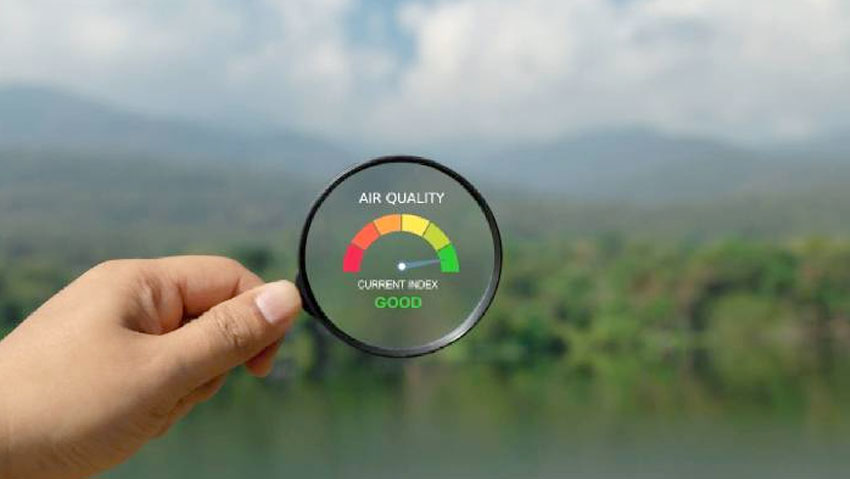
Symbolic Photo
Dhaka, the capital of Bangladesh and one of the world’s most densely populated cities, recorded an Air Quality Index (AQI) of 93 at around 10:20 AM on Tuesday morning, placing it in the ‘moderate’ category.
At this level, air quality is generally acceptable, though it may still pose minor health risks for sensitive groups.
On the global list of polluted cities, Dhaka ranked 21st on Tuesday morning.
Meanwhile, Delhi in India, Lahore in Pakistan and Chiang Mai in Thailand topped the list with AQI levels of 199, 191, and 176 respectively.
According to AQI scale, readings between 101 and 150 are considered ‘unhealthy for sensitive groups’, 151�"200 are ‘unhealthy’, 201�"300 are ‘very unhealthy’, and anything above 301 is classified as ‘hazardous’, indicating severe health risks.
The AQI system measures daily air quality and its potential health impacts based on key pollutants such as PM2.5, PM10, nitrogen dioxide, carbon monoxide, sulphur dioxide and ozone.
Air pollution remains a long-standing issue in Dhaka, typically worsening during winter and improving during the monsoon season.
The World Health Organization estimates that air pollution causes around seven million deaths globally each year, mainly due to stroke, heart disease, chronic respiratory diseases, lung cancer and acute respiratory infections.
SH
At this level, air quality is generally acceptable, though it may still pose minor health risks for sensitive groups.
On the global list of polluted cities, Dhaka ranked 21st on Tuesday morning.
Meanwhile, Delhi in India, Lahore in Pakistan and Chiang Mai in Thailand topped the list with AQI levels of 199, 191, and 176 respectively.
According to AQI scale, readings between 101 and 150 are considered ‘unhealthy for sensitive groups’, 151�"200 are ‘unhealthy’, 201�"300 are ‘very unhealthy’, and anything above 301 is classified as ‘hazardous’, indicating severe health risks.
The AQI system measures daily air quality and its potential health impacts based on key pollutants such as PM2.5, PM10, nitrogen dioxide, carbon monoxide, sulphur dioxide and ozone.
Air pollution remains a long-standing issue in Dhaka, typically worsening during winter and improving during the monsoon season.
The World Health Organization estimates that air pollution causes around seven million deaths globally each year, mainly due to stroke, heart disease, chronic respiratory diseases, lung cancer and acute respiratory infections.
SH
Loading...
Loading...
Also read









Editor : Iqbal Sobhan Chowdhury
Published by the Editor on behalf of the Observer Ltd. from Globe Printers, 24/A, New Eskaton Road, Ramna, Dhaka.
Editorial, News and Commercial Offices : Aziz Bhaban (2nd floor), 93, Motijheel C/A, Dhaka-1000.
Phone: PABX- 41053001-06; Advertisement: 41053012; 01793317829, 01550707291, E-mail: [email protected], [email protected] Online: email: [email protected] 41053014; 01550707297 Advertisement: 01550707296
Published by the Editor on behalf of the Observer Ltd. from Globe Printers, 24/A, New Eskaton Road, Ramna, Dhaka.
Editorial, News and Commercial Offices : Aziz Bhaban (2nd floor), 93, Motijheel C/A, Dhaka-1000.
Phone: PABX- 41053001-06; Advertisement: 41053012; 01793317829, 01550707291, E-mail: [email protected], [email protected] Online: email: [email protected] 41053014; 01550707297 Advertisement: 01550707296


