



| HEADLINE |

|

Give blood now-Bangladesh cannot wait any longer
Published : Wednesday, 17 June, 2026 at 8:17 AM
Prof. Dr. Kazi Nawshad Hossain


Bangladesh needs blood. Not eventually. Not someday. Today- right now-hospitals across this country are treating patients whose survival depends entirely on whether a healthy stranger decided to donate. That stranger could be you. And if you have never donated, this is the moment to start.
Every year, Bangladesh requires approximately 9 to 10 lakh units of blood to meet its national medical demand. We collect barely 6 to 7 lakh. That gap-roughly 3 lakh units annually-is not a statistic. It is mothers dying in delivery rooms, accident victims bleeding out in emergency wards, and children with thalassemia running out of time while families frantically search for a matching donor. This is the reality our healthcare system navigates every single day.
The system is fragile-And that is our fault
Here is the uncomfortable truth. Bangladesh's blood supply runs predominantly on replacement donation-meaning families scramble to find donors only after a patient is already critical. Voluntary, non-remunerated donation, which the World Health Organization sets as the global gold standard and 100% target for every nation, remains the minority practice here. Countries that have achieved blood security-Sri Lanka, Thailand, South Korea-did so by building a culture of voluntary giving. We have not done that yet. We can.
Organizations like Sandhani and Badhan have been doing extraordinary work for decades, mobilizing student donors across universities. The National Blood Transfusion Council provides the policy framework. But institutional infrastructure alone cannot solve a cultural problem. That requires individuals making a personal decision.
Schools and universities must integrate blood donation awareness into civic education. Youth is where donation habits form and last.
One Decision. Multiple Lives.
A single unit of whole blood, when separated into its components, can save up to three lives. In the time it takes to read this article, somewhere in Dhaka a patient has been told there is no blood available. You have the power to change that outcome-not with money, not with policy, but with one hour of your time and something your body produces freely.
Go to your nearest blood bank or hospital donation centre. Walk in. Roll up your sleeve.
That is all it takes.
Every year, Bangladesh requires approximately 9 to 10 lakh units of blood to meet its national medical demand. We collect barely 6 to 7 lakh. That gap-roughly 3 lakh units annually-is not a statistic. It is mothers dying in delivery rooms, accident victims bleeding out in emergency wards, and children with thalassemia running out of time while families frantically search for a matching donor. This is the reality our healthcare system navigates every single day.
On June 14, it was World Blood Donor Day-a date the world chose deliberately. It marks the birth anniversary of Karl Landsteiner, the Austrian scientist who in 1901 discovered the ABO blood group system and won the Nobel Prize in Physiology or Medicine in 1930 for that work. Before Landsteiner, blood transfusion was largely guesswork. After him, it became medicine. Every transfusion performed safely today stands on his discovery. We honor him by doing the one thing his science made possible-donating.
Who Needs Your Blood Right Now
Understand who is waiting. A thalassemia patient-and Bangladesh has an estimated 70,000 registered thalassemia patients, with thousands more undiagnosed-requires transfusions every two to four weeks for life. Cancer patients undergoing chemotherapy need platelets and packed red cells routinely. A woman hemorrhaging during childbirth can lose lethal quantities of blood within minutes. Trauma victims from road accidents, which kill over 25,000 Bangladeshis annually, flood emergency departments requiring immediate transfusion. Every one of these patients depends not on medicine alone, but on the decision a healthy person made to donate.
The system is fragile-And that is our fault
Here is the uncomfortable truth. Bangladesh's blood supply runs predominantly on replacement donation-meaning families scramble to find donors only after a patient is already critical. Voluntary, non-remunerated donation, which the World Health Organization sets as the global gold standard and 100% target for every nation, remains the minority practice here. Countries that have achieved blood security-Sri Lanka, Thailand, South Korea-did so by building a culture of voluntary giving. We have not done that yet. We can.
Organizations like Sandhani and Badhan have been doing extraordinary work for decades, mobilizing student donors across universities. The National Blood Transfusion Council provides the policy framework. But institutional infrastructure alone cannot solve a cultural problem. That requires individuals making a personal decision.
If you are between 18 and 60 years old, weigh at least 50 kilograms, and are in general good health, you can donate blood today. Your hemoglobin must be at least 12.5 g/dL-a quick finger-prick test at any donation centre confirms this in minutes. You can donate safely once every three months. The entire process takes under one hour. Your body fully replenishes the donated blood within four to six weeks. There is no credible medical reason for a healthy, eligible adult to withhold donation.
Common fears-that donation causes permanent weakness, that it is painful, that you will feel ill for days-are myths. Mild lightheadedness lasting minutes is the most common side effect, resolved immediately with rest and fluids. Millions of Bangladeshis donate repeatedly across their lifetimes without consequence. If you have had a recent illness, surgery, tattoo within the last six months, or are on certain medications, consult the blood bank staff-temporary deferral exists for your protection and the patient's.
What Must Happen Institutionally- Starting Today
Hospitals, medical colleges, and corporations must stop treating blood donation as an annual ceremonial event and start treating it as an operational priority. Blood banks require investment in hemovigilance systems-the quality control frameworks that track and prevent transfusion errors. The nurses and laboratory scientists who screen, test, process, and store donated blood work under-resourced and under-recognized. Their work is the final barrier between a patient and a fatal transfusion error. They deserve both funding and respect.
Schools and universities must integrate blood donation awareness into civic education. Youth is where donation habits form and last.
One Decision. Multiple Lives.
A single unit of whole blood, when separated into its components, can save up to three lives. In the time it takes to read this article, somewhere in Dhaka a patient has been told there is no blood available. You have the power to change that outcome-not with money, not with policy, but with one hour of your time and something your body produces freely.
Go to your nearest blood bank or hospital donation centre. Walk in. Roll up your sleeve.
That is all it takes.
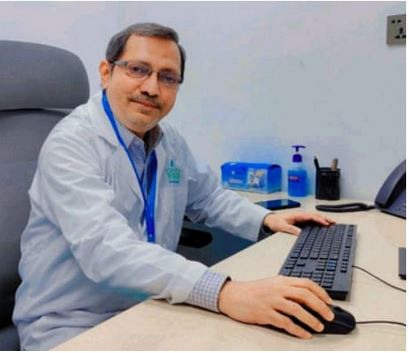
The writer is the coordinator, Transfusion Medicine Department, Unico Hospitals PLC
Loading...
Loading...
Also read








Editor : Iqbal Sobhan Chowdhury
Published by the Editor on behalf of the Observer Ltd. from Globe Printers, 24/A, New Eskaton Road, Ramna, Dhaka.
Editorial, News and Commercial Offices : Aziz Bhaban (2nd floor), 93, Motijheel C/A, Dhaka-1000.
Phone: PABX- 41053001-06; Advertisement: 41053012; 01793317829, 01550707291, E-mail: [email protected], [email protected] Online: email: [email protected] 41053014; 01550707297 Advertisement: 01550707296
Published by the Editor on behalf of the Observer Ltd. from Globe Printers, 24/A, New Eskaton Road, Ramna, Dhaka.
Editorial, News and Commercial Offices : Aziz Bhaban (2nd floor), 93, Motijheel C/A, Dhaka-1000.
Phone: PABX- 41053001-06; Advertisement: 41053012; 01793317829, 01550707291, E-mail: [email protected], [email protected] Online: email: [email protected] 41053014; 01550707297 Advertisement: 01550707296


