



| HEADLINE |

|

How advanced tech changing our lives
Published : Monday, 29 June, 2026 at 12:00 AM
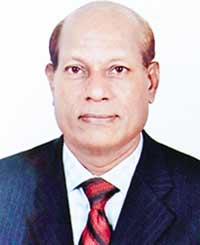
Motaher Hossain


 The rapid advancement of technology has transformed our lives in remarkable ways, making daily tasks easier, faster, and more convenient. Today, a single smart device enables us to complete countless activities�"from banking and shopping to education, healthcare, and communication�"with just a few taps. Technology has saved time, increased productivity, and enhanced the quality of life. Yet, alongside these undeniable benefits, it has also created new challenges that demand our attention.
While technology has accelerated human progress, it has also reduced our dependence on physical effort, critical thinking, and personal initiative. Excessive reliance on digital devices is gradually making people more passive, less creative, and increasingly dependent on technology. The celebrated Bangladeshi writer Binoy Kumar Mukhopadhyay, better known by his pen name Jajabar, once observed, "Science has given us speed, but it has taken away our emotions." Though written decades ago, this statement remains profoundly relevant today.
As individuals, societies, and nations race toward technological advancement, many people are drifting away from human values, social interaction, cultural traditions, and emotional connections. The pursuit of speed and efficiency often overshadows compassion, empathy, and community. Modern lifestyles increasingly emphasize material success, social status, and self-promotion. This sense of superiority may stem from wealth, education, or influence, but it often distances people from one another rather than bringing them together.
In this increasingly mechanized world, life, love, nature, and humanity are at risk of becoming secondary concerns. Yet life was never meant to be mechanical. Rabindranath Tagore viewed life as a flowing river�"constantly moving, adapting, and overcoming obstacles. According to him, life is not about standing still but about moving forward with hope, resilience, and dignity. His writings remind us that even in times of adversity, we should preserve our humanity and remain optimistic.
Unfortunately, many people today struggle to cope with life's challenges despite living in an age of unprecedented technological advancement. Trust is being replaced by suspicion, cooperation by competition, and compassion by self-interest. Families and communities are experiencing growing conflict, emotional distance, and social instability. The erosion of mutual trust has become one of the defining social challenges of our time. Yet trust, empathy, and kindness remain the essential foundations of a peaceful and prosperous society.
Another pressing concern is the excessive use of smartphones and social media. People of all ages now spend a significant portion of their day staring at screens. As a result, the habit of reading books is declining, family conversations are becoming less frequent, and meaningful social interactions are diminishing. Many individuals now feel more comfortable in virtual environments than in real-life relationships.
The misuse of technology is also affecting mental health in alarming ways. Constant comparison on social media, loneliness, broken relationships, employment uncertainty, and anxiety about the future have left many people under significant psychological stress. Personal setbacks and emotional disappointments often become overwhelming because individuals lack adequate emotional support.
Books, however, continue to play an irreplaceable role in shaping thoughtful, compassionate, and informed individuals. They expand our imagination, deepen our understanding of the world, and cultivate moral values. Rabindranath Tagore believed that the purpose of education extends beyond acquiring information; its true mission is to develop complete human beings. Reading introduces us to new ideas, diverse perspectives, and broader horizons. Encouraging children and young people to develop a lifelong reading habit should therefore remain a central objective of education. No matter how dark the times may seem, the light of knowledge always has the power to guide humanity forward.
The misuse of technology is also affecting mental health in alarming ways. Constant comparison on social media, loneliness, broken relationships, employment uncertainty, and anxiety about the future have left many people under significant psychological stress. Personal setbacks and emotional disappointments often become overwhelming because individuals lack adequate emotional support. Families and society sometimes fail to recognize mental suffering, instead pressuring individuals to make quick decisions that may worsen their condition.
Technology itself is not the enemy. Rather, it is a powerful tool that should serve humanity rather than control it. While embracing technological innovation, we must also protect the values that define us as human beings: compassion, empathy, integrity, cultural heritage, and meaningful social relationships. Reading books, spending quality time with family, staying connected with nature, engaging in physical activity, and nurturing real-world relationships can significantly enrich both our mental and social well-being.
Human civilization has reached extraordinary heights through scientific and technological progress, and this progress will undoubtedly continue. However, if technology is not used responsibly, its negative consequences may create profound personal, familial, and social crises. Therefore, alongside technological advancement, we must place equal importance on humanity, ethics, education, mutual trust, and social responsibility. Only then can technology become a true friend of humanity and a driving force for building a more compassionate, inclusive, and sustainable society.
The writer is an Editor, Climate Journal24.com and General Secretary, Bangladesh Climate Change Journalists Forum
Loading...
Loading...
Also read



Editor : Iqbal Sobhan Chowdhury
Published by the Editor on behalf of the Observer Ltd. from Globe Printers, 24/A, New Eskaton Road, Ramna, Dhaka.
Editorial, News and Commercial Offices : Aziz Bhaban (2nd floor), 93, Motijheel C/A, Dhaka-1000.
Phone: PABX- 41053001-06; Advertisement: 41053012; 01793317829, 01550707291, E-mail: [email protected], [email protected] Online: email: [email protected] 41053014; 01550707297 Advertisement: 01550707296
Published by the Editor on behalf of the Observer Ltd. from Globe Printers, 24/A, New Eskaton Road, Ramna, Dhaka.
Editorial, News and Commercial Offices : Aziz Bhaban (2nd floor), 93, Motijheel C/A, Dhaka-1000.
Phone: PABX- 41053001-06; Advertisement: 41053012; 01793317829, 01550707291, E-mail: [email protected], [email protected] Online: email: [email protected] 41053014; 01550707297 Advertisement: 01550707296


