



| HEADLINE |

|
Bangladesh Railway revenue rises by Tk 221cr without hiking fares
Published : Sunday, 19 July, 2026 at 7:11 PM
Observer Online Desk


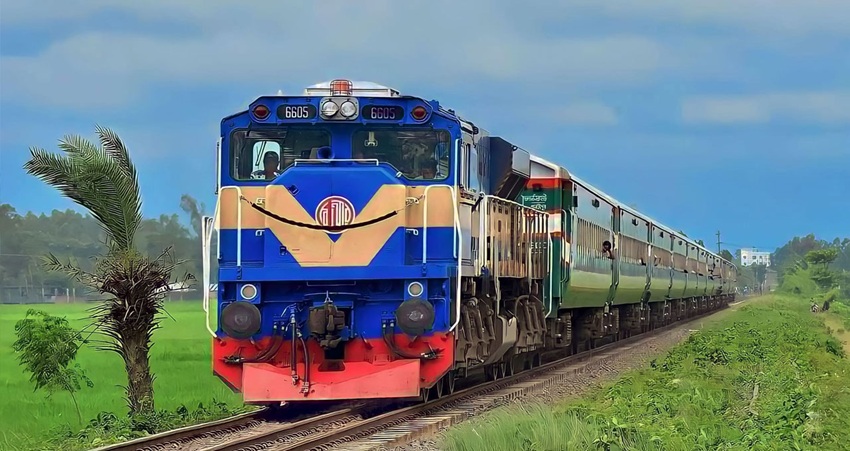
Bangladesh Railway saw its revenue increase by Tk 221 crore in the 2025-26 fiscal year compared to the previous year. Despite passenger fares have remained unchanged for the last 10 years, the gap between income and expenditure narrowed, which made the revenue rise higher. BSS confirmed the news.
According to Bangladesh Railway data, the total income of the organization stood at Tk 2,066.38 crore in FY 2025-26. This is Tk 221 crore higher than the Tk 1,845 crore earned in FY 2024-25. This income growth was achieved through various initiatives and management strategies despite numerous challenges.
Highest revenue growth in FY 2025-26 came from passenger fares. Tk 256 crore revenue was earned compared to the previous fiscal year.
However, due to an engine crisis, earnings from freight transport decreased by Tk 8.34 crore. Additionally, an extra Tk 3 crore was earned from real estate and Tk 11.52 crore from optical fiber leasing.
Conversely, income dropped by nearly Tk 24.34 crore in the transport and commercial sectors, which include vending licenses and miscellaneous earnings.
Total operating expenditure in FY 2025-26, including salaries, allowances, pensions, and maintenance of railway tracks and rolling stock, was Tk 3,955 crore. As a result, the operating ratio (expenditure-to-income ratio) stood at 1.91, down from 2.09 in the previous fiscal year. This means the gap between the expenditure and income of the railway has reduced.
According to railway sources, the actual financial picture reflects differently as nearly Tk 1,000 crore in pension costs is added to the operating expenditure annually. Excluding the pension expenditure, the operating cost drops to Tk 2,955 crore, bringing the operating ratio down to 1.43. In that case, the expenditure is only 43 percent higher than the income.
Since Bangladesh Railway is a state-owned public transport agency, fares have been kept at a subsidized rate in the public interest. Railway fares have not been increased since 2016. However, during this period, the prices of maintenance materials, imported spare parts, the dollar exchange rate, salaries, allowances, pensions, and fuel oil costs have increased significantly.
According to railway officials, the gap between income and expenditure would narrow further if fares are rationally readjusted in line with other public transports, considering current economic realities. Therefore, evaluating Bangladesh Railway solely as a loss-making institution is not realistic.
-SA
Loading...
Loading...
Also read






Editor : Iqbal Sobhan Chowdhury
Published by the Editor on behalf of the Observer Ltd. from Globe Printers, 24/A, New Eskaton Road, Ramna, Dhaka.
Editorial, News and Commercial Offices : Aziz Bhaban (2nd floor), 93, Motijheel C/A, Dhaka-1000.
Phone: PABX- 41053001-06; Advertisement: 41053012; 01793317829, 01550707291, E-mail: [email protected], [email protected] Online: email: [email protected] 41053014; 01550707297 Advertisement: 01550707296
Published by the Editor on behalf of the Observer Ltd. from Globe Printers, 24/A, New Eskaton Road, Ramna, Dhaka.
Editorial, News and Commercial Offices : Aziz Bhaban (2nd floor), 93, Motijheel C/A, Dhaka-1000.
Phone: PABX- 41053001-06; Advertisement: 41053012; 01793317829, 01550707291, E-mail: [email protected], [email protected] Online: email: [email protected] 41053014; 01550707297 Advertisement: 01550707296


