



| HEADLINE |

|
Why Does Everything Have to Be Political in Bangladesh?


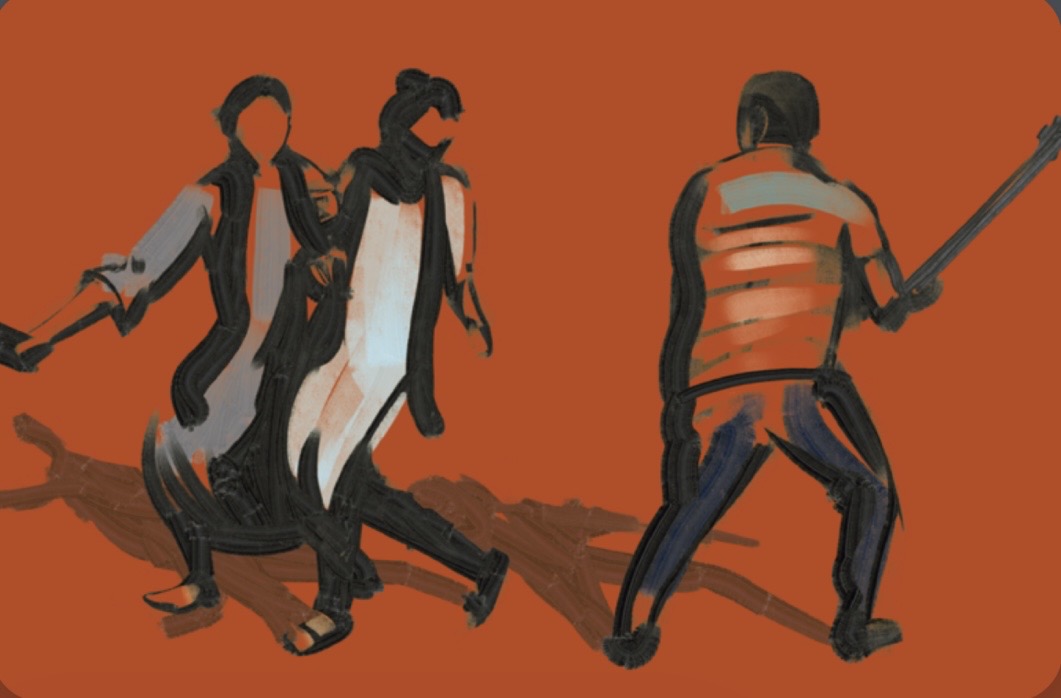
When history becomes a political battleground
Bangladesh has always been a politically conscious nation. Politics played a central role in the Language Movement, the Liberation War of 1971 and, more recently, the July 2024 mass uprising. These events shaped the country’s identity and changed its course. Yet, over time, many of these defining moments have become more than historical milestones�"they have become political symbols.
Instead of remaining shared chapters of national history, they are often viewed through partisan lenses. Political parties seek to associate themselves with these events, while supporters and opponents debate who deserves credit, who represents the “true” legacy and who has the right to speak for the nation.
The result is that history itself increasingly becomes contested.
Beyond parliament
Politics in Bangladesh no longer remains confined to parliament or election campaigns. It reaches classrooms, universities, workplaces, social media and even cultural events. People’s identities are often judged not by their work or ideas, but by their perceived political affiliation.
In such an environment, disagreement can quickly become division. Rather than discussing issues on their merits, debates frequently shift toward determining which political camp someone belongs to.
This culture has made neutrality increasingly difficult.
Universities: Spaces for learning or political contest?
Perhaps nowhere is this more visible than on university campuses.
Student politics has long been part of Bangladesh’s political tradition. Many national leaders began their political journeys through campus organisations. But the line between democratic participation and partisan confrontation has often become blurred.
The concern was evident again on the eve of the second anniversary of the July Uprising. According to The Daily Observer, clashes broke out at Jagannath University, Dhaka College, Dhaka Alia Madrasa and Begum Rokeya University, leaving more than 100 people injured. Rival activists of Jatiyatabadi Chhatra Dal and Islami Chhatra Shibir blamed each other for the violence, while police and university authorities intervened to restore order.
The incidents were a reminder that many campuses continue to mirror the country’s wider political divisions. For students who simply want to study, such confrontations raise questions about whether universities can truly remain safe spaces for learning and free expression.
Who owns history?
The debate surrounding the Liberation War and the July Uprising increasingly reflects a broader question: Can any political party claim ownership of a national movement?
The Liberation War involved millions of people from different political beliefs, professions and social backgrounds. Likewise, the July Uprising saw participation from students, workers, professionals and ordinary citizens across the country. While political organisations undoubtedly played roles in both periods, reducing these defining moments to the achievements of any single party risks overlooking the sacrifices of countless others.
National history belongs to the nation�"not exclusively to those who later seek political legitimacy from it.
Politics without partisanship
Politics itself is not the problem. Every democracy depends on political debate, competing ideas and public participation. The challenge begins when every issue is interpreted solely through partisan interests.
Museums, memorials, educational institutions and even national commemorations should ideally unite citizens around shared memories. Instead, they often become subjects of political competition.
Bangladesh’s democracy will always be shaped by politics. But the country also needs institutions where ideas can be exchanged without fear, history can be remembered without partisan ownership and students can learn without becoming casualties of political rivalry.
If every national achievement, every historical event and every campus becomes another political battleground, Bangladesh risks losing something more valuable than political victories�"the common ground that binds its people together.
History should inspire a nation. It should not divide one.




Published by the Editor on behalf of the Observer Ltd. from Globe Printers, 24/A, New Eskaton Road, Ramna, Dhaka.
Editorial, News and Commercial Offices : Aziz Bhaban (2nd floor), 93, Motijheel C/A, Dhaka-1000.
Phone: PABX- 41053001-06; Advertisement: 41053012; 01793317829, 01550707291, E-mail: [email protected], [email protected] Online: email: [email protected] 41053014; 01550707297 Advertisement: 01550707296


