



| HEADLINE |

|

The world’s toughest exam?
Published : Monday, 10 August, 2026 at 6:21 PM
Observer Online Desk


Collected Photo
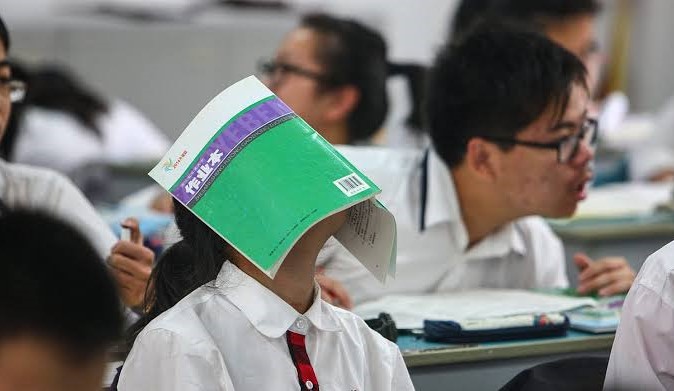
From disrupting air traffic in South Korea to determining the university prospects of millions of students in China, the Suneung and Gaokao are among the world’s most competitive and high-pressure university entrance examinations.
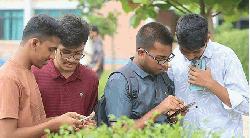
For students in Bangladesh, the release of SSC results is a major event that generates excitement among examinees and their families. In several other countries, however, the pressure surrounding university entrance examinations can extend for years.
Among the most prominent examples are South Korea’s 'Suneung' and China’s 'Gaokao'. Both are national-level university entrance examinations that can have a major influence on students’ academic and career prospects. But while the Suneung is notable for the way an entire country adjusts its routine around a single examination day, the Gaokao stands out for the sheer scale of competition among millions of students.
So, which is tougher, the Suneung or the Gaokao?
What is the Suneung?
South Korea’s university entrance examination is officially known as the College Scholastic Ability Test (CSAT) and is commonly called the 'Suneung' in Korean.
Held annually, usually in November, the examination is taken by high school students seeking admission to universities. The results play an important role in determining their chances of entering universities, particularly the country’s prestigious institutions, where competition for places is intense.
Students often spend months or even years preparing for the examination. Many also attend private after-school academies known as 'Hagwons', which are a major part of South Korea’s highly competitive education culture.
The day South Korea changes its routine
One of the most remarkable aspects of the Suneung is the extent to which the wider society accommodates the examination.
On examination day, special arrangements are made to help students reach their centres on time. Traffic and public transport operations are adjusted in some areas, while police officers may assist students who are running late.
During the English listening test, restrictions are imposed on aircraft operations to minimise noise that could distract examinees. Authorities and businesses also take measures to reduce unnecessary noise around examination centres.
As a result, the Suneung is not simply an examination for students. It has become a major annual social event in South Korea.
What does the Suneung test?
The examination generally covers Korean language, mathematics, English, Korean history and selected social studies, science and second-language or classical Chinese subjects, depending on the student’s chosen track and university admission plans.
Time management is one of the major challenges. Students must solve complex questions under strict time limits, while the listening section of the English test requires them to maintain concentration and respond quickly.
Even a small difference in marks can matter when students compete for places at highly selective universities.
What is China’s Gaokao?
China’s 'Gaokao', officially known as the National College Entrance Examination, is one of the largest and most competitive university entrance examinations in the world.
For millions of Chinese students, it is much more than an admission test. The result can significantly influence which universities they can attend and, consequently, their future academic and career opportunities.
The examination is generally held over multiple days. Its structure varies across different parts of China, but Chinese language, mathematics and a foreign language are core components in many examination systems. Students also take subjects according to their chosen academic track.
Why is the Gaokao so competitive?
The enormous number of candidates is one of the Gaokao’s defining characteristics.
Millions of students compete for university places every year, while admission to China’s most prestigious institutions remains highly competitive. A student may achieve a strong score but still fail to secure a place at their preferred university because admission also depends on regional policies, available seats and the performance of other candidates.
For many students, preparation begins years before the examination. Schools may devote extensive classroom hours to preparation, while students continue studying at home after classes.
Families also make significant adjustments to support students during the preparation period. Around examination centres, authorities often take measures to control traffic, noise and other potential disruptions.
So, which one is harder?
There is no definitive answer.The Suneung and Gaokao operate under different systems and create different forms of pressure. The Suneung is a highly standardised examination in which students face intense competition under strict time constraints. The Gaokao, meanwhile, combines enormous numbers of candidates with regional admission policies, university quotas and differences in students’ choices.
The Suneung’s defining feature is the way an entire society adjusts to the examination on a single day. The Gaokao’s defining feature is the scale and intensity of competition.
Therefore, rather than declaring one definitively harder than the other, it is more accurate to say that the two examinations represent different forms of academic pressure.
The Suneung demands sustained concentration, precision and time management under intense pressure. The Gaokao places enormous emphasis on years of preparation and performance in a highly competitive admission system.
More than just an examination
The significance of the Suneung and Gaokao extends beyond examination halls.
They reflect the expectations of families, the structure of the education systems and the importance placed on university admission in South Korean and Chinese society.
In South Korea, the Suneung can affect everything from traffic arrangements to flight schedules for a single day. In China, the Gaokao generates a months or years-long atmosphere of preparation among students, families and schools.
For students in Bangladesh, the SSC examination marks an important stage of their academic journey. For students in South Korea and China, the Suneung and Gaokao similarly represent the culmination of years of preparation but on a much larger national scale.
Rather than identifying a single “toughest” examination, these two tests demonstrate how deeply an education system, families and an entire society can become connected to one examination.
-HIS
Loading...
Loading...
Also read




Editor : Iqbal Sobhan Chowdhury
Published by the Editor on behalf of the Observer Ltd. from Globe Printers, 24/A, New Eskaton Road, Ramna, Dhaka.
Editorial, News and Commercial Offices : Aziz Bhaban (2nd floor), 93, Motijheel C/A, Dhaka-1000.
Phone: PABX- 41053001-06; Advertisement: 41053012; 01793317829, 01550707291, E-mail: [email protected], [email protected] Online: email: [email protected] 41053014; 01550707297 Advertisement: 01550707296
Published by the Editor on behalf of the Observer Ltd. from Globe Printers, 24/A, New Eskaton Road, Ramna, Dhaka.
Editorial, News and Commercial Offices : Aziz Bhaban (2nd floor), 93, Motijheel C/A, Dhaka-1000.
Phone: PABX- 41053001-06; Advertisement: 41053012; 01793317829, 01550707291, E-mail: [email protected], [email protected] Online: email: [email protected] 41053014; 01550707297 Advertisement: 01550707296


