



| HEADLINE |

|

Deepening gas crisis chokes factories
Published : Saturday, 15 August, 2026 at 12:00 AM
Mizanur Rahman


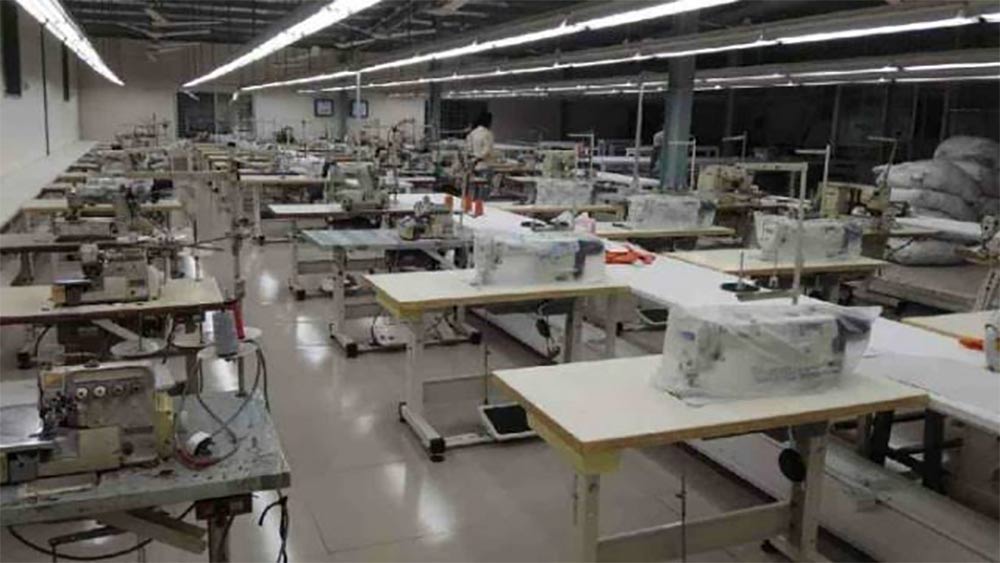
The country’s worsening gas crisis has crippled industrial production, forcing hundreds of factories in major industrial hubs including Narayanganj, Gazipur, Savar, Ashulia and Habiganj to shut down or operate far below capacity.
The crisis has hit consumer-goods processors, textile and spinning mills, dyeing units, steel and glass factories and other gas-dependent industries. Some are using costly alternative fuels, while others have suspended operations or sent workers on leave.
Industrialists warn that a prolonged shortage could disrupt domestic supply chains, delay export shipments, trigger order cancellations and threaten jobs and export earnings. Garment-sector leaders, however, have urged caution in reporting factory closures, saying conditions vary and some shutdowns are scheduled holidays or operational adjustments.
At the same time, representatives of the garment sector have urged caution in reporting factory closures, saying the situation varies from factory to factory and that some reported closures were actually scheduled holidays or operational adjustments.
The National Board of Revenue (NBR) data show that Bangladesh imported around 15.4 million tonnes of seven major essential commodities and raw materials, including sugar, wheat, edible oil and pulses, during the last fiscal year. A significant portion of these commodities is imported in raw or semi-processed form and processed locally before being supplied to consumers.
Sources said that the country’s daily gas demand stands at around 3.8-3.85 billion cubic feet, while supply has fallen sharply below demand.
One of the two floating LNG terminals at Maheshkhali, operated by Excelerate Energy, was shut down following a fire and technical problems on July 21. The shutdown reduced gas supply to the national grid by around 450 million cubic feet per day.
Although the terminal was partially brought back into operation on August 6, it was still operating at roughly half capacity as of August 12.
According to the Energy Division, gas supply fell to around 2.03 billion cubic feet a day on Wednesday, leaving a shortfall of approximately 1.77 billion cubic feet against demand of around 3.85 billion cubic feet.
The gas shortage has also affected power generation, transport and household consumers, further complicating the allocation of limited gas supplies.
Twenty of TK Group's 28 processing factories have reportedly remained closed. Nabil Group's nearly 20 factories are operating at only around 40 percent capacity, with the company using alternative fuel and electricity to keep production running.
Nabil Group Managing Director Aminul Islam said alternative arrangements had been made to cope with gas shortages, but production could not exceed 40-50 percent of capacity. At the same time, production costs had risen substantially.
Seacom Group's Delta Agrofood has also suspended operations at three soybean crushing and edible-oil processing plants in Narayanganj. City Group's factories at the Hossendi Economic Zone have also been affected.
Industry officials say factories are currently relying on stocks of finished goods stored in warehouses to maintain market supplies. But they warn that existing inventories may not be enough if production remains suspended for an extended period.
According to Industrial Police-2, Gazipur district and metropolitan area have around 3,500 industrial units, of which approximately 12-15 percent-or about 525 factories-have stopped production because of the gas shortage. Larger factories are attempting to continue operations through alternative arrangements, but their production has also fallen by around 40 percent.
In Kaliakoir and surrounding areas, daily gas demand is around 25 million cubic feet, while current supply is only 10-12 million cubic feet. More than 35 factories have reportedly become largely inactive.
At Nuru Group's Raiyan Knit Composite factory in Hartakitola, gas pressure fell so sharply that machinery could not be operated. The factory subsequently suspended operations and sent around 2,200 workers on leave.
The situation is particularly severe in Habiganj, where gas supplies to 171 small and large factories have reportedly been cut off since Wednesday after weeks of reduced pressure.
More than half of these factories are fully export-oriented. Industrial operators say around 150,000 workers have effectively become idle because of the shutdown.
At Jamuna Industrial Park, six factories employ around 12,000 people. The park requires 13.6 standard million cubic feet of gas daily but had been receiving only around 3 million cubic feet before supplies were completely cut off. Its engineering general manager, Abul Hossain, estimated losses at around Tk 100 crore a day.
Jalalabad Gas T&D System Ltd's Shahjibazar regional distribution office chief Md Khaled Gani said Habiganj needs around 60 million cubic feet of gas daily but is currently receiving only about 20 million cubic feet. He attributed the shortage mainly to increased supplies to power plants and described it as a national problem. He said the situation could improve within two to three days.
Officials at several factories in Habiganj said production shutdowns have already affected shipments, with some foreign buyers cancelling orders and companies unable to accept new orders.
Saiham Group General Manager Engineer Md Rezaul Haque said the company employs around 27,000 workers and that its production and captive power generation had been halted because of the gas shortage. He estimated the company's daily losses at around Tk 200 crore and said foreign orders had already been cancelled.
The situation is also affecting Narayanganj's textile and garment supply chain. Around 450 dyeing factories have reportedly suspended production, creating a shortage of fabrics for garment manufacturers. As a result, more than 100 garment factories are at risk of disruption.
In Savar-Ashulia, factories reportedly need gas pressure of 10-15 PSI for normal production but are receiving only around 5-8 PSI in many areas. This has forced some factories to operate partially and others to stop production. Industry sources have also reported thousands of layoffs in the area this month.
The Bangladesh Garment Manufacturers and Exporters Association (BGMEA), Senior Vice-President Inamul Haq Khan has separately acknowledged that gas shortages are affecting the industry. Earlier this month, he said some factories had extended holidays partly because of gas shortages and lower workloads, while factories with alternative energy arrangements were able to continue operations.
Bangladesh Knitwear Manufacturers and Exporters Association (BKMEA) President Mohammad Hatem has been more vocal about the severity of the energy crisis. Hatem said the gas situation had worsened despite assurances that it would improve after August 10. "In most places, there is almost no gas," he said.
Hatem said energy shortages, along with excessive certification requirements and bureaucratic hurdles, are discouraging foreign investors from coming to Bangladesh. According to him, a Chinese business leader he recently met identified the gas crisis and bureaucratic barriers as two major obstacles to investment.
Centre for Policy Dialogue (CPD) distinguished fellow Prof Mustafizur Rahman said essential-goods factories should receive priority in gas allocation during the crisis so that supplies to the domestic market remain stable.
At the same time, he called for stronger market monitoring to prevent traders from exploiting supply disruptions and creating artificial instability. He also urged the government to publicly communicate what measures it is taking to address the crisis and how long it may take to restore normal supply.
Loading...
Loading...
Also read



Editor : Iqbal Sobhan Chowdhury
Published by the Editor on behalf of the Observer Ltd. from Globe Printers, 24/A, New Eskaton Road, Ramna, Dhaka.
Editorial, News and Commercial Offices : Aziz Bhaban (2nd floor), 93, Motijheel C/A, Dhaka-1000.
Phone: PABX- 41053001-06; Advertisement: 41053012; 01793317829, 01550707291, E-mail: [email protected], [email protected] Online: email: [email protected] 41053014; 01550707297 Advertisement: 01550707296
Published by the Editor on behalf of the Observer Ltd. from Globe Printers, 24/A, New Eskaton Road, Ramna, Dhaka.
Editorial, News and Commercial Offices : Aziz Bhaban (2nd floor), 93, Motijheel C/A, Dhaka-1000.
Phone: PABX- 41053001-06; Advertisement: 41053012; 01793317829, 01550707291, E-mail: [email protected], [email protected] Online: email: [email protected] 41053014; 01550707297 Advertisement: 01550707296


