



| HEADLINE |

|

Government’s first six months: Political message on accountability, institutional governance
Published : Saturday, 15 August, 2026 at 10:54 PM
Observer Online Report


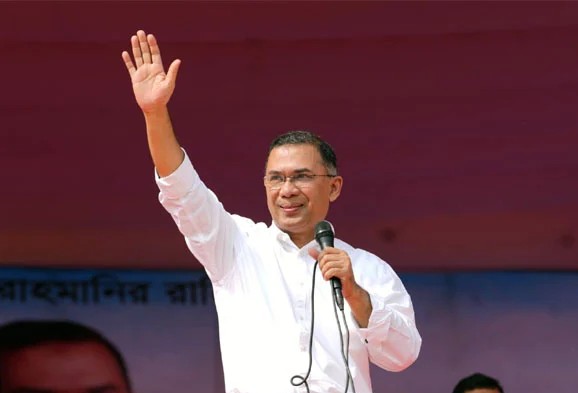
The BNP-led government has completed six months in office, highlighting initiatives in economic recovery, employment, social welfare, education, healthcare, administrative reform and foreign policy while seeking to project a message of institutional governance and accountability. A government assessment report says several election pledges have already entered the implementation stage, though challenges remain, particularly in the energy sector, inflation control and job creation.
The government, formed after the 12 February general election in which the Bangladesh Nationalist Party (BNP) won 212 parliamentary seats, formally assumed office on 17 February under Prime Minister Tarique Rahman. The government is set to complete its first six months on 16 August.
A government assessment report covering its first 180 days is expected to be published shortly as a booklet. A press conference on the report is scheduled to be held at the Prime Minister’s Office on 17 August, according to a source there. Prime Minister Tarique Rahman may formally unveil the report.
According to the assessment, the government has sought not only to launch new programmes but also to establish a different approach to state governance by reducing personality-driven politics, strengthening institutions, exercising fiscal restraint and promoting accountability.
Shift from personality-driven to state-centred politics
One of the government’s key political messages has been to emphasise institutions over individuals in running the state.
The government has highlighted the decision to stop displaying portraits of political leaders at government offices, courts and educational institutions, as well as avoiding the use of the prime minister’s photograph at official events. It has also sought to reduce VIP culture and government expenditure.
The report says the prime minister has been using a personal vehicle instead of an official car, while the number of vehicles in his convoy has been reduced. Expenditure on foreign trips and official hospitality has also been cut. It further states that the prime minister is depositing 10% of his monthly basic salary into the state treasury.
The report also notes that 105 bills were passed during 52 working days of the current parliament.
Roadmap for one crore jobs
Employment has been placed at the centre of the government’s economic agenda. In line with its election pledge, the government has adopted a five-year strategic plan for 2026-31, targeting nearly 10 million new jobs.
According to a proposal from the General Economics Division of the Planning Commission, the target is to create 9.327 million jobs both at home and abroad.
The government plans to promote industrialisation, entrepreneurship, startups, the informal sector and the rural economy as major drivers of employment.
Food security and economic recovery
The government says it has made measurable progress in maintaining food stocks. As of 28 June, government warehouses held 2.21 million tonnes of food grains around 860,945 tonnes above the designated safe stock level.
During the Boro procurement campaign, the government collected 271,312 tonnes of paddy and 798,912 tonnes of rice, according to the report.
Economic recovery has been identified as one of the government’s major priorities. For the 2026-27 fiscal year, it has proposed a Tk 938,000 crore budget, with targets of raising economic growth to 6.5% and reducing inflation to 7.5%.
The government has also announced a three-stage “3R” strategy -- Recovery and Stabilisation, Restoration, and Reconstruction for Acceleration to revive the economy.
To improve the business environment, the government has proposed reducing the time required to start a business from nearly a year to 14 days. Bangladesh Bank has also launched four refinancing programmes worth Tk 19,000 crore to facilitate financing for small entrepreneurs and farmers and encourage green investment.
However, the government acknowledges that more time will be needed to assess whether major targets such as reducing inflation to 7.5% and creating nearly 10 million jobs can be achieved.
Family cards, farmer support and social protection
The government has started implementing several election pledges aimed at low-income groups and farmers, including Family Cards, Farmer Cards and healthcare support.
Agricultural loans of up to Tk 10,000, including interest, have been waived for small farmers. The government says 1.434 million farmers have benefited from the initiative.
So far, 67,278 Family Cards have been distributed, with a target of providing cards to at least 4.1 million women by June 2027.
The government also plans to introduce Farmer Cards for around 4.3 million farmers during the 2026-27 fiscal year.
Law and order and faster justice
Restoring law and order has been presented as another major achievement of the government’s first six months.
The assessment report highlights the verdict in the Ramisa rape and murder case, delivered within 19 days, and the verdict in a child rape case in Meherpur, completed within 29 working days.
It also cites a major joint operation in Chattogram’s Jungle Salimpur as an example of restoring state authority. Around 3,200 to 4,000 personnel from the army, police, RAB, Border Guard Bangladesh and APBn took part in the operation.
The government also highlighted efforts to arrest and repatriate several accused in major murder cases, including former Inspector General of Police Benazir Ahmed. An accused in the Ziaur Rahman murder case was also arrested after remaining a fugitive for 45 years.
The government says it has taken a firm position against push-ins along the border and increased surveillance and citizenship verification in border areas.
It has also initiated the formation of a National Preventive Mechanism division to monitor human rights conditions in prisons and detention centres. The proposed body would have the authority to inspect prisons, police custody facilities and other detention centres without prior notice.
Balanced foreign policy
The government has described “strategic balance” and “friendship with all, hostility towards none” as the foundations of its foreign policy.
It says it is seeking balanced relations with major powers, including China, India, the United States and Russia.
Prime Minister Tarique Rahman’s June visit to China has been highlighted as one of the government’s major diplomatic achievements. More than 20 agreements and memorandums of understanding were signed during the visit, covering economic and infrastructure cooperation.
During the prime minister’s Malaysia visit, reopening the labour market, ensuring transparency in recruitment and protecting Bangladeshi workers were among the key priorities. The report says Malaysia’s labour market for Bangladeshi workers is expected to reopen in the final week of August, with the syndicate system being abolished.
The government has also cited Bangladesh’s foreign minister being elected president of the 81st session of the United Nations General Assembly as a diplomatic achievement.
Education and digital transformation
Education received a 56.6% increase in allocation, rising to Tk 136,606 crore, according to the report. The government has adopted a 43-point priority action plan for the sector.
Programmes including “One Teacher, One Tablet”, free Wi-Fi, digital classrooms, free school uniforms and bags, and increased student stipends have been introduced.
The government says 20% of the initial implementation of the “One Teacher, One Tablet” programme has been completed. It also claims that thousands of digital classrooms have been launched and that 82% of classrooms have been made operational by repairing 65,000 old laptops and 62,000 multimedia projectors in primary schools.
Healthcare initiatives
The government says restoring public confidence in healthcare is one of its key objectives.
The recruitment process for 100,000 healthcare workers has begun, with women expected to account for 80% of the positions. The government has also initiated the recruitment of another 5,000 MBBS doctors.
Taxes and VAT on certain medical products, including cardiac stents, valves, pacemakers, oxygenators and some raw materials used in cancer treatment, have been reduced or withdrawn.
Work has also begun on developing a health data architecture for introducing electronic health cards for citizens.
Allowances for freedom fighters, July fighters and religious leaders
Allowances for freedom fighters and families of Bir Sreshtho recipients have been increased.
Of the 14,368 gazette-listed July fighters, 13,479 are currently receiving monthly allowances through bank accounts, according to the government.
A pilot honorarium programme for religious leaders has also provided allowances to 13,949 people.
Energy crisis remains a major challenge
Despite the government’s list of achievements, the electricity and energy sector has emerged as one of its biggest challenges.
Fuel shortages and price increases in March and April were followed by severe gas shortages in July, which affected power generation. Industries, fertiliser factories and CNG stations suffered from inadequate gas pressure, while some factories were forced to suspend production.
Political criticism has also emerged over the appointment of BNP leaders to top positions in 11 government institutions under one-year contracts and the appointment of party figures as administrators of 11 city corporations and 42 district councils.
Government claims most targets achieved
State Minister for Water Resources Farhad Hossain Azad told Dhaka Post that his ministry had fully achieved the targets assigned by the prime minister.
He said the ministry had achieved 102% of its six-month target for canal excavation and exceeded its tree-planting target.
Meanwhile, BNP Standing Committee Member and the prime minister’s political adviser Ruhul Kabir Rizvi said at a press conference that most of the government’s election pledges and programmes had been implemented during its first six months.
According to Rizvi, some targets had been achieved 100%, while others had reached 90-95%.
He said the government had to undertake substantial preparatory work to launch the programmes during its first six months and expressed confidence that the next six months would be even more productive.
Loading...
Loading...
Also read






Editor : Iqbal Sobhan Chowdhury
Published by the Editor on behalf of the Observer Ltd. from Globe Printers, 24/A, New Eskaton Road, Ramna, Dhaka.
Editorial, News and Commercial Offices : Aziz Bhaban (2nd floor), 93, Motijheel C/A, Dhaka-1000.
Phone: PABX- 41053001-06; Advertisement: 41053012; 01793317829, 01550707291, E-mail: [email protected], [email protected] Online: email: [email protected] 41053014; 01550707297 Advertisement: 01550707296
Published by the Editor on behalf of the Observer Ltd. from Globe Printers, 24/A, New Eskaton Road, Ramna, Dhaka.
Editorial, News and Commercial Offices : Aziz Bhaban (2nd floor), 93, Motijheel C/A, Dhaka-1000.
Phone: PABX- 41053001-06; Advertisement: 41053012; 01793317829, 01550707291, E-mail: [email protected], [email protected] Online: email: [email protected] 41053014; 01550707297 Advertisement: 01550707296


