



| HEADLINE |

|

Solution is in our hands, But power is in yours: Hasnat tells PM
Published : Saturday, 15 August, 2026 at 11:15 PM
Observer Online Report



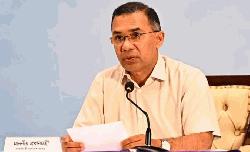
Collected Photo
National Citizen Party (NCP) lawmaker and southern region chief organiser Hasnat Abdullah has challenged Prime Minister Tarique Rahman over the country’s ongoing power crisis, saying the opposition already has solutions, while the authority to implement them rests with the government.
“Solutions are in our hands, but power is in your hands,” Hasnat said in a Facebook post on Saturday night.
His remarks came after Prime Minister Tarique Rahman challenged the opposition to present a plan to resolve the electricity crisis within six months.
Hasnat said the prime minister should have known that concrete proposals to address the crisis had already been presented. He pointed to a 15-point proposal by NCP convener, lawmaker and opposition chief whip Nahid Islam, covering short-, medium- and long-term measures.
He also claimed that opposition lawmakers, civil society members and research organisations had already offered recommendations on issues including subsidy policy, fuel planning, contingency planning and disaster recovery.
“Despite having a large cabinet and advisory council, if these proposals have not reached the prime minister, that is a matter of shame,” Hasnat said.
Questioning the effectiveness of the government’s team, he said 62 people including ministers, state ministers, advisers and special assistants are involved in the government’s decision-making process. Yet, according to him, none had properly reviewed public opinions or opposition proposals.
Hasnat urged the prime minister to examine the NCP’s five short-term proposals for 30 days, six medium-term proposals for six to 18 months, and four long-term proposals.
He also called on the government to respond to the opposition’s request for a special parliamentary session to discuss the electricity crisis.
Criticising the government’s administrative decisions, Hasnat alleged that extensive political appointments over the past six months had weakened institutional memory. He claimed that the country now lacks adequate fuel, contingency and disaster recovery plans.
He also questioned the government’s handling of the fire at the Maheshkhali Floating Storage and Regasification Unit (FSRU), saying an independent investigation report into whether maintenance failures contributed to the incident had yet to be made public.
Hasnat further demanded implementation of the Merchant Power Policy 2025, which was approved by the interim government. He said the policy would allow private power producers to sell electricity directly to large industrial consumers, with prices determined by the two parties and the Bangladesh Energy Regulatory Commission (BERC) merely being informed.
According to Hasnat, implementing the policy would not require government funds and would mainly involve finalising the standard service-level agreement and wheeling charges.
“Prime Minister, we provided the solution before you asked for it,” Hasnat said. “If implementing the Merchant Power Policy takes more than six months, it will no longer be a policy issue; it will be an admission of failure in capacity.”
He also criticised what he described as the government’s practice of testing “unqualified people” in strategic sectors.
“In a practising democracy, the prime minister does not give the opposition an ultimatum or challenge. Rather, the government is accountable for its own performance,” Hasnat said.
He questioned why the country had experienced severe load-shedding despite the government having been in power for six months.
“Ultimately, the solutions are in our hands, but the power is in yours,” Hasnat said. “After six months, the people will ask which of the two was missing that kept the country in darkness.”
-HIS
Loading...
Loading...
Also read







Editor : Iqbal Sobhan Chowdhury
Published by the Editor on behalf of the Observer Ltd. from Globe Printers, 24/A, New Eskaton Road, Ramna, Dhaka.
Editorial, News and Commercial Offices : Aziz Bhaban (2nd floor), 93, Motijheel C/A, Dhaka-1000.
Phone: PABX- 41053001-06; Advertisement: 41053012; 01793317829, 01550707291, E-mail: [email protected], [email protected] Online: email: [email protected] 41053014; 01550707297 Advertisement: 01550707296
Published by the Editor on behalf of the Observer Ltd. from Globe Printers, 24/A, New Eskaton Road, Ramna, Dhaka.
Editorial, News and Commercial Offices : Aziz Bhaban (2nd floor), 93, Motijheel C/A, Dhaka-1000.
Phone: PABX- 41053001-06; Advertisement: 41053012; 01793317829, 01550707291, E-mail: [email protected], [email protected] Online: email: [email protected] 41053014; 01550707297 Advertisement: 01550707296


