



| HEADLINE |

|

Bangladesh’s Trust Crisis: Why Mistrust Is Growing and How to Rebuild It
Published : Monday, 24 August, 2026 at 12:00 AM
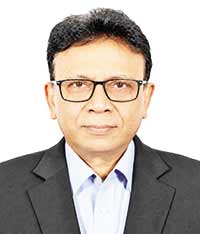
Shahiduzzaman


 Trust is one of the most valuable assets of any society. It binds families, strengthens communities, supports economic activity and gives legitimacy to democratic institutions. When people trust one another and believe that institutions will act fairly, societies become more peaceful and prosperous. When trust declines, suspicion and division take its place.
Bangladesh is increasingly facing such a crisis. Mistrust has spread beyond personal relationships into politics, government institutions, business, workplaces and everyday social interactions. Many citizens question the intentions of political leaders, the integrity of officials, the fairness of institutions and even the honesty of fellow citizens. This growing culture of suspicion is becoming an obstacle to good governance, social cohesion and national development.
Political mistrust is perhaps the most visible dimension of the problem. Many citizens are sceptical about political promises and question whether leaders genuinely represent public interests or primarily seek power and partisan advantage. Confrontational politics, corruption, favouritism, abuse of power and political interference have further weakened public confidence.
Trust in government institutions is also under pressure. Citizens visiting public offices may fear unnecessary delays, bureaucratic complications, discrimination or demands for unofficial payments. When people believe that access to public services depends on political connections, personal influence or money rather than established rules, confidence in the state inevitably declines.
This creates a dangerous cycle. Citizens may assume that officials cannot be trusted, while officials may view citizens with suspicion. Instead of cooperation, an adversarial relationship develops. A citizen seeking a legitimate service may feel compelled to use an intermediary, while an official may become more concerned with protecting institutional interests than serving the public.
Corruption is one of the strongest drivers of this mistrust. When people believe that public services, employment, contracts or administrative decisions can be influenced by bribery or connections, they begin to question whether honesty and merit have any real value. This is particularly damaging for young people. If they repeatedly see influence rewarded while competence and integrity are ignored, they may lose faith in the fairness of society.
The media has a particularly important responsibility. Responsible journalism should verify information, challenge misinformation and hold political leaders and public officials accountable without becoming partisan. Citizens, meanwhile, need stronger media literacy to distinguish credible information from rumours and manipulation.
The trust deficit also affects ordinary social relationships. People may hesitate to trust neighbours, colleagues, business partners or even friends when money, property or personal interests are involved. Family relationships face similar pressures. Rapid urbanisation, migration, financial difficulties and changing lifestyles have reduced opportunities for meaningful communication. Smartphones and social media can further replace face-to-face interaction. In many urban communities, people may live in the same building for years without knowing their neighbours.
Social media has added another layer to the crisis. False information, manipulated images, anonymous accounts and rumours can spread within minutes. Political propaganda and unverified allegations can create hostility before facts are established. Online arguments, jealousy and unrealistic expectations can also damage personal relationships. Repeated misinformation can make people doubt not only individuals but also institutions and legitimate sources of information. Political polarisation makes matters worse. Opponents are often treated as enemies rather than legitimate competitors. Citizens may judge government decisions, political statements and national events according to partisan loyalties. Such polarisation leaves little room for dialogue or compromise. Democracy cannot function effectively without a basic level of trust between political forces and between citizens and institutions.
The economic costs are significant. Trust is a form of social capital. Businesses depend on confidence between employers and employees, customers and companies, investors and regulators, and buyers and sellers. Where institutions are predictable and contracts are respected, economic activity becomes easier. Widespread mistrust, by contrast, creates uncertainty, increases transaction costs and discourages investment.
The social consequences are equally serious. People who constantly suspect others may experience greater insecurity and isolation. Communities with weak social cohesion are less capable of responding collectively to crises. Children raised in environments dominated by conflict and suspicion may carry those attitudes into adulthood, creating an intergenerational cycle of mistrust.
Bangladesh can learn from countries that have built stronger cultures of public trust. Finland, Denmark and Norway have benefited from transparent institutions, effective public services, civic participation and strong accountability. Singapore has strengthened confidence in public administration through efficiency and strict anti-corruption measures, while Japan emphasises civic responsibility and social discipline. Their political and historical contexts differ from Bangladesh’s, but their experiences show a common lesson: trust grows when institutions consistently behave in ways that deserve it.
Bangladesh must therefore address the roots of mistrust. Political parties should demonstrate greater transparency, accountability and respect for democratic institutions. Leaders must understand that public confidence cannot be secured through promises alone; it must be earned through responsible behaviour and measurable performance. Government institutions have an equally important responsibility. Public officials must recognise that citizens are entitled to public services, not favours. Administrative procedures should be transparent, corruption should be punished, complaints should be taken seriously and officials should be held accountable for misconduct. Digital public services can reduce unnecessary interactions and opportunities for corruption, but technology cannot replace institutional integrity. Citizens also have a role in rebuilding trust. Rejecting bribery, refusing to spread misinformation, respecting different opinions and treating others fairly are essential. Families should encourage honesty and open communication. Schools should strengthen civic education, ethics, digital literacy and critical thinking. Civil society and community groups can promote dialogue, volunteerism and cooperation.
The media has a particularly important responsibility. Responsible journalism should verify information, challenge misinformation and hold political leaders and public officials accountable without becoming partisan. Citizens, meanwhile, need stronger media literacy to distinguish credible information from rumours and manipulation. Trust cannot be rebuilt overnight. It develops through everyday actions: an official performing a duty honestly, a politician keeping a promise, a citizen refusing to pay a bribe, a journalist verifying a report, a business honouring an agreement and a neighbour helping another neighbour.
Bangladesh has repeatedly demonstrated its resilience in facing natural disasters, economic hardship and social challenges. Rebuilding trust should now become a national priority. A country cannot achieve sustainable development when citizens distrust political leaders, fear government offices, question institutions and increasingly doubt one another.
Ultimately, trust is not merely a moral value. It is the foundation of effective government, a healthy economy, social harmony and democratic stability. Bangladesh will move forward when citizens have genuine reasons to believe that politicians are accountable, officials are honest, institutions are fair and fellow citizens can be trusted. Without restoring that confidence, the country’s development will remain fragile. With it, Bangladesh can build a more democratic, prosperous and united society.
The writer is the Editor and CEO of News Network
Loading...
Loading...
Also read



Editor : Iqbal Sobhan Chowdhury
Published by the Editor on behalf of the Observer Ltd. from Globe Printers, 24/A, New Eskaton Road, Ramna, Dhaka.
Editorial, News and Commercial Offices : Aziz Bhaban (2nd floor), 93, Motijheel C/A, Dhaka-1000.
Phone: PABX- 41053001-06; Advertisement: 41053012; 01793317829, 01550707291, E-mail: [email protected], [email protected] Online: email: [email protected] 41053014; 01550707297 Advertisement: 01550707296
Published by the Editor on behalf of the Observer Ltd. from Globe Printers, 24/A, New Eskaton Road, Ramna, Dhaka.
Editorial, News and Commercial Offices : Aziz Bhaban (2nd floor), 93, Motijheel C/A, Dhaka-1000.
Phone: PABX- 41053001-06; Advertisement: 41053012; 01793317829, 01550707291, E-mail: [email protected], [email protected] Online: email: [email protected] 41053014; 01550707297 Advertisement: 01550707296


