



| HEADLINE |

|
Mahdi Amin hails press freedom, TIB cites rights concerns
Published : Tuesday, 15 September, 2026 at 6:33 PM
Staff Correspondent


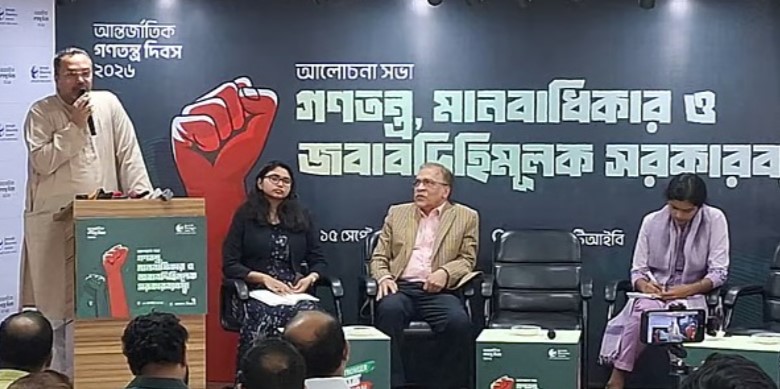
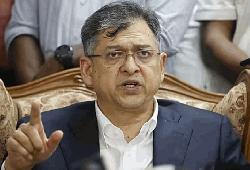
Prime Minister’s Adviser Mahdi Amin has claimed that Bangladesh has seen “unprecedented” freedom of speech and respect for human rights under the BNP government over the past seven months.
However, Transparency International Bangladesh (TIB) Executive Director Iftekharuzzaman said available data painted a different picture.
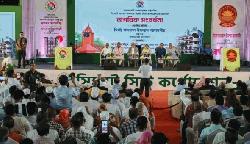
Speaking at a TIB discussion titled “Democracy, Human Rights and Accountable Governance” at the Midas Centre in Dhaka on Tuesday, Mahdi Amin said there had been no human rights violations, enforced disappearances, killings, extrajudicial deaths or deaths in custody with state support during the period.
“We are seeing the highest level of freedom of speech in history,” he said, adding that the government remained tolerant even of offensive or abusive speech.
Mahdi Amin said, "the government aimed to build an inclusive state based on human rights, freedom of speech, the rule of law, equality, dignity and social justice."
Iftekharuzzaman, however, cited data showing at least 52 incidents involving restrictions or harassment over freedom of speech, with 58 people detained, most under the Anti-Terrorism Act.
He also reported more than 1,730 incidents of violence against women and girls, including at least 503 rapes and 50 deaths. In addition, 51 cases of detention and torture were recorded.
According to Iftekharuzzaman, seven people died directly at the hands of law enforcement agencies, while at least one enforced disappearance allegedly involved a law enforcement agency.
He also criticised the process of turning ordinances into laws, saying the second round lacked meaningful public participation and warning against imposing laws concerning human rights, justice and accountability without proper consultation.
Mahdi Amin rejected claims of state support for abuses, saying the government had changed how it responded to wrongdoing. He said complaints were now reaching authorities from the grassroots level and action was being taken.
He also outlined government plans to address challenges in the power and energy sectors over the next six months, two years and five years, with greater energy self-reliance targeted over the next decade.
"The government’s main source of power was the people and claimed that Bangladesh had returned to a democratic path under Prime Minister Tarique Rahman"he added.
Loading...
Loading...
Also read




Editor : Iqbal Sobhan Chowdhury
Published by the Editor on behalf of the Observer Ltd. from Globe Printers, 24/A, New Eskaton Road, Ramna, Dhaka.
Editorial, News and Commercial Offices : Aziz Bhaban (2nd floor), 93, Motijheel C/A, Dhaka-1000.
Phone: PABX- 41053001-06; Advertisement: 41053012; 01793317829, 01550707291, E-mail: [email protected], [email protected] Online: email: [email protected] 41053014; 01550707297 Advertisement: 01550707296
Published by the Editor on behalf of the Observer Ltd. from Globe Printers, 24/A, New Eskaton Road, Ramna, Dhaka.
Editorial, News and Commercial Offices : Aziz Bhaban (2nd floor), 93, Motijheel C/A, Dhaka-1000.
Phone: PABX- 41053001-06; Advertisement: 41053012; 01793317829, 01550707291, E-mail: [email protected], [email protected] Online: email: [email protected] 41053014; 01550707297 Advertisement: 01550707296


