



| HEADLINE |

|
Three Generations of Zia Family at UN Over Four Decades


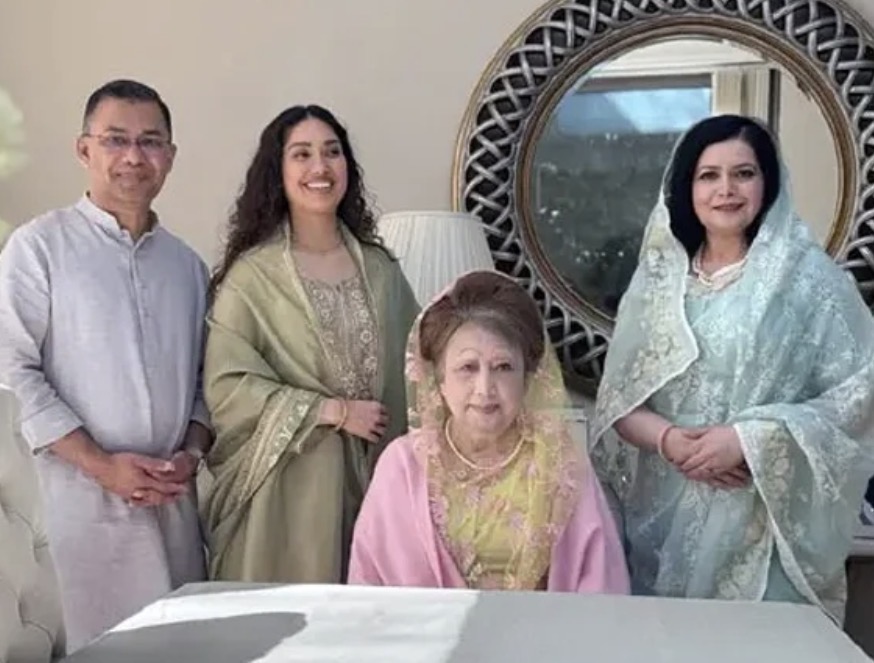
Three generations of the Zia family have appeared at the United Nations over four decades, with Prime Minister Tarique Rahman set to address the 81st UN General Assembly on September 24.
President Ziaur Rahman first represented Bangladesh at the UN in 1980. His wife and then Prime Minister Khaleda Zia addressed the General Assembly in 1993. Tarique Rahman will now become the third member of the family to address the world body.
Ziaur Rahman addressed the UN during its 11th Special Session on August 26, 1980. At the time, developing countries were facing economic instability, poverty, inequality and a widening gap between rich and poor nations.
His speech focused on hunger, poverty, economic inequality and development. He also stressed the need for international cooperation and a new international economic order.
Khaleda Zia addressed the 48th session of the UN General Assembly on October 1, 1993. Her speech focused on democracy, development and the interests of smaller states.
She also raised Bangladesh’s concerns over the sharing of the Ganges waters. The issue had a direct impact on the country’s agriculture, economy and millions of people.
UN records show that Khaleda Zia addressed General Assembly proceedings five times between 1993 and 2005.
Tarique Rahman is scheduled to address the 81st session of the UN General Assembly on September 24. It will be his first address to the world body as prime minister.
His speech is expected to reflect the changing priorities of Bangladesh and the international community.
Foreign Secretary Asad Alam Siam said at a Foreign Ministry briefing on Sunday that the prime minister will speak about Bangladesh’s democratic transition, rule of law and accountability.
Global peace and security, climate change, sustainable development and economic cooperation will also be highlighted.
Youth and women’s empowerment, education and healthcare are also expected to feature in his address.
The Rohingya crisis, access to modern technology and reform of the multilateral system are also expected to be part of Bangladesh’s diplomatic agenda.
Climate change
Climate change is expected to be a major issue for Bangladesh at the General Assembly.
State Minister for Foreign Affairs Shama Obaid Islam said Bangladesh will highlight its vulnerability to climate change.
The country will seek greater international attention to climate finance, adaptation, technology transfer, loss and damage, and climate justice.
Climate change affects Bangladesh’s food security, water resources, agriculture and coastal communities. It is also linked to displacement and livelihoods.
Rohingya crisis
The Rohingya crisis will remain another major diplomatic priority during the prime minister’s visit.
Bangladesh is scheduled to hold a side event on September 23 on the crisis. The event will focus on international cooperation to facilitate the earliest possible repatriation of Rohingyas to Myanmar.
Tarique Rahman is also scheduled to meet the UN Secretary-General, the UN Special Envoy on Myanmar, the UN High Commissioner for Refugees and the UN High Commissioner for Human Rights.
He is also scheduled to meet representatives of the World Bank, the International Peace Institute and members of the international business community.
The meetings are expected to cover the Rohingya crisis, development, investment, international cooperation and global economic issues.
Bangladesh in a prominent UN role
Bangladesh’s role at this year’s General Assembly is also significant because Foreign Minister Dr Khalilur Rahman is serving as president of the 81st session.
According to the UN, his presidency is being guided by the theme, “Restoring Trust, Managing Transformation: A United Nations that Delivers for All.”
Dr Khalilur Rahman has a long diplomatic career, including experience in Bangladesh’s foreign service and at the UN. His presidency has placed emphasis on dialogue, consensus and international cooperation.
On September 24, a Bangladeshi will preside over the General Assembly while Bangladesh’s prime minister addresses it.
The occasion also highlights how Bangladesh’s message at the UN has changed over the decades.
In 1980, Ziaur Rahman focused on poverty, inequality and development challenges facing developing countries.
In 1993, Khaleda Zia highlighted democracy, development, the rights of smaller states and Bangladesh’s water interests.
In 2026, Tarique Rahman is expected to address climate change, forced displacement, geopolitical conflicts, technological transformation, economic cooperation and reform of the multilateral system.
His appearance will mark the third generation of the Zia family at the United Nations and a new chapter in Bangladesh’s engagement with the global body.
sks





Published by the Editor on behalf of the Observer Ltd. from Globe Printers, 24/A, New Eskaton Road, Ramna, Dhaka.
Editorial, News and Commercial Offices : Aziz Bhaban (2nd floor), 93, Motijheel C/A, Dhaka-1000.
Phone: PABX- 41053001-06; Advertisement: 41053012; 01793317829, 01550707291, E-mail: [email protected], [email protected] Online: email: [email protected] 41053014; 01550707297 Advertisement: 01550707296


