



| HEADLINE |

|

Once abundant native fish now scarce at Amtali
Published : Tuesday, 6 October, 2026 at 12:00 AM
Our Correspondent


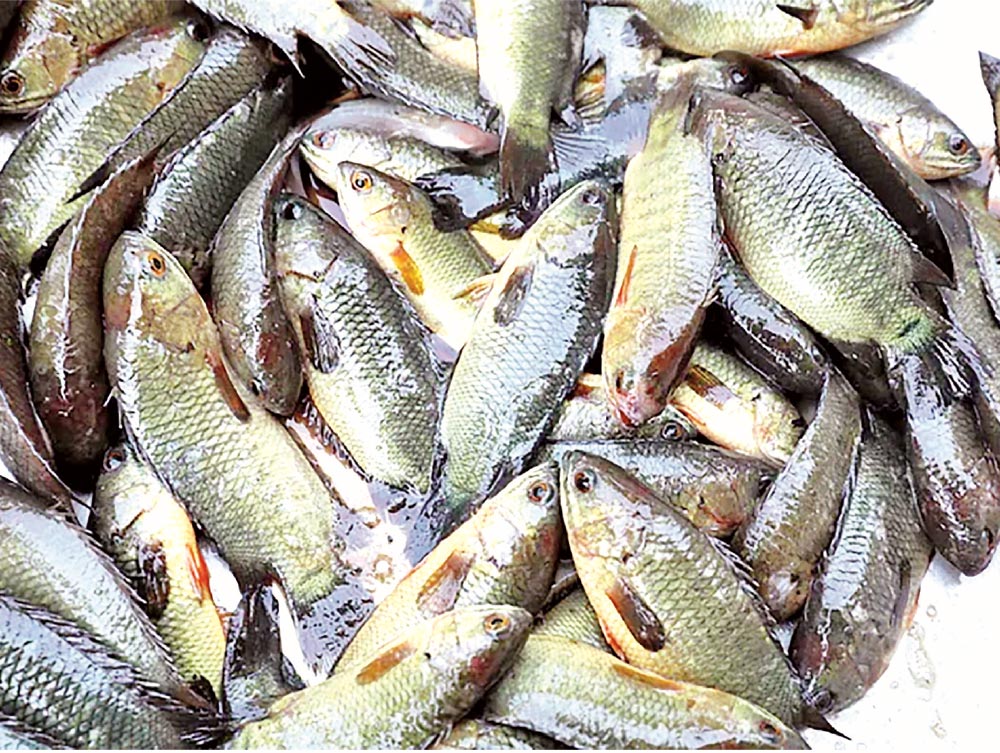 AMTALI, BARGUNA, Oct 5: Several native fish species are disappearing from the water bodies of Amtali Upazila in Barguna as rivers, canals, beels and other natural habitats are gradually losing their fish diversity.
The area, once known for abundant native fish in its open waters, now has only a few species remaining, locals said.
The indiscriminate catching of brood fish and fish fry with nets in different parts of the upazila is also hampering natural reproduction, locals said.
In the past, species such as koi, shol, boal, magur, shing, foli, punti, shrimp and pabda were commonly found in open waters. During the monsoon, villagers would often catch fish collectively by draining water or using nets, traps and other traditional fishing gear.
Although many of those fishing methods are still used, the fish they once yielded are now rarely found in rivers, canals, beels and other open water bodies.
Native fish species that are on the verge of disappearing are also rarely seen in local markets. Only a handful of native species are available, while farmed fish, particularly pangas and tilapia, have taken over the markets.
Some unscrupulous fishermen are also reportedly using highly toxic pesticides in rivers and canals to kill fish, further damaging aquatic ecosystems. At the same time, farmed fish from local aquaculture facilities have become increasingly common in the markets.
Fishermen said excessive use of pesticides and chemical fertilisers on croplands is reducing fish reproduction. When brood fish lay eggs, the fry often die after coming into contact with pesticide-contaminated water, they said.
This is severely disrupting natural fish breeding and forcing people to depend increasingly on hybrid and farmed fish to meet their demand as open water bodies become depleted.
According to local fisheries officials, changes in farming and agricultural practices are also contributing to the disappearance of native freshwater species such as koi, magur, shing, tengra, punti, mola, dhela, chela, shol, boal, aor, bheti, baim, khalisha, foli and shrimp.
In the past, villagers would catch native fish from ponds, canals, ditches and ghers as water levels fell during the months of Agrahayan, Poush and Magh. In many villages, however, native fish have now become scarce.
Traditional fishing practices during the monsoon, including the use of small nets, hooks and traps in paddy fields, have also disappeared from many areas. Many people who once met their families' fish needs by catching fish from ponds, canals, beels and ditches are now forced to buy fish from markets.
Sohel Rana, a fish trader at the Amtali market, said many native fish used to arrive at local markets on market days.
“Those fish are rarely available now. The markets are mostly filled with farmed pangas and tilapia,” he said, blaming the excessive use of chemical fertilisers and pesticides on Boro rice and vegetable crops for the decline in native fish.
According to the Amtali Upazila fisheries office, annual fish demand in the upazila is 5,137 tonnes, of which 3,085 tonnes come from open water bodies. The rest is supplied by farmed fish.
Tanmay Kumar Das, Senior Upazila Fisheries Officer, said the fisheries department was working to protect native fish resources.
“Native fish species can be protected if people become more aware and follow the fisheries laws while catching fish,” he said.

Loading...
Loading...
Also read



Editor : Iqbal Sobhan Chowdhury
Published by the Editor on behalf of the Observer Ltd. from Globe Printers, 24/A, New Eskaton Road, Ramna, Dhaka.
Editorial, News and Commercial Offices : Aziz Bhaban (2nd floor), 93, Motijheel C/A, Dhaka-1000.
Phone: PABX- 41053001-06; Advertisement: 41053012; 01793317829, 01550707291, E-mail: [email protected], [email protected] Online: email: [email protected] 41053014; 01550707297 Advertisement: 01550707296
Published by the Editor on behalf of the Observer Ltd. from Globe Printers, 24/A, New Eskaton Road, Ramna, Dhaka.
Editorial, News and Commercial Offices : Aziz Bhaban (2nd floor), 93, Motijheel C/A, Dhaka-1000.
Phone: PABX- 41053001-06; Advertisement: 41053012; 01793317829, 01550707291, E-mail: [email protected], [email protected] Online: email: [email protected] 41053014; 01550707297 Advertisement: 01550707296


