



| HEADLINE |

|
Waterways on verge of extinction at Amtali
Encroachment, pollution, siltation leave rivers, canals nearly dead
Published : Saturday, 10 January, 2026 at 12:00 AM
M A Sayeed Khokon


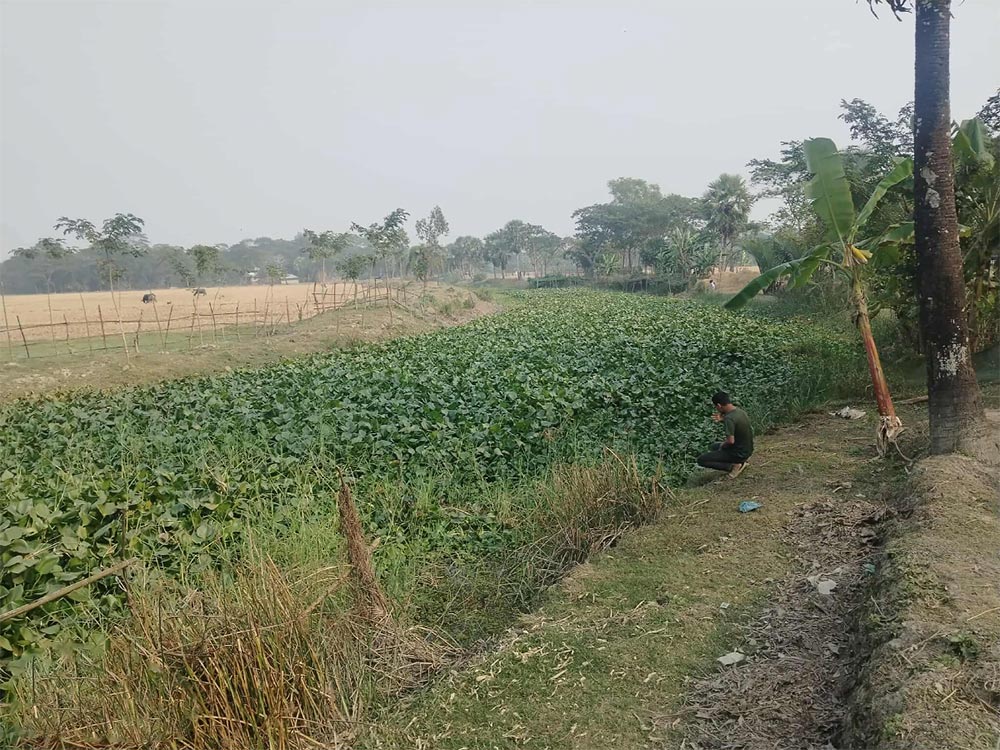 AMTALI, BARGUNA, Jan 9: More than 200 rivers, canals and wetlands in Amtali Upazila of Barguna are on the verge of extinction due to illegal encroachment, indiscriminate filling, pollution and siltation.
 Once vital for agriculture, transport and ecology, these waterways are now drying up, threatening livelihood and the environment.
Local residents say canals that once carried boats and trawlers have been filled with soil and occupied by shops, houses, fish enclosures and other structures. Navigation has stopped, fishermen have lost their catch, and farmers cannot irrigate their fields. Farmers, too, are suffering: without water, they cannot cultivate irrigated Boro paddy.
A visit to several unions revealed canals once flowing with water now filled with soil and occupied by shops, houses, fish enclosures and other structures. Locals allege that influential groups, under political patronage, have been grabbing these canals for years without effective resistance.
Climate change has worsened the crisis. Silt deposits have filled rivers and canals, while unplanned construction of roads, bridges and culverts across waterways has further obstructed flow. Encroachers have built settlements and markets on canal banks, shrinking them beyond recognition.
Residents said canals once played a vital role in communication, serving as the only transport routes in many areas. Today, their existence is hard to trace.
Over the past two decades, canals have been illegally converted into agricultural land, often with the help of unscrupulous officials at the upazila land office. Historically, canals originating from the Ramnabad and Payra rivers flowed through seven unions, branching into villages and supporting boat and trawler traffic.
Canals used to remain full of water year round. Fishermen families across the unions survived by catching fish. During monsoon, canal water overflowed, depositing fertile silt on croplands and boosting yields. In the dry season, farmers easily irrigated their fields from canals. That system no longer exists.
In southern Amtali - including Haldia, Ramji, Sonautta, Gazipur and Office Bazar - canals once enabled easy transport of goods by boat and trawler. Today, boats no longer ply, and silt no longer enriches farmland. Thousands of hectares of cropland have lost fertility. Even with chemical fertilisers and pesticides, farmers report poor yields.
Affected farmers accuse corrupt land officials and local land grabbers of leasing canals under false names. Unplanned embankments and culverts have blocked water flow, leaving canals dry and filled. In the dry season, acute water shortages now plague the area.
Most canals have lost navigability and dried up. Without dredging, they have been filled, giving land grabbers the opportunity to occupy them. Locals complain that such illegal activities occur openly, yet authorities look the other way.
Thousands of acres of farmland no longer benefit from natural water movement. With canals filled, drainage has stopped, leading to waterlogging in monsoon and severe irrigation shortages in the dry season. In unions such as Haldia, Chaura and Gulishakhali, canals have been officially leased to influential groups, who now cultivate crops on them.
Environmental activists warn of grave consequences. Journalist Mushfiq Arif, Member Secretary of the group Dhritri Rokkhae Amra Dhora, said: "Destroying canals and wetlands means destroying ecological balance. Fish breeding grounds are lost, biodiversity is under severe threat. For a climate vulnerable district like Barguna, this is a disaster in the making."
Shahabuddin Panna, Executive Director of NGO NSS, noted: "Twenty years ago, rivers and canals supported year round navigation. Siltation has filled them, ending cheap and accessible river transport. As waterways die, famous river ports have disappeared, boatmen and fishermen have lost livelihoods, and farmers along riverbanks suffer. Now goods must be transported by road at higher cost, raising prices for consumers."
Amtali Upazila Nirbahi Officer Mohammad Zafar Arif Chowdhury said over phone, "If complaints are received, we will investigate on the ground and take legal action."
Loading...
Loading...
Also read



Editor : Iqbal Sobhan Chowdhury
Published by the Editor on behalf of the Observer Ltd. from Globe Printers, 24/A, New Eskaton Road, Ramna, Dhaka.
Editorial, News and Commercial Offices : Aziz Bhaban (2nd floor), 93, Motijheel C/A, Dhaka-1000.
Phone: PABX- 41053001-06; Advertisement: 41053012; 01793317829, 01550707291, E-mail: [email protected], [email protected] Online: email: [email protected] 41053014; 01550707297 Advertisement: 01550707296
Published by the Editor on behalf of the Observer Ltd. from Globe Printers, 24/A, New Eskaton Road, Ramna, Dhaka.
Editorial, News and Commercial Offices : Aziz Bhaban (2nd floor), 93, Motijheel C/A, Dhaka-1000.
Phone: PABX- 41053001-06; Advertisement: 41053012; 01793317829, 01550707291, E-mail: [email protected], [email protected] Online: email: [email protected] 41053014; 01550707297 Advertisement: 01550707296


