



| HEADLINE |

|

Yellow blossoms signal promising mango yield in Noagaon
Published : Saturday, 7 March, 2026 at 12:00 AM
Our Correspondent


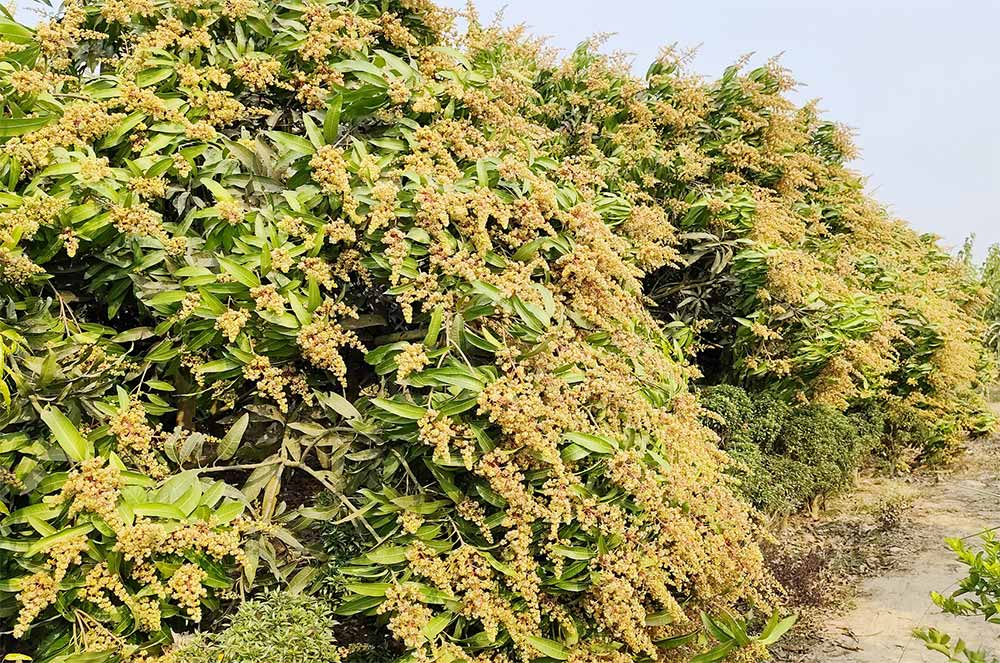 NAOGAON, Mar 6: Noagaon's mango orchards are now adorned with bright yellow blossoms, spreading a sweet fragrance across the gardens.
 The sight of flowers amidst lush green leaves has local growers optimistic about a bumper harvest. After rice, mangoes remain the primary focus for farmers in the district.
According to the Department of Agriculture Extension (DAE) office in Noagaon, mango cultivation this season covers 30,500 hectares, slightly up from 30,300 hectares last year. The production target for this year is set at 450,000 metric tons, compared to last year's planned 431,000 metric tons. However, production fell to 375,000 metric tons due to adverse weather conditions. Sapahar and Porsha Upazilas account for most of the mango orchards, with nearly 20,000 hectares under cultivation.
Field visits reveal rows of mango trees laden with flowers, with medium and large trees showing the most blooms. Blossoms are visible even in home gardens and along roadsides, creating a mix of yellow and green scenery. Orchard owners are busy maintaining their trees to ensure a quality yield.
Farmers noted that last year, many flowers and small fruits were lost due to prolonged winter and dense fog, leading to poor production. This year, favourable weather has allowed nearly all trees to bloom. However, rising costs of pesticides, fertilisers, and labour have increased production expenses.
Young farmer Sohel Rana of Sapahar said about 80% of his 300-hectare orchard has flowered, compared to 50-60% last year. He expects the remaining trees to bloom in the next 15-20 days.
The current warm temperatures have reduced fungal attacks on the blossoms. Another grower, Jalil, mentioned that timely tree maintenance and proper spraying are helping protect flowers from diseases and pests.
In Porsha, farmer Zulfikar confirmed that primary care is being provided to preserve the flowers and upcoming fruits, following guidance from local agricultural officers.
Mango grower Manik added that while blooms have improved this year, costs for fertilizers, pesticides, and labor are rising, increasing overall cultivation expenses.
Humayra Mondal, Deputy Director of Noagaon DAE, said flowers began appearing in late January.
With warmer temperatures and reduced fog, no significant flower loss has occurred so far.
Farmers are advised to apply proper insecticide and fungicide sprays to ensure the flowers and fruits remain healthy.
Loading...
Loading...
Also read



Editor : Iqbal Sobhan Chowdhury
Published by the Editor on behalf of the Observer Ltd. from Globe Printers, 24/A, New Eskaton Road, Ramna, Dhaka.
Editorial, News and Commercial Offices : Aziz Bhaban (2nd floor), 93, Motijheel C/A, Dhaka-1000.
Phone: PABX- 41053001-06; Advertisement: 41053012; 01793317829, 01550707291, E-mail: [email protected], [email protected] Online: email: [email protected] 41053014; 01550707297 Advertisement: 01550707296
Published by the Editor on behalf of the Observer Ltd. from Globe Printers, 24/A, New Eskaton Road, Ramna, Dhaka.
Editorial, News and Commercial Offices : Aziz Bhaban (2nd floor), 93, Motijheel C/A, Dhaka-1000.
Phone: PABX- 41053001-06; Advertisement: 41053012; 01793317829, 01550707291, E-mail: [email protected], [email protected] Online: email: [email protected] 41053014; 01550707297 Advertisement: 01550707296


