



| HEADLINE |

|

Constitution can't be changed by Ordinance: Salahuddin
Constitution Reform Council, July Charter to be decided in JS discussion, he asserts
Published : Monday, 16 March, 2026 at 12:00 AM
Special Correspondent


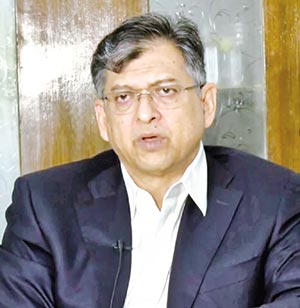 Home Minister and BNP Standing Committee Member Salahuddin Ahmed on Sunday told Parliament that the Constitution of Bangladesh is the supreme document of the state and that all state affairs must be conducted within constitutional and legal frameworks.
He said that even the implementation of the July National Charter must take place through constitutional and legal procedures.
Taking the floor after remarks by Leader of the Opposition and Ameer of Bangladesh Jamaat-e-Islami, Dr Shafiqur Rahman, on constitutional and legislative reforms in line with the July National Charter, Salahuddin Ahmed made the statement before the Jatiya Sangsad.
"The state cannot run on emotions; it runs through the Constitution, laws and established rules," he asserted.
Political analysts say fresh tensions have emerged in the political arena over the implementation of proposals under the July National Charter. The Jamaat-e-Islami-led 11-party alliance including NCP have demanded a session of the Constitutional Reform Council by Sunday and they warned the government of waging street protests if it is not convened.
On the other hand, the ruling Bangladesh Nationalist Party said the matter can be discussed in Parliament.
During the second day of the first session of the 13th Jatiya Sangsad, Leader of the Opposition Dr. Shafiqur Rahman reiterated the demand for convening the Council, while Home Minister Salahuddin Ahmed said the Council has no constitutional recognition.
Speaking in the House, the Home Minister emphasised that the Constitution is the supreme document of the state and that all state affairs must be conducted within constitutional and legal frameworks.
He noted that the Rules of Procedure already provide specific provisions for raising urgent matters of public importance.
According to him, any discussion or proposal on such issues should be brought to Parliament following those established rules.
Referring to constitutional provisions, the Home Minister said the President may promulgate an Ordinance only when Parliament is not in session, as stipulated in Article 93 of the Constitution. However, he stressed that the Constitution itself cannot be amended through an Ordinance.
Ahmed described the July National Charter as a historic political document of consensus. He also noted that a referendum had been held to gather public opinion on the matter.
Nevertheless, he said that if constitutional amendments are required to implement the July Charter, those changes must be made through Parliament.
He further pointed out that all 133 ordinances promulgated during the interim government have already been placed before Parliament, and decisions regarding them must be taken within the stipulated timeframe.
In this regard, he proposed that the Business Advisory Committee of Parliament discuss and determine when a constitutional amendment bill could be placed before the House.
"We respect every word of the July National Charter and remain committed to fulfilling the pledge made to the nation," the Home Minister said.
However, he added that whether the Constitution can be amended through any imposed order outside the constitutional framework remains an important legal and constitutional question.
He expressed hope that necessary constitutional amendments, if adopted through parliamentary discussion and consensus, would further strengthen the country's governance system.
Concluding his remarks, Salahuddin Ahmed said, "We have moved forward by following the Constitution, and in the future as well, the state will continue to be governed in accordance with the Constitution."
Loading...
Loading...
Also read



Editor : Iqbal Sobhan Chowdhury
Published by the Editor on behalf of the Observer Ltd. from Globe Printers, 24/A, New Eskaton Road, Ramna, Dhaka.
Editorial, News and Commercial Offices : Aziz Bhaban (2nd floor), 93, Motijheel C/A, Dhaka-1000.
Phone: PABX- 41053001-06; Advertisement: 41053012; 01793317829, 01550707291, E-mail: [email protected], [email protected] Online: email: [email protected] 41053014; 01550707297 Advertisement: 01550707296
Published by the Editor on behalf of the Observer Ltd. from Globe Printers, 24/A, New Eskaton Road, Ramna, Dhaka.
Editorial, News and Commercial Offices : Aziz Bhaban (2nd floor), 93, Motijheel C/A, Dhaka-1000.
Phone: PABX- 41053001-06; Advertisement: 41053012; 01793317829, 01550707291, E-mail: [email protected], [email protected] Online: email: [email protected] 41053014; 01550707297 Advertisement: 01550707296


