



| HEADLINE |

|
Lightning strikes make Boro paddy harvesting risky
Farmers urged to avoid open fields, water bodies and metal tools during storm alerts
Published : Monday, 11 May, 2026 at 12:00 AM
Our Correspondent


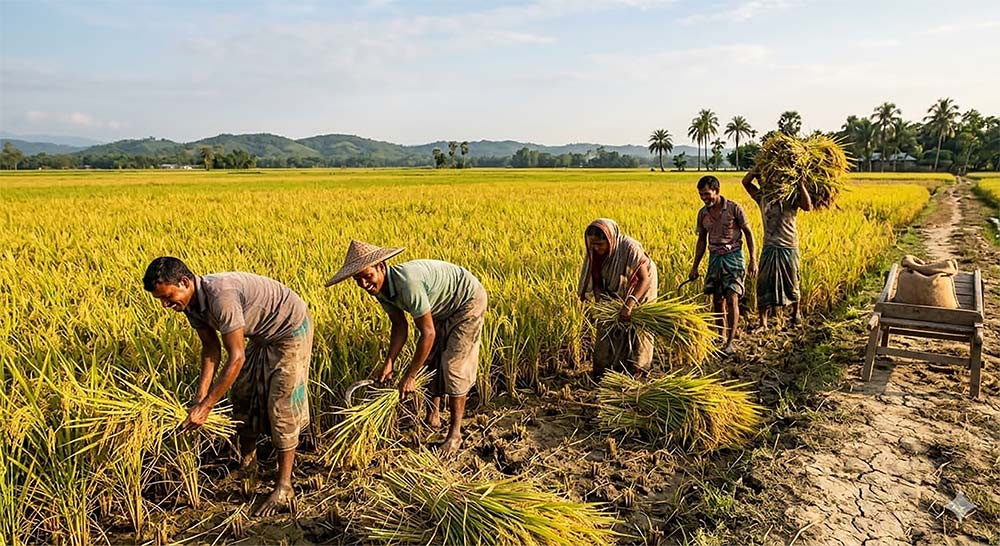 PAIKGACHHA, KHULNA, May 10: With the Boro paddy harvesting season in full swing across the coastal belt of Khulna, including Paikgachha Upazila, farmers are facing a growing threat from lightning strikes that is turning the harvesting season into one of fear and risk.
Known as a key grain-producing region of southern Bangladesh, the area is now witnessing a busy harvest period. However, the joy of the season is being overshadowed by an alarming rise in lightning-related incidents in recent years, largely linked to climate change.
Farmers working in open fields and near saline water shrimp enclosures are among the most vulnerable. The vast agricultural lands of Paikgachha have very few tall trees or safe structures, leaving farmers exposed during sudden thunderstorms.
Weather experts say that the collision of warm, humid air from the Bay of Bengal with cooler northern air creates strong cloud formation over the coastal region, increasing both the frequency and intensity of lightning.
During the Chaitra-Baishakh season, afternoon thunderstorms and lightning are common in Khulna. This is also the peak time for harvesting and drying paddy, forcing farmers to remain in open fields even when weather conditions turn dangerous.
Local farmers said that storms often develop suddenly, and by the time dark clouds appear, it becomes too late to reach safe shelter. With no nearby concrete buildings or tall trees, they are left highly exposed in open fields.
Experts and local authorities have urged farmers to take precautionary measures during thunderstorms. They advised people to immediately move to safe shelters such as concrete buildings or tin-roof houses when dark clouds and lightning are observed.
Farmers have also been advised to avoid staying in open fields, fish enclosures and near rivers during lightning activity. Standing under large trees or near electricity poles has been identified as highly dangerous.
The use of metal-handled tools such as umbrellas or sickles during storms should be avoided. Wearing rubber boots or gumboots can provide some level of protection, experts say. They also recommend avoiding mobile phone use during lightning activity.
Lightning has already been declared a national disaster in Bangladesh. Government initiatives such as planting palm trees and constructing shelters have been undertaken, but environmentalists say more action is needed at the local level.
They have called for increased awareness campaigns and the construction of more cyclone and lightning shelters in coastal areas to protect farmers during the harvest season.
Paikgachha Upazila Agriculture Officer, Agriculturist Md Ekramul Hossain, said Boro harvesting has already started in the area and will intensify within the next 5-7 days.
"The yield is good this season. We are advising farmers to remain cautious and monitor weather conditions while harvesting in the fields," he said.
Environmental experts and local residents have urged the administration to strengthen safety measures immediately to protect farmers' lives during this critical harvesting period.
Loading...
Loading...
Also read



Editor : Iqbal Sobhan Chowdhury
Published by the Editor on behalf of the Observer Ltd. from Globe Printers, 24/A, New Eskaton Road, Ramna, Dhaka.
Editorial, News and Commercial Offices : Aziz Bhaban (2nd floor), 93, Motijheel C/A, Dhaka-1000.
Phone: PABX- 41053001-06; Advertisement: 41053012; 01793317829, 01550707291, E-mail: [email protected], [email protected] Online: email: [email protected] 41053014; 01550707297 Advertisement: 01550707296
Published by the Editor on behalf of the Observer Ltd. from Globe Printers, 24/A, New Eskaton Road, Ramna, Dhaka.
Editorial, News and Commercial Offices : Aziz Bhaban (2nd floor), 93, Motijheel C/A, Dhaka-1000.
Phone: PABX- 41053001-06; Advertisement: 41053012; 01793317829, 01550707291, E-mail: [email protected], [email protected] Online: email: [email protected] 41053014; 01550707297 Advertisement: 01550707296


