



| HEADLINE |

|

Hajj management enters new era
Published : Saturday, 23 May, 2026 at 12:00 AM
Mohosinul Karim


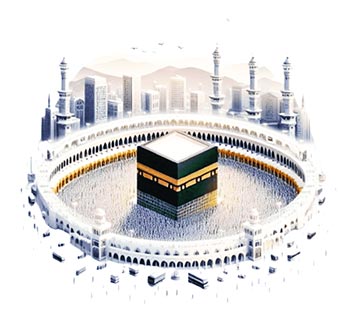 Bangladesh's Hajj management was once widely criticised for irregularities, corruption, administrative failures, and severe suffering faced by pilgrims. Fraud by private Hajj agencies, airline ticket syndicates, poor accommodation in Saudi Arabia, visa complications, and last-minute logistical chaos had long overshadowed the country's Hajj operations. Allegations also emerged over fraudulent registrations, excessive charges under replacement facilities, and the distribution of substandard Hajj bags.
However, officials and stakeholders now claim that the situation has changed significantly in recent years. In particular, the current administration's efforts under Religious Affairs Minister Kazi Shah Mofazzal Hossain Kaikobad are being viewed as a turning point toward a more disciplined, accountable, and technology-driven Hajj management system.
Since April 19 this year, nearly 78,000 Bangladeshi pilgrims have reportedly been transported to Saudi Arabia without major complications. This year's Hajj will formally take place on May 26 with the observance of the Day of Arafah.
While talking to this correspondent, Religious Affairs Minister Kazi Shah Mofazzal Hossain Kaikobad said he had been entrusted by Prime Minister Tarique Rahman to serve as a "khadem" or caretaker of the pilgrims. Describing himself as a servant of the Hajj pilgrims, he said the ministry's primary goal was to ensure that no pilgrim suffered unnecessary hardship during the sacred journey.
According to him, under Saudi Arabia's new regulations, most pilgrims completed their visa procedures before the start of flights this year. Nearly all immigration formalities were completed in Dhaka, significantly reducing congestion and suffering at airports in both countries. Ministry teams also remained active around the clock to address minor issues immediately.
One of the biggest challenges in Bangladesh's Hajj management system had long been irregularities involving private Hajj agencies. Over the years, numerous agencies faced accusations of failing to send pilgrims after collecting money, providing poor accommodation, inadequate food and transport services, and embezzling funds.
In 2014, the government took action against 208 Hajj agencies. Later, in 2017, nearly 90 agencies faced complaints submitted to the Ministry of Religious Affairs, with recommendations for license cancellations and financial penalties.
Parliamentary investigation committees previously identified house-renting processes in Makkah and Madinah as one of the major areas vulnerable to corruption. Despite promises of quality accommodation, many pilgrims were allegedly placed in substandard buildings located far from key religious sites.
Strict Oversight and Technology-Driven Reforms
The current administration says it has undertaken strict measures to reform the Hajj management system. Authorities claim accountability has been strengthened through tighter monitoring, financial penalties, and cancellation of licenses for agencies involved in irregularities.
Direct government supervision has also increased, allowing authorities to coordinate the entire Hajj process more effectively. Officials say these measures have restored discipline among agencies and improved the quality of services provided to pilgrims.
Lowering Hajj expenses has been presented as another major achievement of the government. The official Hajj package for 2026 has been set at Tk467,167, lower than the previous year.
Pilgrims have particularly benefited from reduced airfare costs. Officials say airfare has been reduced by nearly Tk40,000 over the past two years. Administrative reforms and technology-driven operations have also contributed to lowering overall management costs.
Loading...
Loading...
Also read


Editor : Iqbal Sobhan Chowdhury
Published by the Editor on behalf of the Observer Ltd. from Globe Printers, 24/A, New Eskaton Road, Ramna, Dhaka.
Editorial, News and Commercial Offices : Aziz Bhaban (2nd floor), 93, Motijheel C/A, Dhaka-1000.
Phone: PABX- 41053001-06; Advertisement: 41053012; 01793317829, 01550707291, E-mail: [email protected], [email protected] Online: email: [email protected] 41053014; 01550707297 Advertisement: 01550707296
Published by the Editor on behalf of the Observer Ltd. from Globe Printers, 24/A, New Eskaton Road, Ramna, Dhaka.
Editorial, News and Commercial Offices : Aziz Bhaban (2nd floor), 93, Motijheel C/A, Dhaka-1000.
Phone: PABX- 41053001-06; Advertisement: 41053012; 01793317829, 01550707291, E-mail: [email protected], [email protected] Online: email: [email protected] 41053014; 01550707297 Advertisement: 01550707296


