



| HEADLINE |

|
Human pressure pushes Sundarban towards ecological crisis
Poisoning, plastic waste, trafficking and salinity threaten world’s largest mangrove forest


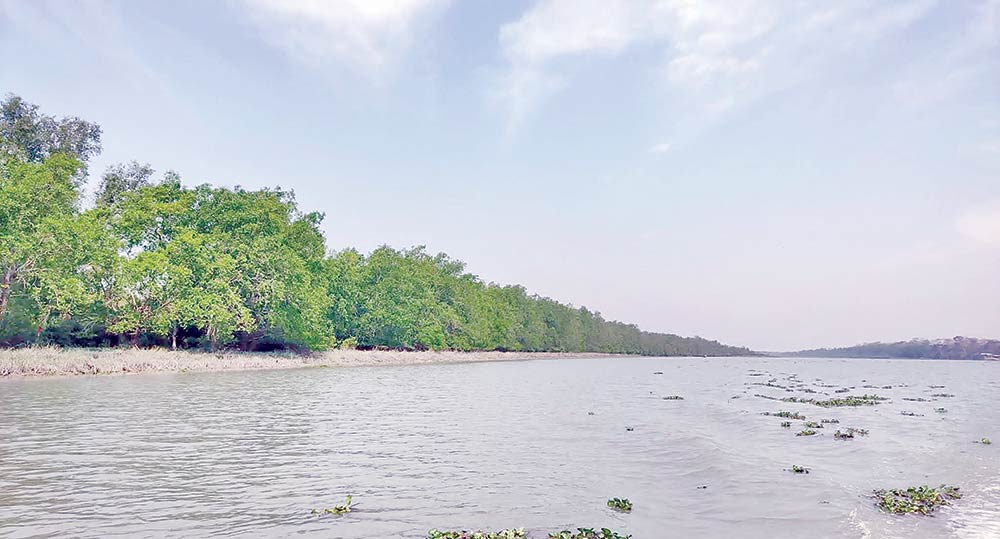 SARANKHOLA, BAGERHAT, June 15: The Sundarban, the world’s largest mangrove forest and a UNESCO World Heritage Site, is facing increasing pressure from multiple human-induced threats, raising concerns over its possible inclusion in UNESCO’s “World Heritage in Danger” list.
Environmentalists and researchers say poisoning in rivers, plastic pollution, wildlife trafficking, industrial waste and rising salinity�"combined with climate change impacts�"are pushing the forest’s ecosystem towards a critical point.
Studies and field investigations show that indiscriminate use of poison for fishing, microplastic contamination, declining freshwater flow from upstream rivers and repeated industrial pollution incidents are severely damaging the ecological balance of the forest.
Experts say although the Sundarban has natural resilience against cyclones and natural disasters, continuous human interference is weakening its ability to recover and threatening long-term biodiversity.
Reports say some fishers use toxic chemicals in rivers and canals inside the Sundarban to catch fish quickly. This kills fish, fry, crabs, shrimp and other aquatic organisms, disrupting the entire food chain.
Environmentalists warn that the toxic substances spread across large areas, contaminating water bodies and entering the human food chain, posing health risks and damaging breeding cycles of aquatic species.
A recent study found microplastics in 17 fish species collected from rivers adjacent to the Sundarban, including the Mongla, Pashur and Rupsha.
The highest concentration was found in Harina shrimp. A joint study involving Bangladeshi and Brazilian universities, including Jahangirnagar University, warned that microplastics can enter the human body and may cause serious health risks such as cancer and liver complications, while also damaging aquatic biodiversity.
International wildlife trafficking networks remain active in the Sundarban, targeting Bengal tigers, deer, turtles and other protected species.
Data from the Wildlife Conservation Society (WCS) shows that only about 30 per cent of wildlife crime cases lead to arrests, while just 20 per cent result in prosecution. Of nearly 400 cases, about one-fourth took up to eight years for disposal, raising concerns over weak enforcement and delayed justice.
Although around 55 per cent of the Sundarban is declared sanctuary, illegal fishing continues in restricted zones, allegedly involving some local influential groups and forest officials.
Environmentalists say this is undermining conservation efforts and reducing safe habitats for wildlife.
Experts say salinity levels in the Sundarban are increasing due to reduced freshwater flow from upstream rivers, particularly after the Farakka Barrage, along with rising sea levels caused by climate change.
This has led to mangrove degradation, tree mortality and reduced regeneration of key species, threatening the long-term survival of the forest.
The Sundarban waterways have witnessed several incidents involving sinking of oil, coal, fertiliser and clinker-carrying vessels in recent years, causing serious water pollution and ecological damage.
Heavy vessel movement is also accelerating river erosion, damaging vegetation and disturbing wildlife through noise pollution, with dolphin habitats increasingly under threat.
According to the International Union for Conservation of Nature (IUCN), critically endangered species in the Sundarban include the Royal Bengal Tiger, otters, vultures and turtles.
Endangered species include monkeys, fishing cats and smooth-coated otters, while vulnerable species include jungle cats and river dolphins. Experts warn that more species could face extinction if current trends continue.
Forest Department data shows at least 27 fire incidents have occurred in the Sundarban over the past 22 years, affecting around 70 acres of forest land.
Environmentalists allege some fires are linked to illegal fishing activities and negligence or involvement of corrupt individuals.
Sundarban and Bangladesh Coastal Protection Movement Coordinator Journalist Shubhrasochin said poisoning, wildlife trafficking, industrial pollution and salinity intrusion are the major threats.
“If this world heritage forest is not protected, future generations will question our failure,” he said.
Sundarban East Forest Division Divisional Forest Officer Md Rezaul Karim Chowdhury said intensified patrols and drone surveillance have helped reduce poisoning and deer poaching, while plastic pollution has also declined compared to previous years.
Experts say the Sundarban is not only a forest but also a natural shield protecting millions in coastal Bangladesh. They warn that without urgent action to stop pollution, control trafficking and ensure freshwater flow, the ecosystem could face irreversible damage.
Protecting the Sundarban, they say, is essential for biodiversity, climate resilience and the country’s environmental security.
Loading...
Loading...
Also read



Editor : Iqbal Sobhan Chowdhury
Published by the Editor on behalf of the Observer Ltd. from Globe Printers, 24/A, New Eskaton Road, Ramna, Dhaka.
Editorial, News and Commercial Offices : Aziz Bhaban (2nd floor), 93, Motijheel C/A, Dhaka-1000.
Phone: PABX- 41053001-06; Advertisement: 41053012; 01793317829, 01550707291, E-mail: [email protected], [email protected] Online: email: [email protected] 41053014; 01550707297 Advertisement: 01550707296
Published by the Editor on behalf of the Observer Ltd. from Globe Printers, 24/A, New Eskaton Road, Ramna, Dhaka.
Editorial, News and Commercial Offices : Aziz Bhaban (2nd floor), 93, Motijheel C/A, Dhaka-1000.
Phone: PABX- 41053001-06; Advertisement: 41053012; 01793317829, 01550707291, E-mail: [email protected], [email protected] Online: email: [email protected] 41053014; 01550707297 Advertisement: 01550707296


