



| HEADLINE |

|
In Memoriam
Rear Admiral Mahbub Ali Khan: Short Life, Lasting Legacy
Published : Thursday, 6 August, 2026 at 12:00 AM
Atikur Rahman Rumon


 Not everyone earns a place in history. History remembers those who leave an enduring mark on the destiny of a nation through their work, ideals and sacrifice. Their lives transcend personal success and become an inseparable part of a nation's history, identity and collective consciousness. Although time eventually takes them away from this world, the brilliance of their achievements never fades. Instead, they leave behind a timeless legacy that continues to inspire generations, guides young people and gives a nation the courage to dream.
Former chief of the Bangladesh Navy and former minister for Communications and Agriculture Rear Admiral Mahbub Ali Khan was one such exceptional figure�"a dedicated, visionary and principled statesman. Despite living only 49 years, he established a remarkable example of patriotism, integrity, professional excellence, prudent leadership and unwavering dedication to duty. His contributions continue to be remembered with profound respect in Bangladesh's military, administrative and political history. His life reminds us that a person's true greatness lies not in rank or authority, but in the strength of character, the nobility of ideals and the enduring service rendered to the motherland.
Rear Admiral Mahbub Ali Khan was born on 3 November 1934 in Birahimpur, South Surma, Sylhet, into a distinguished, educated and respected Muslim family. His father, Barrister Ahmed Ali Khan, was the first Muslim barrister from India, having qualified in 1901. He was also a renowned lawyer, public representative and philanthropist. Mahbub Ali Khan was the youngest of three siblings.
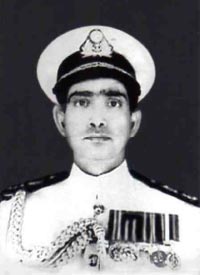 He spent his childhood and adolescence in Birahimpur, Kolkata and, following the Partition of India in 1947, at the family's residence in Purana Paltan, Dhaka. He received his early education in Kolkata and Dhaka before enrolling at Dhaka College, where he earned a reputation as an exceptionally bright, disciplined and hardworking student.
His family heritage reflected a proud tradition of leadership, scholarship and public service. Among his cousins were Sher-e-Sylhet Ajmal Ali Chowdhury, a former minister of undivided Pakistan, and General MAG Osmani, commander-in-chief of Bangladesh's Liberation War. His maternal family was equally renowned for its contributions to education, public administration and social welfare. Growing up in such an environment instilled in Mahbub Ali Khan the values of honesty, discipline, responsibility, patriotism and public service. His upbringing became a living school of leadership, wisdom and national service.
From his student years, Mahbub Ali Khan was known for his intelligence, humility and discipline. In 1952, he joined the Pakistan Navy as a cadet and underwent military training at the Combined Services Academy in Quetta. He later graduated with distinction from the Royal Naval College, Dartmouth, in the United Kingdom and received further training aboard British naval vessels.
His professionalism, competence and leadership qualities quickly earned him the respect and confidence of his peers and superiors. In 1963, in recognition of his outstanding performance, he received an honour from Queen Elizabeth II during his training in the United Kingdom�"a prestigious international acknowledgement of his professional excellence.
Bangladesh's War of Independence marked a new chapter in Mahbub Ali Khan's life. While serving in West Pakistan, he and his family were effectively held captive for an extended period. Even after Bangladesh achieved independence, he was unable to return home immediately. Overcoming numerous hardships, he finally returned to Bangladesh in 1973 with his wife and two daughters, travelling through Afghanistan and India. His return was more than the homecoming of a naval officer�"it represented a solemn commitment to devote himself wholeheartedly to serving the newly independent nation.
Upon his return, Mahbub Ali Khan dedicated himself to building the fledgling Bangladesh Navy. From serving as the first Bengali Commandant of the Chattogram Marine Academy to holding key positions at Naval Headquarters, he left a lasting mark through his professionalism and leadership. In 1976, he personally commanded the voyage that brought the Bangladesh Navy's first major warship, BNS Omar Farooq, from the United Kingdom to Bangladesh. The historic journey symbolised not only the acquisition of a naval vessel but also the emergence of the young Bangladesh Navy as a capable and confident maritime force on the international stage.
In 1979, he was appointed chief of the Bangladesh Navy, and in 1980 he was promoted to the rank of Rear Admiral. Under his leadership, the Navy underwent significant organisational reforms, improvements in training, the development of legal and institutional frameworks, and the laying of a strong foundation for future modernisation.
Following the devastating Bhola Cyclone of 1970, the island known as South Talpatti emerged in the Bay of Bengal, triggering competing territorial claims by Bangladesh and India. According to the article, under Rear Admiral Mahbub Ali Khan's leadership, the Bangladesh Navy maintained control over the island. He also led operations against pirates who had become active in the Bay of Bengal, taking firm measures to curb maritime crime. For him, safeguarding national sovereignty was never a matter for compromise; it was a question of national honour and dignity.
His distinguished career extended far beyond military leadership. In recognition of his administrative ability, he served as chairman of the Armed Forces Pay and Pension Committee, chairman of the Administrative Reorganisation Implementation Committee, and was among the key proponents of introducing Bangladesh's upazila system. He later held ministerial responsibilities in the Posts and Telecommunications, Communications, and Agriculture ministries, demonstrating that capable and principled leadership can succeed in any area of public service.
As Minister for Communications, he oversaw the initiation of several landmark infrastructure projects, including the Shahjalal Bridge, Lamakazi Bridge, Sheola Bridge, and numerous other road and bridge developments across the Sylhet region. His forward-looking vision for transport infrastructure continues to be remembered as an important contribution to Bangladesh's development.
Later, as minister for Agriculture, he placed particular emphasis on increasing agricultural production, promoting rural development and strengthening food security. He worked diligently to advance the vision of an agriculturally self-reliant Bangladesh championed by President Ziaur Rahman, supporting policies aimed at achieving sustainable national development.
The defining characteristic of Rear Admiral Mahbub Ali Khan's personality was his unwavering integrity. He firmly believed that "Patriotism is meaningless without honesty." This was not merely a principle he preached but one he embodied throughout his life. Even while occupying some of the highest offices in the country, he remained humble, selfless, punctual and deeply religious. Serving people was the central mission of his life.
His compassion also extended to social welfare. He inspired the establishment of Suravi, an organisation dedicated to the welfare of underprivileged children, and remained actively involved in charitable and humanitarian initiatives throughout his career. These efforts reflected his profound sense of responsibility toward society and his enduring commitment to public service.
Rear Admiral Mahbub Ali Khan's personal life was equally exemplary. After graduating, he married Syeda Iqbal Mand Banu in 1955. The couple had two daughters�"Shahina Khan (Bindu) and Dr Zubaida Khan (Binu), who later became known as Dr Zubaida Rahman. Mahbub Ali Khan named his younger daughter after his own mother, Zubaida, reflecting the deep affection and respect he held for both his mother and his daughter.
Dr Zubaida Rahman later established herself as a distinguished physician. She earned a Master's degree in Preventive Cardiology in the United Kingdom, graduating first among students from 52 countries enrolled in the programme. She is married to Tarique Rahman, the elder son of the late President Ziaur Rahman and former prime minister Begum Khaleda Zia, who currently serves as the prime minister of Bangladesh.
However, the relationship between the two families did not begin with this marriage. Long before they became relatives, they had developed a close bond based on mutual respect and friendship. President Ziaur Rahman's elder brother, Rezaur Rahman, served alongside Mahbub Ali Khan in the Navy, fostering strong ties between the two families. Ziaur Rahman held Mahbub Ali Khan's professionalism, integrity and patriotism in high regard, while Mahbub Ali Khan worked devotedly to implement President Zia's vision for Bangladesh's development. At the time, few could have imagined that the two families would eventually be united through the marriage of Dr Zubaida Rahman and Tarique Rahman. Today, that relationship continues to reflect a shared legacy of mutual respect, ideals and values.
On 5 August 1984, a Bangladesh Biman aircraft crashed, and Rear Admiral Mahbub Ali Khan personally supervised the rescue operations at the disaster site. The following day, 6 August, after completing his duties, he suffered a fatal heart attack. He was rushed to the Combined Military Hospital (CMH), where he passed away.
His untimely death at the age of just 49 was an irreparable loss for the nation. The article describes him as a patriotic son of Bangladesh whose dedication to duty continued until his final moments. This year marks the 42nd anniversary of his death. More than four decades later, remembering Rear Admiral Mahbub Ali Khan means remembering more than a former chief of the Navy or a former cabinet minister. It means honouring a family that has, across generations, contributed to education, statecraft, military leadership, public service and patriotism. It means paying tribute to a man who demonstrated that honesty, responsibility and love for one's country can make even a short life leave an enduring imprint on history.
Rear Admiral Mahbub Ali Khan remains a shining figure in Bangladesh's history. His service, ideals and the distinguished legacy of his family continue to inspire future generations, reminding them that a nation's true strength lies not in weapons but in character; not in power but in service; and that a person's true identity is defined not by the offices they hold, but by the lasting contributions they make to their country.
The writer is Additional Press Secretary at Prime Minister’s Office
Loading...
Loading...
Also read



Editor : Iqbal Sobhan Chowdhury
Published by the Editor on behalf of the Observer Ltd. from Globe Printers, 24/A, New Eskaton Road, Ramna, Dhaka.
Editorial, News and Commercial Offices : Aziz Bhaban (2nd floor), 93, Motijheel C/A, Dhaka-1000.
Phone: PABX- 41053001-06; Advertisement: 41053012; 01793317829, 01550707291, E-mail: [email protected], [email protected] Online: email: [email protected] 41053014; 01550707297 Advertisement: 01550707296
Published by the Editor on behalf of the Observer Ltd. from Globe Printers, 24/A, New Eskaton Road, Ramna, Dhaka.
Editorial, News and Commercial Offices : Aziz Bhaban (2nd floor), 93, Motijheel C/A, Dhaka-1000.
Phone: PABX- 41053001-06; Advertisement: 41053012; 01793317829, 01550707291, E-mail: [email protected], [email protected] Online: email: [email protected] 41053014; 01550707297 Advertisement: 01550707296


