



| HEADLINE |

|

UN member states urged to end impunity for Rohingya genocide
Published : Tuesday, 25 August, 2026 at 3:24 PM
Observer Online Desk


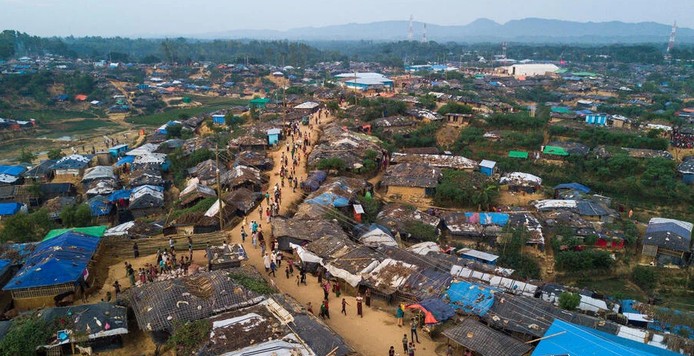
United Nations member states should take urgent action to end impunity for atrocities against the Rohingya people of Myanmar and reverse cuts in lifesaving assistance to Rohingya refugees as international courts move closer to delivering long-awaited justice, Fortify Rights said.
The Rohingya have waited far too long for justice, recognition, and a safe return.
“For Rohingya survivors, international justice is not an abstraction. It is one of the few remaining pathways to accountability after decades of persecution and repeated failures by states to protect them,” said Lynn Htet, Human Rights Specialist at Fortify Rights. “This year could mark a turning point for justice for the Rohingya. UN member states should make sure it does.”
Seventy Myanmar national and international human rights organizations, including Fortify Rights, Human Rights Watch, Amnesty International, the Burmese Rohingya Organization U.K., and dozens of multi-ethnic Myanmar-based groups, issued a joint statement marking nine years since the Myanmar military launched its 2017 campaign of genocide, which included mass killings, village burnings, mental harm, and forced displacement against the Rohingya.
The organizations called on the U.N. Security Council to refer the situation in Myanmar to the International Criminal Court (ICC), impose targeted financial sanctions, and establish a global arms embargo on the Myanmar military junta. They also urged governments, including members of the Association of Southeast Asian Nations (ASEAN), to press the Myanmar military to end attacks on civilians and release political prisoners, and called on the international community to urgently increase humanitarian assistance for Rohingya refugees.
“This should be a moment when governments are intensifying their support for the Rohingya, not retreating from them,” said Lynn Htet, Human Rights Specialist at Fortify Rights. “After nine years of impunity, international justice is finally moving forward, including a historic genocide case before the world’s highest court. No government should weaken support for Rohingya refugees and accountability mechanisms at a time when both are needed more than ever.”
In August 2017, Myanmar security forces killed thousands of Rohingya women, men, and children, razed hundreds of villages, and forced at least 700,000 Rohingya into neighboring Bangladesh.
In July 2018, Fortify Rights published “They Gave Them Long Swords,” a 160-page report that includes evidence that the Myanmar authorities made “extensive and systematic preparations” for attacks against Rohingya civilians.
The report found that the military’s acts constituted genocide and crimes against humanity, and it identified 22 Myanmar Army and police officials with command responsibility for the attacks who should be criminally investigated and potentially prosecuted for genocide and crimes against humanity.
Two months later, in September 2018, the U.N. Independent International Fact-Finding Mission on Myanmar concluded that senior Myanmar military generals should be investigated and prosecuted for genocide, crimes against humanity, and war crimes.
No Myanmar official has been held accountable for the 2017 atrocities to this day.
However, important international justice proceedings are advancing. In January 2026, the International Court of Justice (ICJ) held merits hearings in The Gambia v. Myanmar, a historic case alleging that the state of Myanmar is responsible for genocide against the Rohingya.
Fortify Rights Chief Executive Officer Matthew Smith joined The Gambia’s official delegation to the court. A judgment is expected later this year.
In November, 2024, the ICC prosecutor also requested an arrest warrant for Myanmar military chief Min Aung Hlaing for the alleged crimes against humanity of deportation and persecution of Rohingya, while a universal jurisdiction case initiated in Argentina - brought by Tun Khin of the Burmese Rohingya Organization U.K. and prominent Argentinian lawyer and former U.N. Special Rapporteur Tomas Quintana, who also sits on Fortify Rights’s Leadership Council - has resulted in arrest warrants for Myanmar military officials, including Min Aung Hlaing.
“The world has spent nine years telling Rohingya survivors that justice takes time,” said Zaw Win, Senior Human Rights Specialist at Fortify Rights. “In reality, Rohingya have waited decades for justice. Governments now have an obligation to ensure that justice is not obstructed, defunded, sanctioned, or abandoned at the moment it may finally be within reach.”
In the joint statement, the organizations warned that abuses against the Rohingya are continuing in Myanmar despite legally binding provisional measures issued by the ICJ requiring Myanmar to prevent genocidal acts and preserve evidence.
Fortify Rights has documented how Myanmar military forces have attacked Rohingya areas while continuing to restrict freedom of movement and access to humanitarian aid and health care.
The Arakan Army (AA), an ethnic armed resistance organization fighting the Myanmar junta, which now controls most townships in Rakhine State, is also responsible for atrocities against Rohingya.
The AA has killed and tortured Rohingya and subjected some to arbitrary detention, forced labor, movement restrictions, and forced recruitment. The joint statement notes that the AA also committed mass killings amounting to war crimes and large-scale arson against the Rohingya communities.
Since mid-2024, an estimated 150,000 more Rohingya have fled from Myanmar to Bangladesh, bringing the Rohingya refugee population in Bangladesh to more than 1.2 million.
At the same time, international aid cuts led by the U.S. government have worsened conditions for Rohingya refugees in Bangladesh, adversely affecting access to food, health care, education, and other basic services.
The deteriorating situation for Rohingya in Bangladesh and Myanmar has also contributed to an increasing number of Rohingya undertaking dangerous sea journeys, particularly toward Malaysia.
The joint statement notes that more than 820 Rohingya are believed to have died attempting sea crossings during the first months of 2026.
Those who reach Malaysia also face serious risks. Fortify Rights has documented the arbitrary and indefinite detention of Rohingya refugees in abusive immigration detention centers in Malaysia, where scores of detainees have died in recent years amid inadequate medical care and other inhumane conditions.
The organizations called on the international community to work closely with Bangladesh to increase funding for Rohingya refugees until conditions allow for their “voluntary, safe, dignified, and sustainable return” to Myanmar with full citizenship and human rights protections.
Countries hosting Rohingya should also ensure “effective protection mechanisms” to safeguard Rohingya “from hate, hostility, forced returns, abduction, kidnapping, trafficking, forced recruitment, and other forms of targeted violence” while also “ensuring their access to education and livelihoods,” the joint statement says.
The organizations said that “the roots of the Rohingya crisis” and the more recent atrocities committed throughout Myanmar since the February 2021 military coup d’etat are due to decades of impunity.
Fortify Rights said ASEAN should take a stronger role in breaking that cycle. ASEAN member states should refuse political legitimacy to the Myanmar military junta, press for the release of political prisoners, support accountability mechanisms, protect Rohingya refugees throughout the region, and ensure that no Rohingya are forcibly returned to Myanmar while conditions remain unsafe. Thailand’s recent embrace of coup-and-genocide leader Min Aung Hlaing, hosting him on an official state visit, was a strategic and moral failure, Fortify Rights said.
The U.S. should similarly reverse actions that weaken international justice efforts, Fortify Rights said.
In February 2025, U.S. President Donald Trump issued an executive order imposing sanctions against the ICC and restricting certain assistance to sanctioned ICC officials.
Fortify Rights Chief Executive Officer Matthew Smith and human rights advocate Akila Radhakrishnan subsequently filed a federal lawsuit challenging the sanctions after they forced them to stop communicating with the ICC Office of the Prosecutor about atrocity crimes, including crimes against the Rohingya.
A U.S. federal court later issued a preliminary injunction barring enforcement of the restrictions while the litigation continues.
The U.S. recently announced additional sanctions against the President of the ICC, Tomoko Akane of Japan, and Senior Trial Lawyer Abdoulaye Seye, who had been in charge of investigating government-supported settler violence against Palestinian civilians in the Israeli-occupied West Bank.
The Rohingya have waited far too long for justice, recognition, and a safe return.
“For Rohingya survivors, international justice is not an abstraction. It is one of the few remaining pathways to accountability after decades of persecution and repeated failures by states to protect them,” said Lynn Htet, Human Rights Specialist at Fortify Rights. “This year could mark a turning point for justice for the Rohingya. UN member states should make sure it does.”
Seventy Myanmar national and international human rights organizations, including Fortify Rights, Human Rights Watch, Amnesty International, the Burmese Rohingya Organization U.K., and dozens of multi-ethnic Myanmar-based groups, issued a joint statement marking nine years since the Myanmar military launched its 2017 campaign of genocide, which included mass killings, village burnings, mental harm, and forced displacement against the Rohingya.
The organizations called on the U.N. Security Council to refer the situation in Myanmar to the International Criminal Court (ICC), impose targeted financial sanctions, and establish a global arms embargo on the Myanmar military junta. They also urged governments, including members of the Association of Southeast Asian Nations (ASEAN), to press the Myanmar military to end attacks on civilians and release political prisoners, and called on the international community to urgently increase humanitarian assistance for Rohingya refugees.
“This should be a moment when governments are intensifying their support for the Rohingya, not retreating from them,” said Lynn Htet, Human Rights Specialist at Fortify Rights. “After nine years of impunity, international justice is finally moving forward, including a historic genocide case before the world’s highest court. No government should weaken support for Rohingya refugees and accountability mechanisms at a time when both are needed more than ever.”
In August 2017, Myanmar security forces killed thousands of Rohingya women, men, and children, razed hundreds of villages, and forced at least 700,000 Rohingya into neighboring Bangladesh.
In July 2018, Fortify Rights published “They Gave Them Long Swords,” a 160-page report that includes evidence that the Myanmar authorities made “extensive and systematic preparations” for attacks against Rohingya civilians.
The report found that the military’s acts constituted genocide and crimes against humanity, and it identified 22 Myanmar Army and police officials with command responsibility for the attacks who should be criminally investigated and potentially prosecuted for genocide and crimes against humanity.
Two months later, in September 2018, the U.N. Independent International Fact-Finding Mission on Myanmar concluded that senior Myanmar military generals should be investigated and prosecuted for genocide, crimes against humanity, and war crimes.
No Myanmar official has been held accountable for the 2017 atrocities to this day.
However, important international justice proceedings are advancing. In January 2026, the International Court of Justice (ICJ) held merits hearings in The Gambia v. Myanmar, a historic case alleging that the state of Myanmar is responsible for genocide against the Rohingya.
Fortify Rights Chief Executive Officer Matthew Smith joined The Gambia’s official delegation to the court. A judgment is expected later this year.
In November, 2024, the ICC prosecutor also requested an arrest warrant for Myanmar military chief Min Aung Hlaing for the alleged crimes against humanity of deportation and persecution of Rohingya, while a universal jurisdiction case initiated in Argentina - brought by Tun Khin of the Burmese Rohingya Organization U.K. and prominent Argentinian lawyer and former U.N. Special Rapporteur Tomas Quintana, who also sits on Fortify Rights’s Leadership Council - has resulted in arrest warrants for Myanmar military officials, including Min Aung Hlaing.
“The world has spent nine years telling Rohingya survivors that justice takes time,” said Zaw Win, Senior Human Rights Specialist at Fortify Rights. “In reality, Rohingya have waited decades for justice. Governments now have an obligation to ensure that justice is not obstructed, defunded, sanctioned, or abandoned at the moment it may finally be within reach.”
In the joint statement, the organizations warned that abuses against the Rohingya are continuing in Myanmar despite legally binding provisional measures issued by the ICJ requiring Myanmar to prevent genocidal acts and preserve evidence.
Fortify Rights has documented how Myanmar military forces have attacked Rohingya areas while continuing to restrict freedom of movement and access to humanitarian aid and health care.
The Arakan Army (AA), an ethnic armed resistance organization fighting the Myanmar junta, which now controls most townships in Rakhine State, is also responsible for atrocities against Rohingya.
The AA has killed and tortured Rohingya and subjected some to arbitrary detention, forced labor, movement restrictions, and forced recruitment. The joint statement notes that the AA also committed mass killings amounting to war crimes and large-scale arson against the Rohingya communities.
Since mid-2024, an estimated 150,000 more Rohingya have fled from Myanmar to Bangladesh, bringing the Rohingya refugee population in Bangladesh to more than 1.2 million.
At the same time, international aid cuts led by the U.S. government have worsened conditions for Rohingya refugees in Bangladesh, adversely affecting access to food, health care, education, and other basic services.
The deteriorating situation for Rohingya in Bangladesh and Myanmar has also contributed to an increasing number of Rohingya undertaking dangerous sea journeys, particularly toward Malaysia.
The joint statement notes that more than 820 Rohingya are believed to have died attempting sea crossings during the first months of 2026.
Those who reach Malaysia also face serious risks. Fortify Rights has documented the arbitrary and indefinite detention of Rohingya refugees in abusive immigration detention centers in Malaysia, where scores of detainees have died in recent years amid inadequate medical care and other inhumane conditions.
The organizations called on the international community to work closely with Bangladesh to increase funding for Rohingya refugees until conditions allow for their “voluntary, safe, dignified, and sustainable return” to Myanmar with full citizenship and human rights protections.
Countries hosting Rohingya should also ensure “effective protection mechanisms” to safeguard Rohingya “from hate, hostility, forced returns, abduction, kidnapping, trafficking, forced recruitment, and other forms of targeted violence” while also “ensuring their access to education and livelihoods,” the joint statement says.
The organizations said that “the roots of the Rohingya crisis” and the more recent atrocities committed throughout Myanmar since the February 2021 military coup d’etat are due to decades of impunity.
Fortify Rights said ASEAN should take a stronger role in breaking that cycle. ASEAN member states should refuse political legitimacy to the Myanmar military junta, press for the release of political prisoners, support accountability mechanisms, protect Rohingya refugees throughout the region, and ensure that no Rohingya are forcibly returned to Myanmar while conditions remain unsafe. Thailand’s recent embrace of coup-and-genocide leader Min Aung Hlaing, hosting him on an official state visit, was a strategic and moral failure, Fortify Rights said.
The U.S. should similarly reverse actions that weaken international justice efforts, Fortify Rights said.
In February 2025, U.S. President Donald Trump issued an executive order imposing sanctions against the ICC and restricting certain assistance to sanctioned ICC officials.
Fortify Rights Chief Executive Officer Matthew Smith and human rights advocate Akila Radhakrishnan subsequently filed a federal lawsuit challenging the sanctions after they forced them to stop communicating with the ICC Office of the Prosecutor about atrocity crimes, including crimes against the Rohingya.
A U.S. federal court later issued a preliminary injunction barring enforcement of the restrictions while the litigation continues.
The U.S. recently announced additional sanctions against the President of the ICC, Tomoko Akane of Japan, and Senior Trial Lawyer Abdoulaye Seye, who had been in charge of investigating government-supported settler violence against Palestinian civilians in the Israeli-occupied West Bank.
Loading...
Loading...
Also read



Editor : Iqbal Sobhan Chowdhury
Published by the Editor on behalf of the Observer Ltd. from Globe Printers, 24/A, New Eskaton Road, Ramna, Dhaka.
Editorial, News and Commercial Offices : Aziz Bhaban (2nd floor), 93, Motijheel C/A, Dhaka-1000.
Phone: PABX- 41053001-06; Advertisement: 41053012; 01793317829, 01550707291, E-mail: [email protected], [email protected] Online: email: [email protected] 41053014; 01550707297 Advertisement: 01550707296
Published by the Editor on behalf of the Observer Ltd. from Globe Printers, 24/A, New Eskaton Road, Ramna, Dhaka.
Editorial, News and Commercial Offices : Aziz Bhaban (2nd floor), 93, Motijheel C/A, Dhaka-1000.
Phone: PABX- 41053001-06; Advertisement: 41053012; 01793317829, 01550707291, E-mail: [email protected], [email protected] Online: email: [email protected] 41053014; 01550707297 Advertisement: 01550707296


