



| HEADLINE |

|

Nepal flood death toll rises to 547, 517 foreigners still missing
Published : Friday, 28 August, 2026 at 6:03 PM
Observer Online Report


Collected Photo
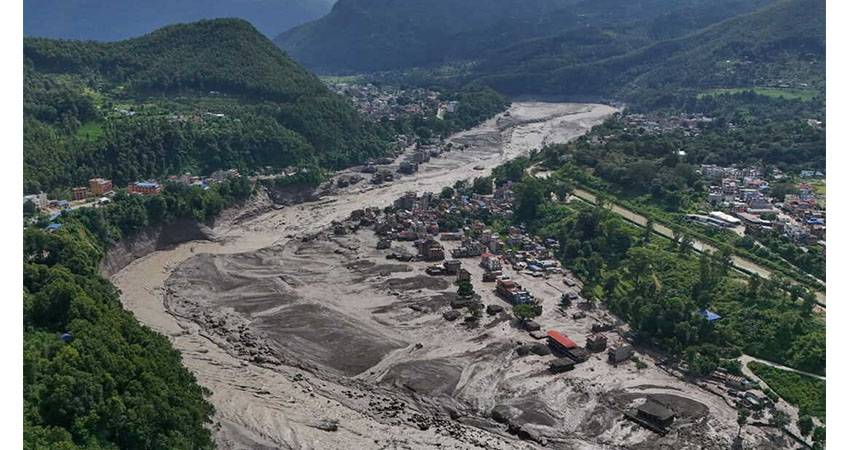
The death toll from sudden floods and landslides triggered by a glacial collapse in Nepal has risen to 547, while 1,473 people have been injured, police said Friday.
The disaster struck on Wednesday along the Nepal-Tibet border, causing severe flooding and landslides in several areas. Earlier on Friday, Nepal’s National Disaster Risk Reduction and Management Authority (NDRRMA) had reported 538 deaths. The authority said 977 people remained missing, including 517 foreign nationals. So far, 121 foreigners have been rescued, according to the Nepal Tourism Board.
Police said 4,473 personnel are currently involved in the rescue operation. The Prime Minister’s Office has also announced the deployment of an additional 1,200 army personnel to assist rescue efforts in the flood-hit riverbank areas.
Chinese rescuers reach worst-hit area
According to AFP, Chinese rescue teams have reached the main area devastated by the glacial collapse and are facing extremely dangerous and difficult conditions while searching for hundreds of missing people.
China’s state-run Xinhua news agency reported that a 21-member rescue team reached the site for the first time on Friday afternoon, two days after the border trade hub of Gyirong in Tibet was buried under mud and debris.
The sudden floods and landslides on Wednesday have also killed five people in Tibet, while 558 remain missing. Chinese President Xi Jinping has held a meeting with senior officials to discuss the ongoing rescue operation.
Xinhua, citing officials, reported that several hidden risks remain in the surrounding areas, including glaciers, glacial lakes and landslide-prone zones. These hazards are making rescue operations extremely challenging.
A large lake formed upstream after water was blocked by mudslides following the disaster on Wednesday. There were fears that the lake could burst and trigger another major flood. However, Chinese state media reported on Friday that the risk posed by the lake was gradually declining and rescue operations were proceeding in an orderly manner.
Earlier, China temporarily suspended rescue operations in the worst-hit areas after water began overflowing from the lake, raising concerns of further flooding.
-HIS
Loading...
Loading...
Also read








Editor : Iqbal Sobhan Chowdhury
Published by the Editor on behalf of the Observer Ltd. from Globe Printers, 24/A, New Eskaton Road, Ramna, Dhaka.
Editorial, News and Commercial Offices : Aziz Bhaban (2nd floor), 93, Motijheel C/A, Dhaka-1000.
Phone: PABX- 41053001-06; Advertisement: 41053012; 01793317829, 01550707291, E-mail: [email protected], [email protected] Online: email: [email protected] 41053014; 01550707297 Advertisement: 01550707296
Published by the Editor on behalf of the Observer Ltd. from Globe Printers, 24/A, New Eskaton Road, Ramna, Dhaka.
Editorial, News and Commercial Offices : Aziz Bhaban (2nd floor), 93, Motijheel C/A, Dhaka-1000.
Phone: PABX- 41053001-06; Advertisement: 41053012; 01793317829, 01550707291, E-mail: [email protected], [email protected] Online: email: [email protected] 41053014; 01550707297 Advertisement: 01550707296


