



| HEADLINE |

|
Bangladesh Cannot Bear Rohingya Crisis Burden Alone


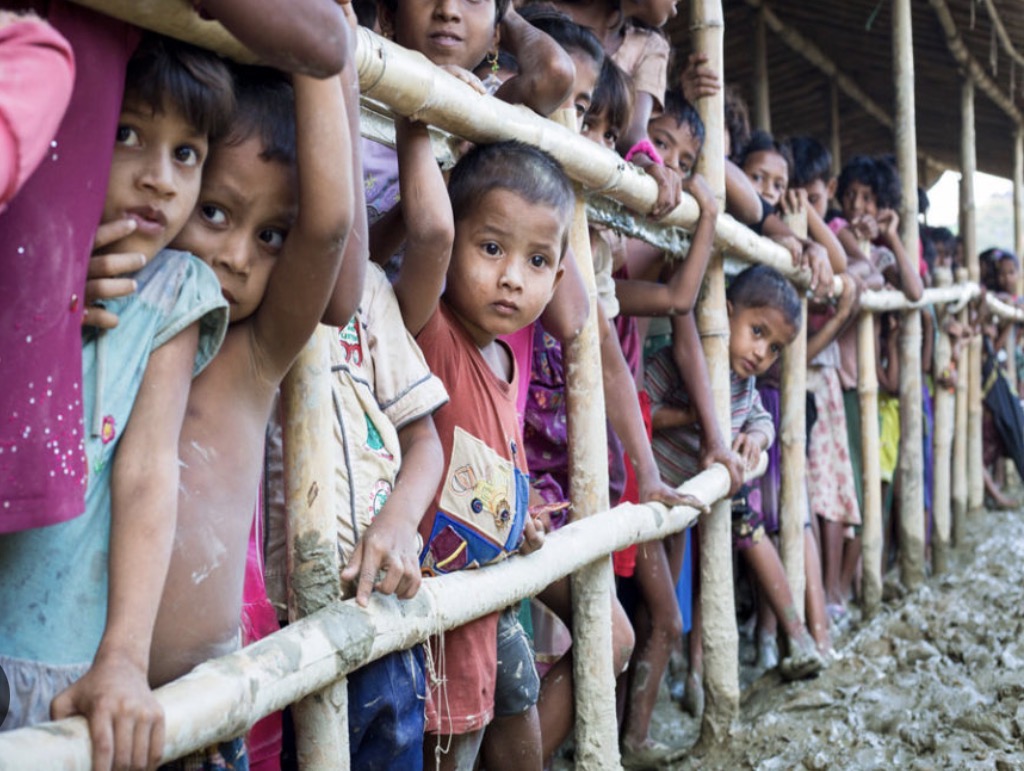
Bangladesh has urged the OIC to increase diplomatic pressure on Myanmar and provide stronger financial and humanitarian support, saying it cannot continue to bear the burden of the Rohingya crisis alone.
The call was made at a meeting of the OIC Contact Group on the Rohingya in New York. The meeting was held on the sidelines of the 81st session of the United Nations General Assembly.
In Bangladesh’s statement, Foreign Adviser and UN General Assembly President-elect Dr Khalilur Rahman called for sustained and coordinated diplomatic pressure on Myanmar.
He also called for increased humanitarian funding and continued international support for justice and accountability.
The statement said the Rohingya crisis has entered its ninth year. More than 1.3 million Rohingyas are currently living in Bangladesh.
More than 140,000 Rohingyas have arrived in Bangladesh since the beginning of 2024, it said.
Despite its limited resources, Bangladesh has continued to provide shelter and humanitarian assistance to forcibly displaced Myanmar nationals for nearly a decade.
The scale of the crisis is also growing. Around 30,000 to 35,000 children are born in Rohingya camps in Bangladesh every year, according to the statement.
As the crisis becomes more prolonged, its impact is extending beyond humanitarian concerns. It is also affecting regional peace, security and stability.
Bangladesh warned that prolonged displacement is increasing the risks of irregular sea journeys, human trafficking, drug trafficking and other forms of transnational crime.
“The longer the crisis persists, the greater these risks will become,” the statement said.
It warned that failure to act now could create more serious threats in the future.
Solution lies in Myanmar
Bangladesh reiterated that the Rohingya crisis originated in Myanmar and that its solution also lies there.
The country’s ultimate objective is the safe, voluntary, dignified and sustainable repatriation of Rohingyas to their homeland.
For this to happen, their rights and security must be ensured. A conducive environment for their return must also be created in Myanmar.
Bangladesh welcomed the OIC decision to make Rohingya repatriation a priority under its 2026–2035 Ten-Year Programme of Action.
Until conditions are created for safe and sustainable repatriation, Bangladesh called for greater international burden-sharing.
Funding gap
The financial pressure on the humanitarian response remains a major concern.
The 2026 Joint Response Plan requires $710.5 million to support up to 1.56 million people, including Rohingya refugees and host communities in Bangladesh.
The appeal is 26 per cent lower than the 2025 request.
Bangladesh stressed that the lower appeal should not be seen as a reduction in humanitarian needs. Rather, it reflects the current international humanitarian financing situation and the amount that can realistically be mobilised.
Bangladesh urged OIC member states to provide urgent, predictable and long-term funding for the humanitarian response.
It also called for greater support for Bangladeshi communities hosting Rohingyas and sharing the burden of the crisis for nearly a decade.
“Bangladesh cannot bear this burden alone,” the statement said.
Support for international justice
Bangladesh also highlighted the importance of international justice and accountability.
It expressed appreciation for the diplomatic and financial support provided by OIC member states to The Gambia’s case against Myanmar at the International Court of Justice (ICJ).
Bangladesh said it had recently contributed around $1.3 million to an OIC fund for the Rohingya to support the legal process.
Dhaka also expects the issue to receive due attention at the upcoming meeting of the OIC Council of Foreign Ministers in Baghdad.
According to Bangladesh, accountability is not only about delivering justice for past crimes. It is also necessary to prevent similar violations in the future.
Bangladesh therefore called on OIC member states to continue supporting international justice and accountability mechanisms in line with international law.
Three immediate priorities
Bangladesh identified three immediate priorities for addressing the Rohingya crisis.
First, diplomatic pressure on Myanmar must continue in coordination with the United Nations and ASEAN.
Second, urgent and predictable funding must be secured for the 2026 Joint Response Plan.
Third, international mechanisms for justice and accountability must be strengthened.
After nearly a decade, Bangladesh warned against allowing the Rohingya crisis to disappear from the international agenda.
The crisis, it said, has become a test of the international community’s solidarity, humanity and commitment to international law.
“Humanitarian fatigue must not turn into political indifference,” Bangladesh said.
“The Rohingyas need more than an opportunity to survive temporarily; they need a future in their own homeland.”
Bangladesh called on the OIC to play a stronger role in creating conditions for the safe, voluntary, dignified and sustainable return of Rohingyas to Myanmar.







Published by the Editor on behalf of the Observer Ltd. from Globe Printers, 24/A, New Eskaton Road, Ramna, Dhaka.
Editorial, News and Commercial Offices : Aziz Bhaban (2nd floor), 93, Motijheel C/A, Dhaka-1000.
Phone: PABX- 41053001-06; Advertisement: 41053012; 01793317829, 01550707291, E-mail: [email protected], [email protected] Online: email: [email protected] 41053014; 01550707297 Advertisement: 01550707296


