



| HEADLINE |

|
Feed prices rise as raw material shortages squeeze poultry sector
Published : Wednesday, 23 September, 2026 at 6:36 PM
Toriqul Islam Sumon


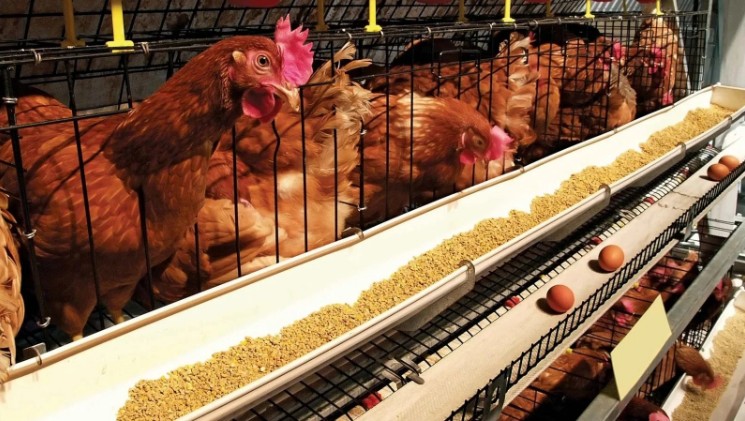
Feed management plays a vital role in livestock development. However, rising feed prices are putting severe pressure on farmers, with raw material shortages driving up production costs and increasing the risk of widespread closures in the poultry sector.
Prices of other protein sources used in feed production have also increased significantly. In addition, fluctuations in foreign exchange rates, particularly the US dollar, are affecting the cost of import-dependent commodities. The corn market, in particular, has come under severe pressure in recent times.
Mominul, a poultry farmer from Panchbari in Dinajpur Sadar Upazila, used to purchase 70 bags of feed a month for his broiler chickens. Following two successive price hikes, he can no longer afford that quantity and has reduced his purchase to 60 bags.
As a result, the chickens are not reaching their target weight, and he is failing to secure good prices in the market. He fears that if the situation continues, he will be forced to close his farm within a few days.
Farmers across different regions of the country are facing a similar ordeal. Alongside rising feed costs, the prices of other inputs, including medicines and vaccines, have also increased over the past few months.
On the other hand, despite rising production costs, egg and chicken prices do not always increase proportionately. Incurring continuous losses, many farmers are reducing production, while some are closing their businesses altogether.
According to industry insiders and recent market analyses, prices of nearly all key feed ingredients have increased over the past month. Corn with 13 per cent moisture content is currently priced at BDT 38.80 per kg, up from BDT 31.30 a month ago.
De-oiled rice bran (DORB) has increased from BDT 26 to BDT 33 per kg. Rice bran containing 16 per cent oil has risen from BDT 33 to BDT 39. Mustard oilcake has increased from BDT 36.50 to BDT 39.70 per kg, while soybean meal has surged from BDT 58 to BDT 66 per kg.
Industry estimates show that corn was available at BDT 28 to BDT 29 per kg during the March-May season, but its price rose to BDT 38-BDT 40 during June, July and August. In the international market, corn prices have risen from $235-$240 per tonne to nearly $290.
This increase in the price of corn, a primary raw material, has a direct impact on feed prices. As feed prices rise, the cost of poultry, fish and livestock production also increases.
Explaining the reasons behind the rising prices of poultry and livestock feed, industry stakeholders said around 80 per cent to 85 per cent of the total production cost of quality feed comes from raw material procurement.
When basic ingredients such as corn, soybean meal, rice bran and DORB become more expensive locally or internationally, feed mills find it difficult to maintain their previous selling prices. Artificial market shortages can also push up prices.
Stakeholders therefore emphasise that efforts should focus not only on controlling feed prices but also on monitoring raw material prices and supply chain management.
Hafizur, a poultry farmer in Bogura Sadar, said prices of various types of animal feed had increased by BDT 2 to BDT 3 per kg over the past week. A 50-kg bag of feed has gone up by as much as BDT 150.
However, bran and corn have seen the sharpest increases. A 50-kg bag of bran has risen from BDT 1,300 to BDT 1,800, while corn has increased from BDT 25 to BDT 37 per kg. A 50-kg bag of poultry feed now costs as much as BDT 3,675.
Salim Sheikh, an animal feed seller in Kapasia Upazila Sadar of Gazipur, said chicken feed represents the largest expense for farmers, accounting for up to 80 per cent of total production costs in some cases.
Due to the sharp rise in corn prices, all types of feed have become more expensive. Gas and electricity shortages are also disrupting feed production, forcing sellers to buy at higher prices and pass the additional cost on to buyers. As a result, customer numbers have declined due to the high prices.
Protesting against increased production costs caused by rising feed prices, farmers have taken to the streets in various parts of the country over the past four months.
From June to September, farmers held human chains, demonstrations, road blockades, egg-smashing protests and submitted memorandums in Rajshahi, Gazipur, Pabna, Kishoreganj, Cumilla, Narsingdi, Dhaka, Kushtia and Mymensingh.
The programmes demanded lower feed prices, reduced import duties and taxes on raw materials, and fair prices for eggs and chicken.
Insiders said prices of key feed ingredients have risen in both local and international markets. This has been compounded by fluctuations in the dollar exchange rate, import costs, local market supply and stock levels, making it difficult to reduce feed prices.
Mosharraf Hossain Chowdhury, president of the Bangladesh Poultry Industries Association (BPIA), said raw materials for feed mills are mostly import-dependent.
A major portion of feed consists of corn. Locally produced corn lasts for less than three months, while imported corn meets demand for the rest of the year.
Global conflicts have driven up freight costs significantly. With corn priced at BDT 39-BDT 40 per kg, even a BDT 4 increase in feed prices leaves no profit margin for mill owners.
Essential ingredients such as soybean meal, rice bran and DORB have also been affected by international price increases. Consequently, several feed mills have scaled down production.
He added that the government had also raised the corporate tax rate for industry owners. Regardless of profitability, businesses are subject to a 27.5 per cent tax rate.
If the government reduces the rate to 15 per cent, industry owners may see some profitability, which could positively affect the poultry sector, boost production and safeguard farmers' interests, he said.
Russell Pradhan, general secretary of the Bangladesh Marginal Poultry Farmers Association, said local supplies of DORB and rice bran should first be prioritised to meet domestic demand to address shortages and price hikes in feed raw materials.
If necessary, temporary export bans or strict controls could be imposed on these items, he said. Reducing VAT, taxes and duties on imported raw materials, along with increased monitoring to prevent artificial shortages, is also crucial.
Reducing feed prices will lower farm production costs and help keep egg and poultry prices under control, he added.
Dr Md Shafiqur Rahman Sishir, associate professor and head of the Department of Animal Nutrition at Bangladesh Agricultural University, said domestic demand for local raw materials such as DORB and rice bran should be met first.
However, rather than banning exports entirely, a balance must be maintained between the interests of producers and local industries, he said.
If international raw material prices rise, import-level taxes and duties can be adjusted temporarily. In the long term, he stressed the need to increase local production of crops such as corn to reduce import dependence.
Md Shahjaman Khan, acting director general of the Department of Livestock Services (DLS), said the government was working to lower the cost of feed and other inputs so that farmers could produce poultry at a lower cost.
Ensuring safe and affordable poultry products for the public requires reducing production costs, he said. To address the issue, authorities plan to meet feed mill owners shortly to take necessary measures to reduce input costs across the sector.
Loading...
Loading...
Also read









Editor : Iqbal Sobhan Chowdhury
Published by the Editor on behalf of the Observer Ltd. from Globe Printers, 24/A, New Eskaton Road, Ramna, Dhaka.
Editorial, News and Commercial Offices : Aziz Bhaban (2nd floor), 93, Motijheel C/A, Dhaka-1000.
Phone: PABX- 41053001-06; Advertisement: 41053012; 01793317829, 01550707291, E-mail: [email protected], [email protected] Online: email: [email protected] 41053014; 01550707297 Advertisement: 01550707296
Published by the Editor on behalf of the Observer Ltd. from Globe Printers, 24/A, New Eskaton Road, Ramna, Dhaka.
Editorial, News and Commercial Offices : Aziz Bhaban (2nd floor), 93, Motijheel C/A, Dhaka-1000.
Phone: PABX- 41053001-06; Advertisement: 41053012; 01793317829, 01550707291, E-mail: [email protected], [email protected] Online: email: [email protected] 41053014; 01550707297 Advertisement: 01550707296


