



| HEADLINE |

|

The Moral-Material Element for Development Planning of New Bangladesh
Published : Wednesday, 4 November, 2026 at 12:00 AM
Masudul Alam Choudhury


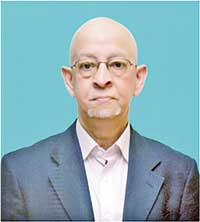 Today, the global humanity in general feels the need for, or cowers under the shroud in darkness, avoiding the moral duty of combining wellbeing with growth. By this moral awakening by command or quiet condescension, the parting of the age of sheer calculative economics, is giving way to the dawning of the new age of socio-philosophical economics. We find this to be the case of the most erudite minds among academics and development planners -- Amartya Sen, John Rawls, Dworkin, many others of whom not the least is the Nobel Laureate, Professor Dr Mohammad Yunus on the economics of poverty alleviation.
A GLIMPSE TOWARDS MORAL RECOVERY OF A BENIGN DEEVELOPMENT PLANNING WORLDVIEW
Their contributions on the role of the philosophy of morality like freedom embedded in the objective meaning of economic development have excited the indispensable thinking in the moral centrepiece of our holistic understanding of socio-economic development. The market-institutional conjoint approach to the formation of a good society of moral gifts and exchanges of goods, services, and technology, laments for systemic unification. The extension of the moral consciousness in human experience can also be found in Dworkin’s theory of law. On this matter is written, “Dworkin argues that, moral principles, which people uphold dearly, are often wrong. This legal contradiction is found even to the extent that, certain crimes are acceptable if one’s principles are skewed enough.” Dworkin’s moral theory of law has indeed, impelled the need for normative interpretation of law, contrary to its evidential procedure followed by the courts under positivism.
Professor Mohammad Yunus’ moral calling in socio-economic perspective is expressed deeply in his poverty alleviation project of the Grameen Bank, and in his later academic writing entitled, A World of Three Zeros. The publisher of this book writes, “By creating a world with zero poverty, zero unemployment, and zero net carbon emissions, Yunus presents his vision of a world bereft of neo-liberal capitalism for a new economic order based on social business and sustainability.” The constellation of such thoughts and their enaction in the whole of the knowledge-centred world that yearns for the moral worth of the civil society and the ideals of participative development worldview, today forms the holistic meaning of socio-economic development, law, geo-politics, and all.
In the case of Bangladesh, the moral element of holistic socio-economic development ought to be the new framework of her programme of reform post-Sheikh Hasina’s downfall in every respect - moral, economic, social, and mature demise of an enlightened nation.
BANGLADESH CONSCIOUSNESS TOWARDS A GLOBAL MORAL-MATERIAL DEVELOPMENT WORLDVIEW
Premised in the moral paradigm of development, Bangladesh and the world nation of Islam (ummah) ought to deepen the moral meaning to the world at large by the new awakening. In the case of Bangladesh, the moral element of holistic socio-economic development ought to be the new framework of her programme of reform post-Sheikh Hasina’s downfall in every respect - moral, economic, social, and mature demise of an enlightened nation. In the case of the moral element of OIC, as in the original and continued value of her founding preamble, the moral value complemented with the material gains ought to frame the progressive sustainability of socio-economic development.
Unfortunately, such is not found in the presentation of the Bangladesh Adviser of Education and Planning, in favour of the kleptocratic capitalism that remains entrenched in the neo-liberal neoclassical micro- and macro- economic school. His questionable comment on the present thought-provoking paradigm of establishing and sustaining participative complementarities on the moral-material essence of development was as follows (the Star newspaper has confirmed the Advisers comment): “‘Now it has become a moral issue whether to buy dialysis machines or invest in public health,’ he said, adding that even seasoned economists and philosophers like Amartya Sen and John Rawls may not be able to come up with a solution for such a moral dilemma.” This is a dispelling maturity view. It should be revamped in Bangladesh future outlook in favour of the imminent development worldview of interfacing moral and material pressing needs of the time. This will spell out the sustainable and participative human ecological worldview of mature thought. Unfortunately, Today, Muslim thinkers and academics have failed to inculcate such a mature thinking and approach in their outmoded erudition. Instead, they have followed the outlandish ideas of trade-off and marginalized wellbeing in the moral value being dissociated from the material growth sectors. Bangladesh society like all other ones of the ummah has remained in the immiserating grips of neoclassical economic assumptions.
A BANGLADESH PARTICIPATIVE MORAL-MATERIAL, WELLBEING-GROWTH DEVELOPMENT PLANNING PARADIGM
Change to the contrary participative socio-economic moral-material embedded worldview is the order of today. Indeed, this area of profound epistemic thought constitutes a most significant pathway for socio-scientific thinking and application in the present emergent vista of ontological-epistemological freshness. The academic profession, political foresight, and sustainable evolution of Bangladesh society, ought to derive and establish the originating praxis of knowledge breeding the moral-material architecture of an educated, productive, and creatively thoughtful young Bangladesh society of now and tomorrow.
The writer is a retired Professor of Economics, Cape Breton University, Nova Scotia, Canada

Loading...
Loading...
Also read



Editor : Iqbal Sobhan Chowdhury
Published by the Editor on behalf of the Observer Ltd. from Globe Printers, 24/A, New Eskaton Road, Ramna, Dhaka.
Editorial, News and Commercial Offices : Aziz Bhaban (2nd floor), 93, Motijheel C/A, Dhaka-1000.
Phone: PABX- 41053001-06; Advertisement: 41053012; 01793317829, 01550707291, 01550707296
E-mail: [email protected], [email protected]. [email protected], [email protected], [email protected], [email protected], Online-email: [email protected]


