



| HEADLINE |

|

Feni blacksmiths struggle amid rising costs
Published : Saturday, 23 May, 2026 at 12:00 AM
Our Correspondent


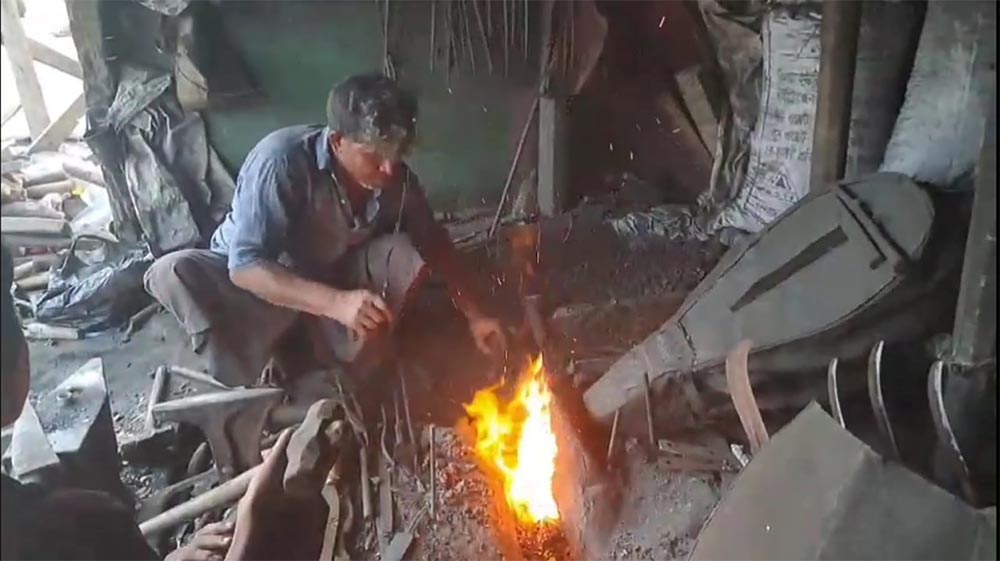 FENI, May 22: Blacksmith workshops across Feni have become busy ahead of Eid-ul-Azha as demand for sacrificial knives, cleavers, and other metal tools rises sharply across the district.
The traditional "kamarpalli" areas are now filled with the sound of hammering iron and burning coal furnaces, where artisans are working from early morning till late night to meet growing orders for Eid.
However, behind this seasonal rush, blacksmiths are facing increasing pressure due to rising production costs, including higher prices of raw materials, fuel, and daily essentials. Many artisans say that although demand has increased, their profit margins continue to shrink.
With Eid-ul-Azha approaching, orders for items such as knives, da (large cutting tools), cleavers, boti, and various agricultural implements have surged. Workers are heating iron in coal-fired furnaces and shaping them manually using traditional techniques before supplying finished products to local markets.
Blacksmiths said the Eid season typically brings their highest workload of the year, often several times higher than normal periods. Yet they are struggling to balance increased demand with rising expenses and limited earnings.
Many workers also pointed to competition from factory-made tools, which are cheaper and widely available in markets. This has further reduced demand for traditional handmade products outside the Eid season.
Artisans said they are also suffering from a lack of modern equipment, limited access to low-interest loans, and inadequate marketing support. As a result, many families engaged in this centuries-old profession fear long-term decline.
Nikhil Karmakar, a blacksmith from the Trunk Road area near Thanirnibas, said the traditional industry urgently needs government support to survive.
He called for technical training, easy-term bank loans, modern machinery, and improved marketing facilities to ensure sustainability and attract younger generations to the profession.
"We are working hard day and night, but rising costs are making it difficult to survive," he said, adding that without support, the next generation may leave the profession.
Meanwhile, local buyer Mohammad Salah Uddin said the sound of hammering iron and glowing furnaces still reflects the living heritage of rural craftsmanship. However, he noted that prices of essential tools have increased compared to previous years.
He warned that without timely support and modernisation, the traditional blacksmith industry could gradually disappear despite its cultural importance in rural Bangladesh.
Loading...
Loading...
Also read



Editor : Iqbal Sobhan Chowdhury
Published by the Editor on behalf of the Observer Ltd. from Globe Printers, 24/A, New Eskaton Road, Ramna, Dhaka.
Editorial, News and Commercial Offices : Aziz Bhaban (2nd floor), 93, Motijheel C/A, Dhaka-1000.
Phone: PABX- 41053001-06; Advertisement: 41053012; 01793317829, 01550707291, E-mail: [email protected], [email protected] Online: email: [email protected] 41053014; 01550707297 Advertisement: 01550707296
Published by the Editor on behalf of the Observer Ltd. from Globe Printers, 24/A, New Eskaton Road, Ramna, Dhaka.
Editorial, News and Commercial Offices : Aziz Bhaban (2nd floor), 93, Motijheel C/A, Dhaka-1000.
Phone: PABX- 41053001-06; Advertisement: 41053012; 01793317829, 01550707291, E-mail: [email protected], [email protected] Online: email: [email protected] 41053014; 01550707297 Advertisement: 01550707296


