



| HEADLINE |

|

A long journey, a presidential turn
Published : Thursday, 13 August, 2026 at 6:55 PM
Observer Online Report


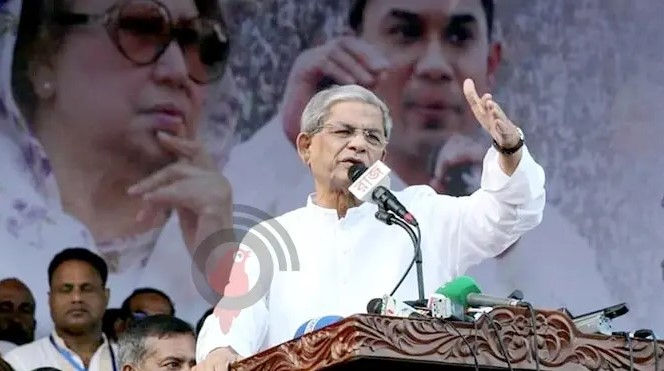
From acting on theatre stages and teaching economics to serving as a parliamentarian, state minister, cabinet minister and BNP secretary general, Mirza Fakhrul Islam Alamgir has traversed a political career spanning more than five decades. Now, the veteran politician stands at the threshold of another defining chapter as the ruling Bangladesh Nationalist Party (BNP) has nominated him as its candidate for the country’s next presidency.
The nomination, announced by the BNP on Thursday, puts the 78-year-old politician in contention to become Bangladesh’s next head of state following the resignation of President Mohammed Shahabuddin. The constitutional process for electing the president is yet to be completed, so his eventual election is not final.
Fakhrul’s journey to the top of national politics, however, began far from the corridors of power.
A beginning on the theatre stage
Before becoming one of Bangladesh’s most recognizable political figures, Fakhrul was involved in theatre and cultural activities in his hometown of Thakurgaon.
He became involved in theatre during his student years and later acted in and directed plays. In a recent appearance on the popular magazine programme 'Ityadi', he spoke about his cultural background and his early involvement in theatre.
Fakhrul has said that his introduction to theatre came under the guidance of theatre personality Fani Bhushan Palit. He also had opportunities to perform on stage with noted actor Anwar Hossain.
Theatre was not his only interest outside politics. He played cricket in Thakurgaon and was also involved in sports organization.
When asked which of his identities as a theatre practitioner, teacher or politician, he found most enjoyable, Fakhrul said the cultural world was undoubtedly the most enjoyable.
He has also demonstrated his interest in literature and recitation, including reciting lines from Rabindranath Tagore’s poem 'Duhshomoy' on 'Ityadi'.
Birth and education
Mirza Fakhrul Islam Alamgir was born on January 26, 1948, in Thakurgaon. His father, Mirza Ruhul Amin, was a lawyer and a parliamentarian, while his mother was Mirza Fatema Amin.
After completing his higher secondary education at Dhaka College, Fakhrul studied economics at the University of Dhaka, where he earned undergraduate and postgraduate degrees.
His involvement in politics began during his student years. He joined the then East Pakistan Students Union and became general secretary of the organization’s Salimullah Muslim Hall unit. During the 1969 mass uprising, he also served as president of the Dhaka University unit.
His early life thus developed along two parallel tracks student politics and cultural activism.
From teaching to government service
Fakhrul passed the BCS examination in 1972 and joined the education cadre. He began his professional career as a lecturer in economics at Dhaka College and later taught at several government colleges.
He also served as an auditor at the Directorate of Inspection and Audit under the government.
During Ziaur Rahman’s administration, Fakhrul served as private secretary to then Deputy Prime Minister S A Bari in 1979. He continued in the role until Bari resigned after Hussain Muhammad Ershad came to power in 1982.
Fakhrul subsequently returned to teaching and joined Thakurgaon Government College as a professor of economics, where he continued until 1986. His basic career trajectory�"from teaching and government service to full-time politics is also reflected in an official government biography.
From municipal politics to BNP
In 1986, Fakhrul left teaching and entered active politics. Two years later, he was elected chairman of Thakurgaon Municipality.
During the anti-Ershad movement, he joined the Bangladesh Nationalist Party. In 1992, he became president of the BNP’s Thakurgaon district unit and also served as vice-president of the Jatiyatabadi Krishak Dal.
He contested the Thakurgaon-1 constituency in the 1991 and 1996 parliamentary elections but lost to Awami League candidates.
His electoral defeats, however, did not halt his political rise.
Parliament and the cabinet
Fakhrul won Thakurgaon-1 in the 2001 parliamentary election, entering parliament for the first time.
After the BNP formed the government that year, he was appointed state minister for agriculture and later state minister for civil aviation and tourism. He remained in government until October 2006.
He again contested Thakurgaon-1 in the 2008 election but lost to Awami League candidate Ramesh Chandra Sen.
From acting secretary general to party chief
The period following the political upheaval of 2007-08 became a difficult chapter in Fakhrul’s career, but his standing within the BNP grew steadily afterward.
At the party’s fifth national council in December 2009, he was elected senior joint secretary general. Following the death of BNP secretary general Khandaker Delwar Hossain in March 2011, then BNP Chairperson Khaleda Zia appointed Fakhrul acting secretary general.
He remained in the position for nearly five years, becoming one of the party’s principal public faces during a prolonged period of opposition politics.
On March 30, 2016, Fakhrul was elected BNP secretary general, a position he held for more than a decade. An official government biography confirms his tenure as secretary general from March 30, 2016, after five years as acting secretary general.
Elections, protests and imprisonment
Fakhrul contested the 2018 parliamentary election from both Thakurgaon-1 and Bogura-6. He won Bogura-6 but did not take the oath as an MP in line with the BNP’s decision at the time. The seat was subsequently declared vacant.
As Khaleda Zia remained in prison and Tarique Rahman stayed abroad, Fakhrul became one of the principal figures representing the BNP in public and political activities.
He regularly appeared at press conferences, party programmes, political rallies and court proceedings as the party’s leading spokesperson.
Following clashes surrounding the BNP’s October 28, 2023 grand rally in Dhaka, Fakhrul was arrested the following day. He was released in February 2024 after spending several months in custody.
His political career has also drawn criticism, with some opponents portraying him as more comfortable with organizational politics and press briefings than street mobilization. Supporters, however, have highlighted his restrained political language, organizational experience and role in steering the party through difficult periods.
Back in parliament and government
Bangladesh’s political landscape changed significantly after the 2026 national election.
Fakhrul was elected from Thakurgaon-1 and returned to parliament. On February 17, he took oath as minister for Local Government, Rural Development and Cooperatives. Contemporary reporting confirms his appointment and his subsequent assumption of charge at the ministry.
After years in opposition, he was once again part of the government.
But within months, an even bigger political turn came his way.
Now, a presidential bid
Following President Mohammed Shahabuddin’s resignation on July 24, BNP began considering several senior leaders for the presidency. Fakhrul’s name emerged as one of the leading contenders.
On August 13, the BNP formally nominated Fakhrul as its candidate for the upcoming presidential election.
The development marks a dramatic turn in the career of a politician who has spent years as one of Bangladesh’s most prominent opposition figures and the public face of the BNP.
If elected, Fakhrul would move from the cabinet and the leadership of the ruling party to Bangabhaban as head of state.
A family with a political legacy
Fakhrul is married to Rahat Ara Begum. They have two daughters, Mirza Shamaruh and Mirza Safaruh.
His family also has a long political tradition. His father, Mirza Ruhul Amin, was a lawyer and parliamentarian. His uncle, Mirza Golam Hafiz, was a senior BNP politician, former minister and former speaker of the Jatiya Sangsad.
From the stage to Bangabhaban
Fakhrul’s political journey has passed through student activism, teaching, government service, municipal politics, parliamentary politics, ministerial office and the highest organisational position in the BNP.
Along the way came electoral victories and defeats, years in opposition, political movements, arrests and imprisonment.
Yet his public identity has never been limited to politics. Theatre, sports, literature and recitation have remained part of the story of the man who first entered public life as a student activist and cultural enthusiast.
Now, after more than five decades in public life, the former theatre performer and economics teacher stands on the threshold of the country’s highest constitutional office.
The BNP has chosen him for the presidency, but the final outcome will depend on the completion of the constitutional election process.
For Mirza Fakhrul Islam Alamgir, the road from a theatre stage in Thakurgaon to the doorstep of Bangabhaban may be approaching its most consequential turn yet.
-HIS
Loading...
Loading...
Also read




Editor : Iqbal Sobhan Chowdhury
Published by the Editor on behalf of the Observer Ltd. from Globe Printers, 24/A, New Eskaton Road, Ramna, Dhaka.
Editorial, News and Commercial Offices : Aziz Bhaban (2nd floor), 93, Motijheel C/A, Dhaka-1000.
Phone: PABX- 41053001-06; Advertisement: 41053012; 01793317829, 01550707291, E-mail: [email protected], [email protected] Online: email: [email protected] 41053014; 01550707297 Advertisement: 01550707296
Published by the Editor on behalf of the Observer Ltd. from Globe Printers, 24/A, New Eskaton Road, Ramna, Dhaka.
Editorial, News and Commercial Offices : Aziz Bhaban (2nd floor), 93, Motijheel C/A, Dhaka-1000.
Phone: PABX- 41053001-06; Advertisement: 41053012; 01793317829, 01550707291, E-mail: [email protected], [email protected] Online: email: [email protected] 41053014; 01550707297 Advertisement: 01550707296


