



| HEADLINE |

|

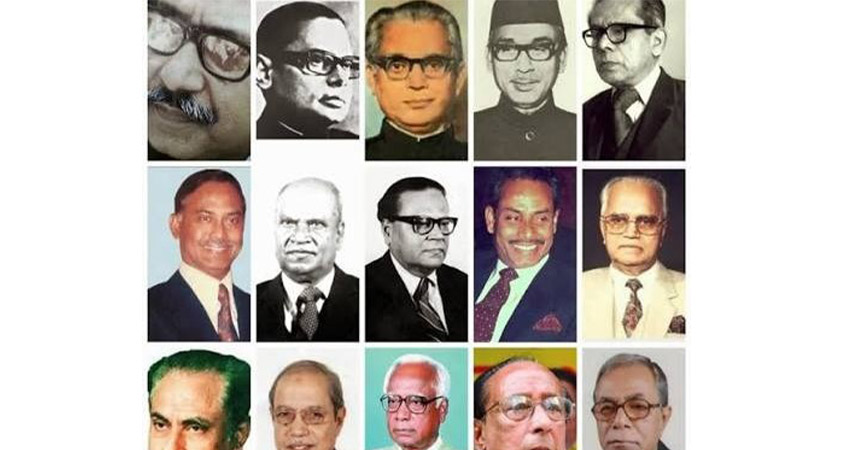
18 individuals have served as Bangladesh’s president: A look at the country’s presidential history
Published : Thursday, 13 August, 2026 at 7:11 PM
Observer Online Desk


Collected Photo
Bangladesh is set to elect its next president following the resignation of Mohammed Shahabuddin on July 24, with the constitutional process for choosing the country’s 23rd president now underway.
Speaker Hafiz Uddin Ahmad, Bir Bikram, has been performing the functions of the president under Article 54 of the Constitution since Shahabuddin’s resignation. The Election Commission is responsible for conducting the presidential election, in which members of parliament are the electors.
Shahabuddin was Bangladesh’s 22nd president and the 18th individual to hold the office. The distinction arises because several individuals served more than once, while some served in acting or temporary capacities.
As Bangladesh prepares for another change at Bangabhaban, a look back at the country’s presidential history shows how the office has evolved through periods of parliamentary government, military rule, caretaker administrations and democratic transitions.
Sheikh Mujibur Rahman
Sheikh Mujibur Rahman was the president of the Provisional Government of Bangladesh during the Liberation War in 1971. Although he was detained in Pakistan, Syed Nazrul Islam performed the functions of acting president.
After returning to Bangladesh in January 1972, Sheikh Mujibur Rahman became prime minister. Following the Fourth Amendment to the Constitution in January 1975, Bangladesh adopted a presidential system, and he became president again on January 25, 1975. He remained in office until his assassination on August 15 that year.
Syed Nazrul Islam
Syed Nazrul Islam served as acting president of the Provisional Government during Sheikh Mujibur Rahman’s absence during the Liberation War. He performed the duties of the office until Mujib’s return in January 1972.
Justice Abu Sayeed Chowdhury
Justice Abu Sayeed Chowdhury became president on January 12, 1972. He resigned from office in December 1973 after serving for nearly two years.
Muhammadullah
Following Abu Sayeed Chowdhury’s resignation, Speaker Muhammadullah served as acting president before becoming president in his own right in January 1974. He remained in office until January 1975, when the presidential system was introduced under Sheikh Mujibur Rahman.
Khondaker Mostaq Ahmad
Following the assassination of Sheikh Mujibur Rahman on August 15, 1975, Khondaker Mostaq Ahmad became president. He remained in office until November 6, 1975, when he was removed amid a series of military developments.
Justice Abu Sadat Mohammad Sayem
Justice Abu Sadat Mohammad Sayem became president on November 6, 1975. He remained in office until April 21, 1977, when he resigned citing health reasons.
Ziaur Rahman
Ziaur Rahman assumed the presidency in April 1977. He later founded the Bangladesh Nationalist Party (BNP) and was elected president. He remained in office until his assassination in Chattogram on May 30, 1981.
Justice Abdus Sattar
Following Ziaur Rahman’s assassination, Vice President Justice Abdus Sattar became acting president. He was subsequently elected president in November 1981.
His presidency ended on March 24, 1982, when Army Chief Hussain Muhammad Ershad seized power in a military coup.
Justice Abul Fazal Mohammad Ahsanuddin Chowdhury
After the military takeover, Ershad installed Justice Ahsanuddin Chowdhury as president in March 1982. He remained in office until December 1983, when Ershad removed him and assumed the presidency.
Hussain Muhammad Ershad
Ershad became president in December 1983 while continuing to rule under martial law. He was subsequently elected president in 1986.
His rule ended in December 1990 following a mass uprising, forcing him to resign on December 6.
Justice Shahabuddin Ahmed
Justice Shahabuddin Ahmed served as acting president following Ershad’s resignation while also heading the caretaker government. He oversaw the transition to parliamentary democracy and the 1991 general election.
He later returned to Bangabhaban after being elected president in 1996 and served a full five-year term until November 2001.
Abdur Rahman Biswas
Abdur Rahman Biswas became president after the BNP formed the government following the 1991 parliamentary election. He remained in office until October 1996.
A.Q.M. Badruddoza Chowdhury
Former BNP Secretary General A.Q.M. Badruddoza Chowdhury became president in November 2001. He resigned in June 2002 amid political tensions after around seven months in office.
Muhammad Jamiruddin Sircar
Following Badruddoza Chowdhury’s resignation, then-Speaker Muhammad Jamiruddin Sircar performed the functions of the president until September 2002.
Professor Iajuddin Ahmed
Iajuddin Ahmed became president in September 2002. During the political crisis surrounding the 2006-07 transition, he also served as chief adviser to the caretaker government.
He remained president until February 2009.
Md Zillur Rahman
Zillur Rahman became president in February 2009 after the Awami League returned to power. He remained in office until his death in Singapore on March 20, 2013, while undergoing medical treatment.
Md Abdul Hamid
Abdul Hamid first assumed presidential responsibilities in an acting capacity following Zillur Rahman’s illness and death. He was subsequently elected president and served two consecutive terms.
With roughly 10 years at Bangabhaban, Abdul Hamid became Bangladesh’s longest-serving president, leaving office in April 2023.
Mohammed Shahabuddin
Mohammed Shahabuddin was elected president in February 2023 and took office on April 24 that year as Bangladesh’s 22nd president.
He resigned on July 24, 2026, citing serious health complications. His resignation brought his five-year term to an early end and triggered the constitutional process for electing his successor.
Hafiz Uddin Ahmad
Following Shahabuddin’s resignation, Speaker Hafiz Uddin Ahmad assumed the functions of the presidency under Article 54.
Bangabhaban currently identifies him as the country’s '23rd president', reflecting his assumption of the presidential office following the vacancy created by Shahabuddin’s resignation. The next elected president will succeed him once the constitutional election process is completed.
The president of Bangladesh is elected by members of parliament rather than through a direct popular vote. Under the Constitution, a new president must be elected within 90 days when the office becomes vacant through resignation, death or removal.
-MT
Loading...
Loading...
Also read



Editor : Iqbal Sobhan Chowdhury
Published by the Editor on behalf of the Observer Ltd. from Globe Printers, 24/A, New Eskaton Road, Ramna, Dhaka.
Editorial, News and Commercial Offices : Aziz Bhaban (2nd floor), 93, Motijheel C/A, Dhaka-1000.
Phone: PABX- 41053001-06; Advertisement: 41053012; 01793317829, 01550707291, E-mail: [email protected], [email protected] Online: email: [email protected] 41053014; 01550707297 Advertisement: 01550707296
Published by the Editor on behalf of the Observer Ltd. from Globe Printers, 24/A, New Eskaton Road, Ramna, Dhaka.
Editorial, News and Commercial Offices : Aziz Bhaban (2nd floor), 93, Motijheel C/A, Dhaka-1000.
Phone: PABX- 41053001-06; Advertisement: 41053012; 01793317829, 01550707291, E-mail: [email protected], [email protected] Online: email: [email protected] 41053014; 01550707297 Advertisement: 01550707296


