



| HEADLINE |

|

One murder, four accounts: Why ‘Rashomon’ still fascinates 76 years later
Published : Wednesday, 26 August, 2026 at 11:24 PM
Observer Online Report


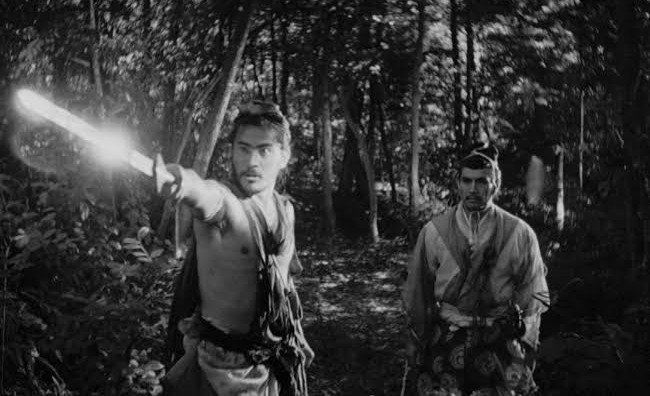
Collected Photo
What is the truth? Japanese filmmaker Akira Kurosawa explored this ancient and complex question of human existence perhaps more profoundly than anyone else on the silver screen.
Seventy-six years ago, on August 26, 1950, a black-and-white film was released in Japanese theatres. Few could have imagined at the time that the film would not only transform Japanese cinema but also fundamentally change the way world cinema approached truth, memory and human nature.
That film was 'Rashomon'
From aspiring painter to master of world cinema
Born in Tokyo in 1910, Akira Kurosawa initially dreamed of becoming a painter. As a young man, he studied various traditions of Western and Japanese art and regularly painted. Even after entering the film industry, his artistic sensibility remained evident.
Every frame of his films reflected the eye of a painter the sophisticated use of light and shadow, character positioning, dramatic use of weather and remarkable visual composition.
Kurosawa began working in cinema as an assistant director in 1936. Through his films, he portrayed the social realities, human crises and moral dilemmas of wartime and postwar Japan in a distinctive cinematic language.
At the same time, he drew inspiration from Japanese traditions, Shakespearean drama, Russian literature and Western filmmaking. His work therefore brought together Eastern and Western artistic traditions in a rare and influential way.
His films 'Seven Samurai', 'Ikiru', 'Yojimbo', 'Throne of Blood', 'Ran' and 'Dreams' are now regarded as classics of world cinema. In particular, 'Seven Samurai' is considered one of the most important films ever made. Its story and structure later inspired numerous films, including Hollywood’s 'The Magnificent Seven'.
The film that opened Japan’s door to the world
The most important milestone in Kurosawa’s international rise, however, was 'Rashomon'.
The film won the Golden Lion at the 1951 Venice Film Festival and went on to receive an Honorary Academy Award the following year. These achievements brought Kurosawa and Japanese cinema widespread international recognition.
At the time, Japanese cinema was largely unfamiliar to Western audiences and critics. 'Rashomon' opened that previously unfamiliar door.
Audiences in Europe and the United States discovered that Japanese cinema had its own distinctive visual language, storytelling techniques and philosophical depth, and could stand alongside the major traditions of world cinema.
The film’s success at Venice became one of the most significant moments in bringing Japanese cinema to an international audience.
The story that begins beneath a rain-soaked gate
The story of 'Rashomon' is primarily based on Ryunosuke Akutagawa’s short story 'In a Grove'. The film takes its title from Akutagawa’s story 'Rashomon', while the famous scene of three people sheltering from torrential rain beneath the ruined Rashomon Gate also comes from that literary source.
Set in ancient Kyoto, the film follows three people who take shelter from heavy rain beneath the dilapidated gate. Through their conversation, a horrifying incident gradually unfolds a samurai has been murdered in a forest and his wife has been sexually assaulted.
Four people testify about the incident: the notorious bandit Tajomaru, the murdered samurai’s wife, the samurai himself through a medium, and a woodcutter who witnessed the events.
This is where Kurosawa’s cinematic magic begins.
Each account contradicts the others. Every witness describes the incident in a way that makes his or her own role appear comparatively honest, courageous or innocent.
The audience is therefore left with an unsettling question: 'Where is the real truth?'
The ‘Rashomon Effect’: When truth breaks into multiple versions
The influence of 'Rashomon' did not remain confined to cinema. Its name later became associated with a widely used concept known as the “Rashomon Effect.”
The term is used in psychology and various social sciences to describe how different people can witness the same event but remember or describe it differently because of their individual perceptions, memories and perspectives.
Kurosawa demonstrated that people do not necessarily remember or recount an event exactly as it happened. Fear, shame, self-interest, memory and the instinct for self-preservation can all influence how people perceive and describe the same incident.
As a result, the “Rashomon Effect” has evolved beyond a term used in film criticism and is now widely invoked in discussions about human memory, testimony and the nature of reality.
From Hollywood to Bengali cinema: Kurosawa’s lasting influence
Kurosawa’s influence extended far beyond Japan.
George Lucas drew significant inspiration from Kurosawa’s 'The Hidden Fortress' when developing 'Star Wars'. Meanwhile, 'Seven Samurai' inspired the famous Hollywood film 'The Magnificent Seven'.
Filmmakers including Steven Spielberg, Martin Scorsese and Francis Ford Coppola have also spoken about their admiration for Kurosawa and the influence of his work.
His impact was not limited to Hollywood. Kurosawa’s films also had a profound influence on Indian cinema and film studies.
Legendary Bengali filmmaker Satyajit Ray was a great admirer of Kurosawa’s work. Ray was reportedly so impressed by 'Rashomon' that he watched the film three consecutive days.
Kurosawa, in turn, held Ray in extremely high regard and famously described him as one of the world’s greatest filmmakers, saying that not seeing Ray’s films was like living on Earth without seeing the sun or moon.
Although the two directors had different cinematic styles and came from distinct cultural backgrounds, both explored the moral dilemmas and conflicts of human life with remarkable depth. In that sense, Kurosawa’s influence on Bengali cinema is significant.
Why is ‘Rashomon’ still relevant after 76 years?
The black-and-white film released in 1950 continues to pose the same fundamental question 76 years later: 'Is there really only one truth?'
Personal interests, memories, emotions and ideologies can all shape how people interpret reality.
In the age of social media, when misinformation, fake news and misleading narratives constantly surround us, 'Rashomon' arguably feels more relevant than ever.
Kurosawa never provided a definitive answer. Instead, he left the question with the audience:
'Do people tell the truth exactly as it happened, or does every truth have multiple versions?'
-HIS
Loading...
Loading...
Also read







Editor : Iqbal Sobhan Chowdhury
Published by the Editor on behalf of the Observer Ltd. from Globe Printers, 24/A, New Eskaton Road, Ramna, Dhaka.
Editorial, News and Commercial Offices : Aziz Bhaban (2nd floor), 93, Motijheel C/A, Dhaka-1000.
Phone: PABX- 41053001-06; Advertisement: 41053012; 01793317829, 01550707291, E-mail: [email protected], [email protected] Online: email: [email protected] 41053014; 01550707297 Advertisement: 01550707296
Published by the Editor on behalf of the Observer Ltd. from Globe Printers, 24/A, New Eskaton Road, Ramna, Dhaka.
Editorial, News and Commercial Offices : Aziz Bhaban (2nd floor), 93, Motijheel C/A, Dhaka-1000.
Phone: PABX- 41053001-06; Advertisement: 41053012; 01793317829, 01550707291, E-mail: [email protected], [email protected] Online: email: [email protected] 41053014; 01550707297 Advertisement: 01550707296


