



| HEADLINE |

|
Women’s share in banking falls despite Bangladesh’s gender progress


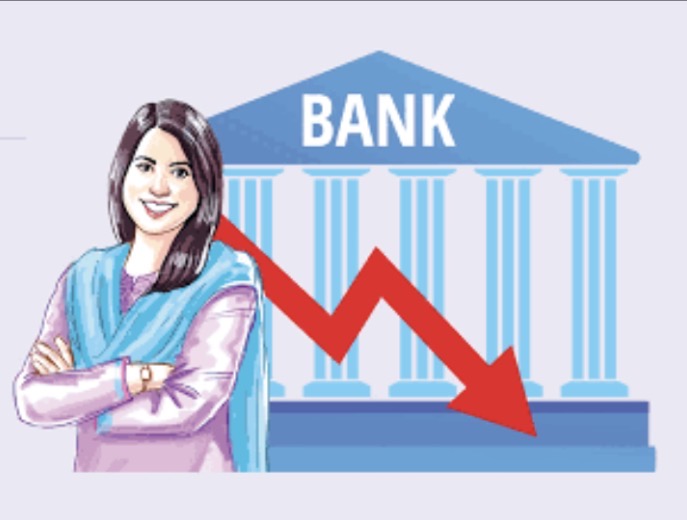
Bangladesh may have made a major jump in the global gender equality ranking, but women are losing ground inside the country’s banking industry, with their share of the workforce falling steadily in recent months.
The number of female bankers fell to 35,971 at the end of June from 37,649 in December 2024, while their share of total bank employees dropped to 16.51 per cent from 17.57 per cent during the period, according to the latest Bangladesh Bank data.
The decline has come at a time when Bangladesh’s overall performance on gender equality has improved sharply. The country ranked 24th among 148 countries in the World Economic Forum’s Global Gender Gap Report 2025, compared with 99th in 2024.
Bankers said a slowdown in recruitment, job cuts at some banks, the ongoing merger of five Shariah-based banks and the growing shift of banking operations to rural and semi-urban areas are making it harder for women to remain or enter the sector.
“Recruitment in most commercial banks has remained almost suspended because of the sluggish business situation,” said Shahjalal Islami Bank Managing Director Mosleh Uddin Ahmed.
He said some large banks are also facing serious liquidity pressure because of a rise in non-performing loans (NPLs). These banks are cutting jobs and trying to reduce operating costs, which is also affecting female employees.
The ongoing merger of five Islamic banks is another factor behind the decline, he said, as those banks had a sizeable number of female bankers.
A managing director of a private commercial bank, speaking on condition of anonymity, said some banks still recruit women, but hiring through personal references, including recommendations from board members, remains common.
“Because of the prolonged economic slowdown, banks are under pressure on income. This has almost closed the normal hiring window in many banks,” he said.
The latest Bangladesh Bank data show that female employees accounted for 16.51 per cent of the banking workforce in June, down from 16.78 per cent a year earlier. Although the number was slightly higher than a year earlier -35,971 against 35,782 -the overall female participation rate declined because the total banking workforce grew faster.
Private commercial banks employ the largest share of female bankers. About 65.40 per cent of all female bank employees work in private scheduled banks, while 26.33 per cent work in state-owned banks.
Specialised banks account for 5.69 per cent and foreign commercial banks for 2.59 per cent of female employment in the sector.
Bankers said the changing location of banking jobs is also creating a problem for women.
New branches are increasingly being opened in rural and semi-urban areas as banks expand outside major cities. But many female employees prefer to remain in Dhaka and other urban centres because of family responsibilities, childcare and other personal reasons.
Shanaj Parven, a senior executive of EXIM Bank, which is now part of Sammilito Islami Bank, said the banking industry has been expanding outside major cities, creating a growing demand for employees in rural areas.
“But most female officials prefer to stay in urban centres, especially Dhaka, for family and personal reasons,” she said.
She said this mismatch is becoming more visible as the demand for banking staff shifts from cities to rural areas.
A large portion of female bank employees is still concentrated in Dhaka, she added.
Parven heads portfolios covering branding and corporate affairs, marketing and development, and financial inclusion.
The decline in women’s participation in banking presents a sharp contrast with Bangladesh’s progress in the broader gender equality index.
The World Economic Forum’s 2025 report said Bangladesh made significant progress in political representation, economic participation and social inclusion.
But bankers warn that unless recruitment resumes, women get better opportunities outside Dhaka and banks maintain a more balanced workforce during restructuring and mergers, the banking sector may continue moving in the opposite direction.
HMS/ sks






Published by the Editor on behalf of the Observer Ltd. from Globe Printers, 24/A, New Eskaton Road, Ramna, Dhaka.
Editorial, News and Commercial Offices : Aziz Bhaban (2nd floor), 93, Motijheel C/A, Dhaka-1000.
Phone: PABX- 41053001-06; Advertisement: 41053012; 01793317829, 01550707291, E-mail: [email protected], [email protected] Online: email: [email protected] 41053014; 01550707297 Advertisement: 01550707296


